Closer to Relief
Survivors battle long-term pain with newer methods.
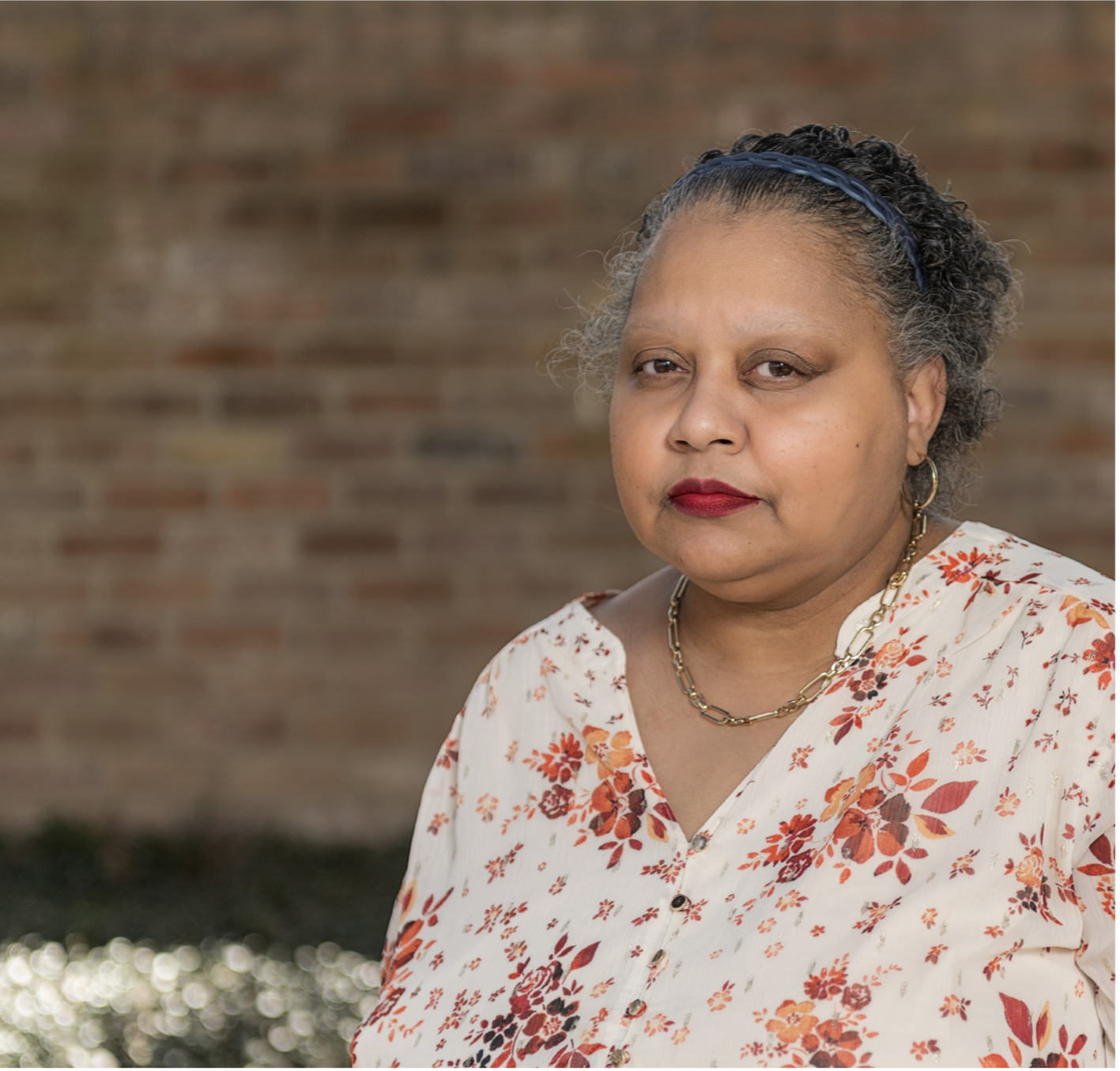
After two surgeries in less than a month to remove her breast cancer, Andrea Cooper, a retired graphic designer from Phoenix, Maryland, felt prepared for her first radiation session. The technician placed her arm above her head before he began the two-hour session. Cooper said the pain from the position was unbearable. “I was literally crying in pain,” she says. When she informed the technician about her pain, he merely said it was a common complaint and offered no remedy.
Cooper wasn’t prepared for the severity of pain after surgery, radiation and chemotherapy treatments or for chronic pain that followed. Seven years later, she says the surgery site is still tender and her twice-a-year mammograms are agonizing. Her surgeon told her she has extensive scar tissue and it will always hurt. In addition to her breast pain, she has chronic esophageal pain from the radiation and unrelated fibromyalgia, a syndrome characterized by pain and fatigue. Cooper says it took her years to accept that the pain will probably never be totally eliminated.
“With chronic pain, you can never predict how you’re going to feel,” she says. “It’s always in the back of your mind. If I go to the movies, am I going to need pain medication? If I travel, what happens if I have a setback or an attack? I had to stop working because I couldn’t maintain the pace. It was just too painful.”
Cooper is among the nearly 90 percent of patients who experience cancer-related pain during and/or after treatment. Over 50 percent of cancer patients experience chronic pain, defined as continuous or recurrent pain for longer than six months. While most chronic pain responds to oral medication, it has become trial and error for some patients to determine the best regimen and best administration. Not all pain medications work the same on every patient because of the different ways people react to pain and individual differences in receptor type sensitivity, metabolic pathways or other unknown genetic factors. An array of treatments provides patients with a choice for personalized pain management, which includes relief for long-term and short-term pain and brief, yet severe flare-ups called breakthrough pain.
Pain can be caused by cancer or its treatment and can occur when tumors press on nerves or organs, but can often be relieved with surgery or by anti-cancer therapy. Pain can also be caused by radiation, chemotherapy, and surgery, resulting in nerve damage, mouth sores, or other painful side effects.
Allen Burton, MD, clinical medical director of M.D. Anderson Cancer Center’s Pain Management Center in Houston, says that although cancer treatments are more effective now than in the past, some are also more invasive, including repeated surgeries, multiple cycles of chemotherapy and radiation. “Survival is better, but patients are exposed to numerous types of treatment that can cause both acute and sometimes chronic pain,” Burton says.
Even with a successful pain management strategy, many patients still experience pain, but at a considerably lower level, says Janet Abrahm, MD, co-director of Dana-Farber Cancer Institute’s Pain and Palliative Care Program in Boston. “When most patients with chronic pain say they have no pain, and they’re asked what number it is on a scale of one to 10, they almost always say it’s a two or three, and that’s usually the goal,” she says.
Chronic pain often requires around-the-clock medication to stay in front of the pain—taking medication to prevent pain rather than waiting to relieve it once it occurs. Long-acting medications that are continuously given or metabolized slowly in the body are best for chronic pain and can be combined with short-acting medication for acute and breakthrough pain.
The first step in treating pain is to determine if it is caused by progressive cancer, metastatic disease or nerve damage. “If we know the cause of the pain, we can possibly use less opioids by using specific drugs for bone pain or nerve pain,” says Abrahm. It may take time to reach a balance of pain relief and manageable side effects by gradually increasing or trying different opioids to discover the best strategy for individual patients. “Patients are much more in tune with the need to not be sedated with their medicines and the need to be functional,” Burton says. “They want to work, they want to travel, they want to have a good quality of life.” Morphine continues to be the gold standard for chronic pain relief, but, as well as other opioids, it has side effects that can include drowsiness, constipation, sleepiness and nausea.
Pain relief patches, which are applied to the skin for continuous high-dose pain medication over several days, are more convenient than oral medication because of their long half-life and continuous administration of painkiller. A commonly used fentanyl patch called Duragesic delivers high-dose opioids continuously through the skin for up to 72 hours for chronic pain. A generic version of the fentanyl transdermal patch was approved in early 2005. Newer versions of the pain patch include buprenorphine, a potent semisynthetic opioid with fewer side effects than morphine. Another fentanyl patch, ZR-02-01, is currently in phase III testing for moderate to severe cancer pain.
Another new development is CHADD (controlled heat-assisted drug delivery), a disk placed on top of a fentanyl patch to dispense a higher dose of medication. After a CHADD disk is opened and placed over the patch, a chemical reaction produces heat that in turn releases more fentanyl from the pain patch. The CHADD disk can be designed to last from five minutes to as long as 24 hours.
By the time Susan Shinagawa of San Diego was diagnosed with a recurrence of breast cancer in 1997, it had spread to her cerebral spinal fluid causing excruciating pain in her lower back. Although the cancer was successfully treated, Shinagawa’s lower back pain remained. Over the years, she tried a combination of drugs for both chronic and breakthrough pain. Today she takes Prialt (ziconotide), a recently approved drug modeled after a South Pacific sea snail toxin. Because Prialt is such a potent drug—it is 1,000 times more potent than morphine—it is administered directly into her spinal fluid via a surgically implanted pump near her abdomen.
“Having the pump has made me functional,” Shinagawa says, noting that she and her doctor are still trying to determine the best regimen and dose. Although the potent drug alleviated much of her pain in the beginning, the relief has steadily declined. She uses other painkillers and medication to counteract the side effects.
Because Prialt halts the pain process by binding to calcium ions instead of opioid receptors, it has different side effects than oral opioids, including dizziness and headaches, and in rare instances, hallucinations, delirium, and possible coma. In a phase III trial, patients with opioid-resistant pain reported that Prialt relieved pain within three weeks. The longest treatment duration has been seven years with positive follow-up results.
Advances in pump design have also aided patients. In late 2005, the Food and Drug Administration approved the Personal Therapy Manager, a handheld device that signals the pump to release medication when the patient needs it. Although the device allows the patient to control the medication, it prevents overdosing and overmedicating. It also keeps a log of delivery times and self-pain ratings to help the patient’s physician adjust the dosage.
While there are many options to control pain, patients still face barriers to adequate pain relief, either through their own misconceptions or the medical community. Abrahm says many patients are hesitant to talk to their oncologist about pain. “There’s still a big barrier, partially because patients don’t want to seem like complainers or waste time with their doctors.”
The fear of addiction is also common, but is usually an unnecessary concern, she says. After prolonged use of pain medication, a patient may go through withdrawal if the drug is not properly titrated off, especially with opioids. Symptoms of opioid withdrawal include rapid pulse, sweating, nausea, vomiting, diarrhea, and anxiety. But physical dependency should not be confused with addiction, says Abrahm. Few patients ever become addicted to pain medication, and it’s believed that those who do have a predisposition to addictive behavior. Even patients who have a history of addiction have drug options, including methadone. “Cancer survivors are going to use drugs to get back into their lives, whereas addicts use drugs to get out of their lives,” says Abrahm.
If the pain gets to the point where medication is no longer effective, it could be a sign that the cancer has returned or the body has developed a tolerance to the drug. Tolerance occurs in a minority of patients who take opioids, but is easily solved by increasing the dosage or rotating different drugs.
One of the biggest barriers, patients say, is having someone, including their own doctor, believe they have pain. Shinagawa says she saw several doctors and psychiatrists before someone believed she had chronic pain since the medication or dosage she was prescribed did not work. Doctors also could not find a reason for her pain, she says, which made it even more difficult to treat. “My current doctor was the first one who talked to me about my pain, the first person who didn’t tell me it was all in my head or it would go away in a couple of months,” says Shinagawa, who has since become an advocate for chronic pain patients.
In the past few years, awareness of chronic pain has increased, especially in the medical community. Pain has been identified as the fifth vital sign and many cancer centers have pain specialists and palliative care departments for their patients. Several national organizations have increased awareness, provided support and advocated for better care. Andrea Cooper says she has seen a change in attitude toward pain since her first radiation session, but she admits there is still much to do. As a volunteer with the American Pain Foundation, Cooper serves on a new advisory committee that will address issues faced by chronic pain patients. “More education needs to done for both sides, for both healthcare providers and patients,” she says.
With chronic pain, you can never predict how you’re going to feel. It’s always in the back of your mind. If I go to the movies, am I going to need pain medication?
View Chart: Stopping PainView Illustration: Surgically Implanted Pain Pump