



CURE

SUMMER / 2010

Pipeline

The latest in cancer prevention, diagnosis & treatment

New Weapon Against Prostate Cancer

On April 29, the Food and Drug Administration approved the first therapeutic cancer “vaccine,” a customized treatment approach that engages a patient’s own immune system to fight cancer. In clinical trials, Provenge (sipuleucel-T) extended the lives of men with certain types of advanced prostate cancer by about four months compared with those taking a placebo.

The vaccine is indicated for men with metastatic or advanced prostate cancer that is resistant to standard hormonal treatment.

The FDA approval was lauded as good news not only for many prostate cancer patients, but for cancer patients overall. There are ongoing clinical trials for several other drugs that take a similar, immunologic approach to fighting cancers—from renal cell carcinoma and glioma to metastatic melanoma.

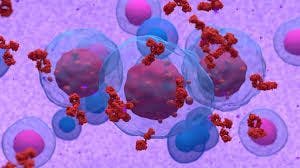
To create a personalized vaccine, Provenge developer Dendreon takes a patient’s blood and isolates certain immune cells (dendritic cells). Those cells are loaded up with an immune stimulant and a protein found in most prostate cancers—and then returned intravenously to the patient in three doses given about two weeks apart. Side effects can include chills, fever, and headaches during intravenous administration.

Soon after approval, Dendreon released an estimated cost of a course of treatment: $93,000 per patient. For more information, visit www.provenge.com or call 877-336-3736.

Tarceva Approved for Some Lung Cancers

In April, the Food and Drug Administration approved the targeted cancer drug Tarceva (erlotinib) as “maintenance” therapy for certain patients with advanced non-small cell lung cancer (NSCLC). Tarceva was already approved for people with advanced NSCLC whose cancer grew or spread after at least one course of chemotherapy. Now, the drug is also approved for those with advanced NSCLC whose disease has not progressed following platinum-based chemotherapy.

The reasoning behind this maintenance approach is to deliver another punch to cancer that responded to initial therapy instead of waiting for a recurrence or progression before giving more treatment.

The FDA’s approval of Tarceva stemmed from a clinical trial in which patients were first given standard chemotherapy (platinum-based) and then either Tarceva or a placebo. Patients given the drug survived without disease progression only slightly longer than those on the placebo: a median of 12.3 weeks versus 11.1 weeks. However, in trial data, this translated mathematically into a 29 percent reduction in the risk of cancer progression or death. Side effects of Tarceva can include rash and diarrhea.

The FDA’s decision came four months after the agency’s Oncologic Drugs Advisory Committee recommended against expanding the approved use of Tarceva, citing problems with the clinical trial design.

Tarceva works by targeting the epidermal growth factor receptor pathway in cancer, which is involved in excessive cell division. For more information, visit www.tarceva.com or call 877-827-2382.

Innovative Lung Cancer Trial Reports Success

Oncologists are one step closer to customizing cancer treatment to a patient’s own tumor, according to a first-of-its-kind clinical trial, BATTLE (Biomarker-integrated Approaches of Targeted Therapy for Lung Cancer Elimination). Results of the “adaptive design” phase 2 trial were presented in April at the American Association for Cancer Research annual meeting.

M.D. Anderson Cancer Center scientists tested four specialized cancer drugs, each designed to target specific molecular pathways in cancer: Tarceva (erlotinib), Nexavar (sorafenib), Zactima (vandetanib), and Tarceva with Targretin (bexarotene). Patients with stage 4 non-small cell lung cancer were initially assigned randomly to a drug, and their tumors were assayed for certain biomarkers—EGFR or KRAS mutations, for example.

As the researchers evaluated what appeared to work, they changed strategy: Patients with known tumor biomarkers were treated with the drug that had worked best for earlier patients with similar biomarkers. The strategy had “limited” success, M.D. Anderson’s Edward Kim, MD, said during a press conference at the meeting. About 46 percent of patients in the trial had disease control at eight weeks, compared with 30 percent in historical experience.

Breast Cancer Drug for Stomach Cancer?

Genentech, which makes breast cancer drug Herceptin (trastuzumab), has asked the Food and Drug Administration to approve the drug plus chemotherapy for people with advanced HER2-positive cancers of the stomach, including cancer of the gastroesophageal junction. In HER2-positive cancers, Herceptin can interfere with HER2 receptors, which are involved in cancer cell growth, survival, and other factors.

Genentech’s application is based on results from a study of nearly 600 people with advanced stomach cancer, randomized to receive chemotherapy alone or chemotherapy plus Herceptin. Those receiving Herceptin lived, on average, about two months longer (13.8 versus 11.1 months). The FDA could make a decision by early 2011.

One-Time Colon Screening Cuts Cancer Risk

A single screening of the rectum and lower colon by sigmoidoscope between ages 55 and 64 can cut a person’s risk of colon cancer by one-third, according to a study published in The Lancet in April. Researchers tracked more than 170,000 people for about 11 years; those screened were 31 percent less likely than those not screened to get colorectal cancer, and 43 percent less likely to die of it. Doctors removed precancerous polyps that were found during the screening procedure. About two-thirds of colorectal cancers occur in the lower colon, reachable by flexible sigmoidoscope, whereas colonoscopy can view the entire length of the colon.

Avodart Reduces Overall Prostate Cancer Risk

Men at increased risk for prostate cancer may be able to reduce their risk by taking Avodart (dutasteride) regularly, according to a study published in The New England Journal of Medicine in April. Avodart is currently used to reduce the size of benign enlarged prostates. 

Over four years of treatment, about 20 percent of men taking Avodart were diagnosed with prostate cancer, compared with 25 percent of men taking a placebo. Avodart works by lowering the production of a hormone associated with prostate growth. Side effects of Avodart can include decreased libido and erectile dysfunction.

Expanded Access Granted for PARP Inhibitor

The Food and Drug Administration has approved expanded access, sometimes called “compassionate use,” for the experimental PARP inhibitor iniparib (BSI-201) for some women with metastatic triple-negative breast cancer (TNBC). FDA uses the expanded access designation for unapproved drugs that target a serious or immediately life-threatening disease with no comparable or satisfactory therapeutic alternatives. This means some women with TNBC who have failed other therapies and do not qualify for a clinical trial may soon be able to access iniparib. Iniparib prevents cancer cells from repairing DNA damage, which can lead to cancer cell death. Updates from BiPar Sciences, the maker of iniparib, are available at www.biparsciences.com or call 866-668-2232.

^ TOP OF PAGE