

Giredestrant generated improved outcomes over standard endocrine therapy in patients with ER+/HER2–, medium- and high-risk early breast cancer.
Giredestrant generated improved outcomes over standard endocrine therapy in patients with ER+/HER2–, medium- and high-risk early breast cancer.

Progression-free survival was not statistically significant with Trodelvy versus chemotherapy as first-line treatment in HR+/HER2– metastatic breast cancer.

Emmy-winning journalist and author, Suleika Jaouad, delivered the keynote address at the inaugural Blood Cancer Heroes event.

KLN-1010 was associated with deep, ongoing minimal residual disease (MRD)–negative responses in multiple myeloma.

Real-world treatment with Yescarta demonstrated durable responses and manageable safety in patients with relapsed/refractory follicular lymphoma.

Dexamethasone before Yescarta reduced the severity of ICANS but did not change how often ICANS or CRS occurred in patients with LBCL.

Pelabresib plus Jakafi delivered stronger, clinically meaningful benefits versus Jakafi alone for people with untreated myelofibrosis.

Tecvayli plus Darzalex Faspro improved overall and progression-free survival versus standard daratumumab regimens in relapsed/refractory multiple myeloma.

Jaypirca therapy improved progression-free survival versus bendamustine plus Rituxan a phase 3 trial for untreated CLL/SLL.

Lore Gruenbaum, chief scientific officer of Blood Cancer United, sat down for an interview with CURE to discuss the themes shaping blood cancer care today.

Dr. Robert Orlowski says a single-drug option in newly diagnosed myeloma may offer strong responses with fewer side effects and preserve future treatments.
A clinical trial found that Jaypirca was more effective than Imbruvica across the frontline and relapsed/refractory CLL/SLL settings.

The phase 3 EPCORE FL-1 trial showed that adding Epkinly to Rituxan and Revlimid delivered superior PFS and response rates.

A new combination of Blincyto and Iclusig provided improved results and stronger responses for patients with Philadelphia chromosome-positive ALL compared with traditional chemotherapy.

Among fit patients with acute myeloid leukemia, azacitidine plus Venclexta was shown to be superior to intensive chemotherapy.
Among older patients with newly diagnosed diffuse large B-cell lymphoma (DLBCL), Epkinly plus R-mini-CHOP appeared to be well tolerated and elicited responses.
Transitioning treatment with Niktimvo to a dose of 0.6 mg/kg every four weeks appeared feasible for chronic graft-versus-host disease.

Race has been identified as an independent prognostic factor in patients with AML receiving intensive chemotherapy.

KRd improved progression-free survival, deepened responses, and led to higher MRD negativity versus VRd in patients with newly diagnosed multiple myeloma.

Among patients with previously untreated diffuse large B-cell lymphoma, odronextamab has been associated with early efficacy.
In patients with R/R multiple myeloma, real-world Elrexfio was associated with shorter time until progression but higher rates of response than Tecvayli.

Venclexta regimens showed comparable progression-free survival versus continuous Imbruvica.

For pediatric and young adult patients with B-cell acute lymphoblastic leukemia, removal of total body irradiation did not compromise efficacy.

Among children receiving chemotherapy for acute lymphoblastic leukemia, 30% of their families developed catastrophic financial toxicity.

CURE spoke with Alexa M. Lantz of Penn State Health about radiation side effects.

Alecensa cut the risk of death by 22% versus Xalkori, with median overall survival reaching 81.1 months versus 54.2 months in advanced ALK-positive lung cancer.

The Beamion LUNG-1 study showed that first-line Hernexeos had benefit for patients with HER2-mutated NSCLC.
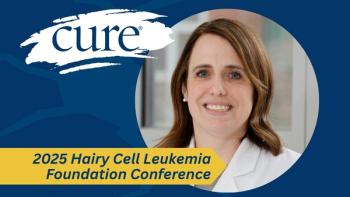
CURE sat down with Dr. Kerry A. Rogers for an interview at the Hairy Cell Leukemia Foundation 2025 Conference, hosted in Bologna, Italy.

In hormone-sensitive prostate cancer, an alternative dosing of docetaxel plus Nubeqa and ADT was associated with improvements in side effect rates.

The addition of postsurgical Verzenio to endocrine therapy provided a benefit in HR–positive, HER2-negative breast cancer.