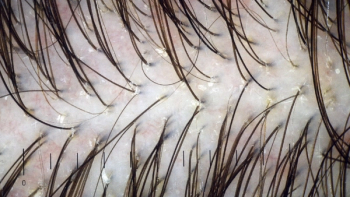
California Gov. Gavin Newsom signed AB 1682 on Sept. 27, requiring large-group health plans to cover prescribed scalp cooling starting Jan. 1, 2027. Medi-Cal coverage is pending federal approval.
This month, I have seen more pink on the football fields across the country that I have ever seen before. I know that many wonder whether the "pinkification" campaign is really working and whether it is a fair way to raise awareness. Does this simply go to running the operations of organizations that raise money, or does it really trickle down to help those with breast cancer?As I pass my 20-year anniversary as a breast cancer clinician and researcher, it is clear that the basic science and clinical trial output is at an all-time high. Whether or not this is due to increased awareness or to fundamental breakthroughs in science cannot be clear discerned, but in the last two decades, breast cancer specific journals and general journals have increased their publication quantity and quality exponentially. The impact of these findings on earlier detection, less invasive options for surgery, better assays to make medical decisions and newer life-saving treatments are very tangible.However, we are stuck in some areas without progress: > Advanced metastatic disease is no more curable than it was 20 years ago. Although these patients are living longer and better lives, the improvements are not very dramatic. > Disparities in outcome based on ethnicity and income continue, while narrowed in some areas. > We are still overtreating some patients and undertreating others - new assays are just starting to get implemented, but we have a long way to go in our quest to "personalize" medicine. > Medical prevention, while effective, has side effects. Because of this, we tend not to prescribe these drugs to those at risk, and also do not know how to estimate risk very well.So at this point, the progress report is mixed, but mostly positive. After all, breast cancer awareness is not only moving the field forward, it is about demystifying and destigmatizing breast cancer. While research is not moving fast enough, the public has a much better understanding about breast cancer - the importance of research funding, clinical trial participation, supporting a recently diagnosed employee, modifying their risks and getting objective information to help guide treatment should they be diagnosed. Whether you are a fan of structured awareness and pink ribbons or not, there is no mistake that our society, as it so often does, is becoming fluent in the subject matter of the month.