

Experts discussed what other information is needed to understand how best to use Kisqali in treating patients in the adjuvant setting with early breast cancer.
Experts discussed what other information is needed to understand how best to use Kisqali in treating patients in the adjuvant setting with early breast cancer.

Updated data from the phase 3 DREAMM-7 trial was presented during the 2024 ASH Annual Meeting and Exposition.

A Phase 3 trial of uproleselan failed to improve overall survival in relapsed/refractory AML, though it may benefit primary refractory patients.

The Venclexta-based regimen improved complete response rates in patients with acute myeloid leukemia and myelodysplastic syndromes.

In patients with certain B-cell blood cancers, heart-related side effects may occur less after receiving second-generation BTK inhibitors.
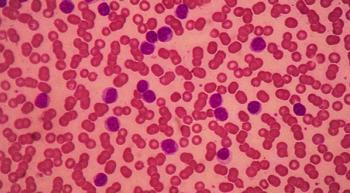
Patients with treatment-naive CLL/SLL experienced long-term improved efficacy when treated with Brukinsa compared with bendamustine plus Rituxan.

Adding pelabresib to a JAK inhibitor may improve multiple aspects of myelofibrosis, including spleen size, symptoms and bone marrow fibrosis.
Tecvayli alone or plus Revlimid has been found to be safe and may result in high MRD-negativity rates.
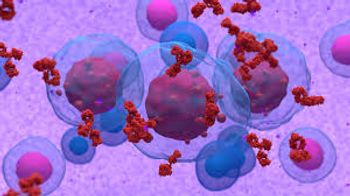
The risk for disease progression or death was reduced by 51% with subcutaneous Darzalex Faspro in certain patients with smoldering multiple myeloma.
Calquence plus Venclexta, with or without Gazyva, improved progression-free survival over the standard-of-care chemoimmunotherapy in patients with untreated chronic lymphocytic leukemia.
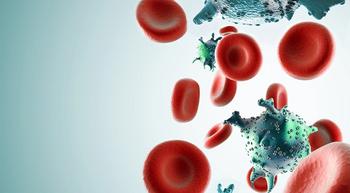
Scemblix resulted in better outcomes and fewer side effects compared to standard tyrosine kinase inhibitor therapies in patients with chronic myeloid leukemia.

Patients with relapsed or refractory (R/R) myelofibrosis experienced reduced biomarkers of disease severity following treatment with navtemadlin.

Tecartus demonstrated similar effectiveness across age groups of patients with relapsed or refractory B-cell acute lymphoblastic leukemia.
Long-term follow-data shows Revuforj to be effective in the treatment patients with R/R KMT2Ar acute leukemias.

For patients with transplant-ineligible or -deferred newly diagnosed multiple myeloma, the addition of Darzalex to VRd improved MRD responses as well as progression-free survival.
Results from the study also showed the potential association between smoking, disease progression and survival in patients with myelodysplastic syndromes.

Treatment with bicistronic CD19/CD22 CAR-T cell therapy has shown event-free survival improvements in children with relapsed or refractory B-ALL.
Pediatric patients with standard-risk B-ALL demonstrated significantly improved disease-free survival with Blincyto plus chemotherapy versus chemotherapy alone.

An expert discusses the next steps for patients with metastatic breast cancer after their disease no longer responds to hormone therapy.

In patients with advanced NSCLC, treatment with Jemperli plus chemotherapy showed promising effectiveness compared with Keytruda plus chemotherapy.

Expert answers to patients’ questions were offered as part of the CURE® Educated Patient® Prostate Cancer Summit.

An expert discussed how patients with breast cancer, particularly those with a BRCA mutation, should consider future fertility and breastfeeding when making treatment decisions.
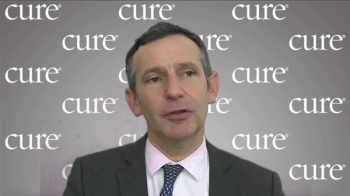
An expert discussed how liquid and tissue biopsies can help monitor treatment and detect potential resistance in patients with non-small cell lung cancer.

Through regular follow-ups and symptom assessments, breast cancer survivors have the access to physical and emotional support they may need.

An expert explained the advantages and disadvantages of radiation as a treatment for patients with renal cell carcinoma, a type of kidney cancer.

It’s crucial for patients with prostate cancer to know that all treatments come with side effects, which may affect their quality of life.

The rate at which PSA rises after hormonal therapy for prostate cancer is a key factor in determining the effectiveness of the treatment.

An expert discussed the importance of patients learning about their specific type of breast cancer to understand potential treatment options.

An expert discussed how the understanding of resistance mechanisms can help care teams develop a global treatment strategy for EGFR-mutated non-small cell lung cancer.

With approaches like high intensity focused ultrasound, patients with prostate cancer may experience lower rates of urinary incontinence and erectile dysfunction, an expert said.