

News|Articles|February 6, 2026
The Power of Personalized Care in Breast Cancer Treatment
Author(s)Alex Biese
Fact checked by: Spencer Feldman
Listen
0:00 / 0:00
Key Takeaways
- Oncoplastic breast-conserving surgery enables larger-volume resections with immediate tissue rearrangement, reducing mastectomy rates while maintaining oncologic priorities and improving cosmetic outcomes.
- Nipple-sparing mastectomy with close plastic surgery collaboration preserves the skin envelope and nipple in eligible patients, allowing reconstruction with less conspicuous scarring and more natural breast contour.
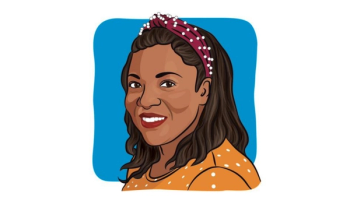
CURE sat down with Dr. Kathie-Ann Joseph to discuss surgical advancements for individuals with breast cancer.
Advertisement
CURE spoke with Dr. Kathie-Ann Joseph about advancements in breast cancer care and the importance of personalized, multidisciplinary treatments.
Joseph was recently appointed by RWJBarnabas Health and Rutgers Cancer Institute to be the chief of breast surgery and co-director of the multidisciplinary breast program at Rutgers Cancer Institute and the Jack and Sheryl Morris Cancer Center. She will also serve as associate chief surgical officer for system integration and quality, RWJBarnabas Health, as well as director of breast surgical services for the RWJBarnabas Health southern region.
CURE: For patients with breast cancer, what are some of the latest surgical treatment advancements they should be aware of?
Dr. Kathie-Ann Joseph: One of the things that most women are fearful of is losing their breasts. And for some women, you may not have that option, but I think we're doing mastectomies less and less, and that's because we have … oncoplastic surgery, where we can preserve the breast. For many individuals, that means for those who have larger tumors that, previously, we would have said we can't really preserve the breast, we conserve the breast. If we have to do a mastectomy, we can take more tissue and then reshape the breast, and the woman can still have a normal-appearing breast. So that's really cool, and that's really helpful for many people to know that we can do … tissue arrangement so we can do a good cancer operation, which is the main focus of the operation, to remove the tumor but still preserve the breast. So that's called oncoplastic surgery.
For those who do need a mastectomy, there's still a wide range of options for breast reconstruction. We're doing nipple-sparing for those who meet the criteria. We work very closely with our plastic surgeons. That means we can remove the breast tissue and still maintain the skin envelope and … nipple. So for many individuals, you would never know that they had a mastectomy. We can hide the scars. We can do a lot of different tricks so that it looks like a very normal-appearing breast.
I think those are very exciting advances that we've made in the past several years so that we are able to offer people these options. So, it's not the same options that we used to offer individuals in the past.
What is some current research or clinical trials that patients should have on their radar?
I think some of the options that they should think about is the fact that we have more options now for women with early-stage breast cancer, women who are who are estrogen receptor-positive, there's just more options in terms of CDK4 inhibitors, particular for those women who are estrogen receptor-positive and lymph node-positive.
It's not always a done deal that you have to have chemotherapy. We're not just looking at the size of the tumor and the whether or not they have lymph nodes. But we're looking more at the biology of the tumor. It's not one size fits all. And so, I think what's important that patients understand is they come in and they're worried about, “I know someone else who had this type of treatment.” No, we don't do that. We look at you as the individual. We're looking at your own tumor biology and your own what we call genomics, to determine the type of treatment that you should receive. And we will run assays on your specific tumor, we send it to pathology, and we send it out, and we look at it to determine what your what your treatment should be.
And so, you can have the same sort of profile as someone else, but you may get a different treatment. I think that's something that's very important, and I try to remind patients not to compare yourself to someone else now, because you can have a completely different treatment plan, and what's really nice about the way we go about it is we work as a team. This is multidisciplinary care. So, your plan is going to be discussed not just with the surgeon, but with the medical oncologist, with the radiation oncologist, so that we come up with a comprehensive plan. Everybody's on the same page.
Transcript has been edited for clarity and conciseness.
For more news on cancer updates, research and education,
Advertisement
Related Content
Advertisement



Advertisement
Advertisement
Trending on CURE
1
5 Years of Prostate Cancer Advances: A Timeline of FDA Approvals and What They Mean for Patients
2
5 Years of Lung Cancer Advances: A Timeline of FDA Approvals and What They Mean for Patients
3
At 21 I Was Given 18 Months. This Year I Turned 40.
4
Cancer Drug Shortages Show Little Improvement in Fourth Year, New NCCN Survey Finds
5