




Gastrointestinal Cancers
Latest News
Advertisement
Latest Videos




Shorts

0:45
Don’t Ignore Symptoms: Early Detection Key for Rare Cancers
7 months ago
by
Ryan Scott

0:41
The Hidden Risks of Long-Term Chemotherapy for Gastrointestinal Cancers
8 months ago
by
Ryan Scott

1:00
Debunking Common Myths About Cancer Clinical Trials
8 months ago
by
Ryan Scott

0:30
Educational Tools Boost Patient Consent for Genomic Testing and Trial Access
8 months ago
by
Ryan Scott

0:30
Dr. Nadine Jackson Explores Patient Consent Rates for Genomic Testing
8 months ago
by
Ryan Scott

0:02
Experts Break Down Key Patient Takeaways From 2026 ASCO GI Cancers Symposium
8 months ago
by
Ryan Scott

0:40
Can ctDNA Testing Help Patients With Cancer Avoid Chemotherapy?
9 months ago
by
Dr. Nicholas Hornstein
Podcasts



Advertisement
More News

ASCO updated its guideline to recommend broader first-line HER2-targeted treatment options, with immunotherapy for eligible patients with PD-L1 expression of 1% or higher.
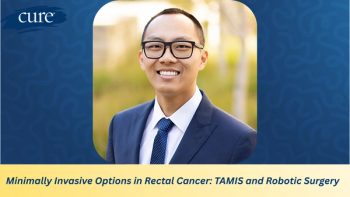
Dr. Mark Zhao explains how minimally invasive techniques preserve function, speed recovery and why patients should not wait years to raise bowel symptoms with their doctor.

Patients with advanced stomach cancer lived longer on sonesitatug vedotin than on standard treatment, according to new trial results.

Katrina Columna, FNP, of Memorial Sloan Kettering Cancer Center, blends deep clinical expertise with steady compassion across GI and GYN oncology and early-phase clinical trials.

In a phase 3 study, Opdivo plus Yervoy did not improve overall survival when combined with chemotherapy for HER2-negative gastric or GEJ cancer.
Zynyz plus chemotherapy improved overall survival for patients with advanced anal cancer in the phase 3 POD1UM-303/InterAACT-2 trial.
FDA reviews Ziihera combinations for HER2-positive gastroesophageal cancer, showing potential benefit as a first-line treatment option for patients.

FDA approves a PD-L1 test to help identify patients with esophageal or gastroesophageal junction (GEJ) cancer who may benefit from Keytruda.

CURE spoke with incoming ASCO president Dr. Deb Schrag on elevating the patient voice, humanism in care and why partnership shapes better cancer outcomes.
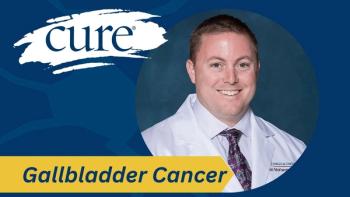
Dr. McKenzie explains bile duct cancer subtypes, genomic profiling, targeted therapies and multidisciplinary strategies to improve quality of life.
Dr. McKenzie discusses gallbladder cancer risk factors, imaging signs and how surgery and lymph node evaluation impact outcomes.

The U.S. FDA has granted orphan drug designation to HCB101, an investigational immunotherapy, for the treatment of gastric cancer.

The FDA has granted orphan drug designation to zenocutuzumab-zbco for the treatment of adults with advanced unresectable or metastatic cholangiocarcinoma.
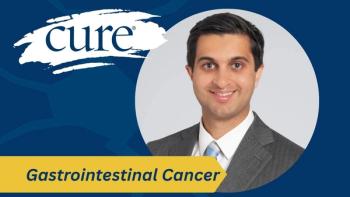
Dr. Suneel Kamath walks patients through what they need to know about their gastrointestinal cancers following major oncology meetings.
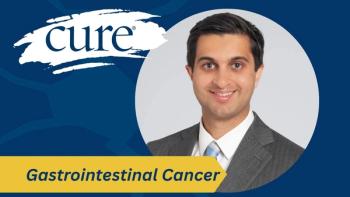
Dr. Suneel Kamath highlighted advances in biomarker-driven therapies and emerging frontline regimens following the 2026 ASCO GI Cancers Symposium.

Experts highlight key themes from the ASCO GI Cancers Symposium, including the growing role of AI and an increased emphasis on patient-centered decision-making.

Patient education and individualized navigation can improve genomic testing uptake and downstream participation in genomics-based clinical trials.

Patients with advanced gastric cancer received PD-1 inhibitors at similar rates across racial groups, although overall use remained limited in real-world care.
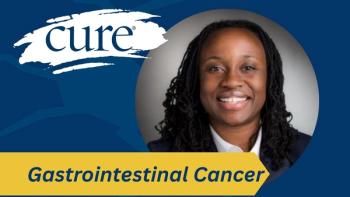
Providing patient-centered education and navigation support significantly increases consent rates for genomic testing, making testing integration feasible.

Nutritional support helps malnourished patients with advanced gastric cancer maintain chemotherapy and may extend time to treatment failure.
Dr. Nadine A. Jackson explains how relatively simple interventions may help close gaps in access to genomics-driven trials across gastrointestinal cancers.

Updated data from GOBLET Cohort 4 demonstrated activity with Reolysin plus Tecentriq in patients with third-line metastatic squamous cell anal carcinoma.

Understanding your diagnosis, the tests ahead and the treatment landscape is the first step in regaining a sense of control.

ECOG performance status was found to capture only part of the patient experience in gastric/GEJ adenocarcinoma.

Dr. Elena Elimova discusses how Ziihera-based therapy may change treatment for HER2+ locally advanced or metastatic gastroesophageal adenocarcinoma.
Advertisement
Advertisement
Trending on CURE
1
Exercise Gave Me Control. It Didn’t Cure My Cancer
2
Living With Incurable Cancer: The Emotional Toll of Never Knowing What Comes Next
3
FDA Approves Tukysa Combination as Maintenance for HER2-Positive Breast Cancer
4
Epkinly Plus R-CHOP Cuts Lymphoma Progression Risk by 51% in Phase 3 Trial
5