


Lung Cancer
Latest News

Brain MRIs Instead of Preventive Radiation Better Protected Memory in Small Cell Lung Cancer
By CURE staff
Advertisement
Video Series
Latest Videos


Shorts
0:19
Rethinking Treatment Sequencing in HER2-Mutant Lung Cancer
21 days ago
by
Kaitlyn M. Le

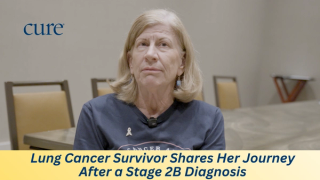
0:34
Lung Cancer Survivor Shares Her Journey After a Stage 2B Diagnosis
a month ago
by
Kaitlyn M. Le
0:51
The Importance and Support of Lung Cancer Advocacy
2 months ago
by
Quincy Attobrah

0:48
Finishing Chemo With Stage 4 Lung Cancer Brings Mixed Emotions
a year ago
by
Clara Cirks
Podcasts


Advertisement
More News

A phase 3 trial found that adding Imdelltra to Imfinzi maintenance improved survival in extensive-stage small cell lung cancer, while another drug's application was pulled. Here's what patients should know.

September brought new options for breast, lung, kidney, bile duct, skin and neuroendocrine cancers, plus a brain tumor scan and easier lung cancer treatment.
Ivonescimab outperformed Keytruda, a new myeloma drug lowered progression risk by 60% and more: the biggest phase 3 cancer results of September 2026.

After a lung cancer diagnosis, one Bronx writer reflects on faith, survivorship and learning that healing isn't a finish line, but a daily journey.
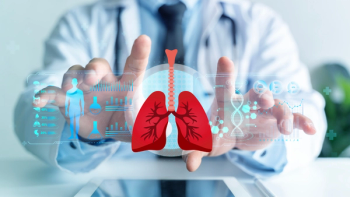
Dr. David DiBardino explains how intratumoral therapy is being studied to deliver treatment directly into tumors and potentially enhance radiation in patients with locally advanced non-small cell lung cancer.
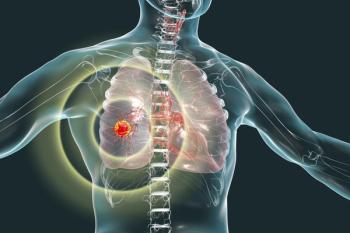
In patients with advanced ROS1-positive lung cancer who had not previously received a ROS1-targeted drug, Jideytro also shrank tumors that had spread to the brain in all 10 evaluable patients.

An estimated 70% of patients with stage 3 lung cancer do not see their tumors respond to standard treatment. An expert explains why, and what a new approach aims to change.
Three new studies from WCLC 2026 show strong results in ROS1-positive NSCLC, EGFR-mutant NSCLC and relapsed small cell lung cancer, offering fresh options.
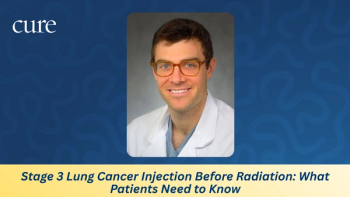
Four of seven patients had no visible cancer on scans in early data from CONVERGE, a trial testing a tumor injection meant to boost radiation in lung cancer.
FDA approves an updated Ibtrozi label for locally advanced or metastatic ROS1-positive NSCLC, reflecting nearly four years of response data.
In the phase 3 DESTINY-Lung04 trial, patients with HER2-mutant advanced non-small cell lung cancer treated with Enhertu went a median of 14.3 months without their disease worsening, compared with 8.3 months with immunotherapy plus chemotherapy.
In the phase 3 ADAURA trial, 79% of patients who took Tagrisso for three years after lung cancer surgery were alive at eight years, compared with 64% of patients who received a placebo.
WCLC 2026 brought new lung cancer data on HER2-mutant, PD-L1-positive and EGFR exon 20 insertion-positive non-small cell lung cancer. Here's what patients should know about three key studies.

Diagnosed with peritoneal mesothelioma at 21 and given 18 months to live, a survivor reflects on what turning 40 means nearly two decades later.
Lung cancer treatment has changed rapidly since 2021, with new targeted drugs, immunotherapy and treatments designed to overcome resistance.

FDA grants accelerated approval to Hyrnuo (sevabertinib) for certain patients with HER2-mutated, advanced or metastatic non-small cell lung cancer.
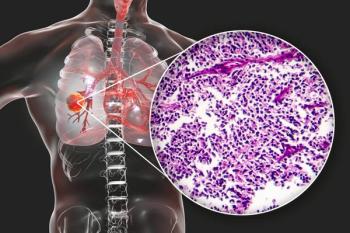
T-cell engagers and other cellular therapies could help the immune system recognize and target lung cancer, including small cell lung cancer.
NEJM-published phase 1/2 data show RASONQUE achieved a 42% response rate and 89% disease control in RAS mutant metastatic lung cancer.
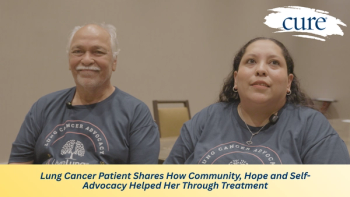
Lung cancer patient and her father, a cancer survivor and caregiver, share how community, hope and self-advocacy helped them through treatment.
Tagrisso plus Orpathys improved progression-free survival in patients with EGFR-mutated lung cancer and MET overexpression, SANOVO trial shows.
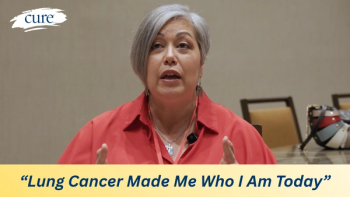
Juanita Segura shares her nearly 12-year lung cancer journey, the power of community and why she advocates for biomarker testing and hope.
The phase 3 DESTINY-Lung04 trial met its main goal of keeping cancer from growing longer than chemotherapy plus immunotherapy did.
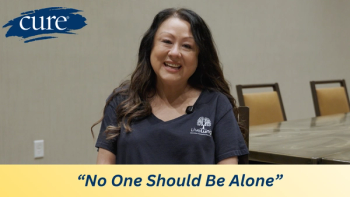
Lung cancer advocate Katie shares how losing her father to the disease and her own cancer journey inspire her work with LiveLung today.
At least half of patients get nervous before a follow-up scan. Dr. Geoffrey Pelz explains why that is common, what he wants patients to hear at the first visit and how much lung cancer treatment has shifted in 15 years.
An incidental CT scan revealed stage 1A lung cancer. After robotic surgery at Hackensack University Medical Center, Carolyn Rothfeld describes a recovery that took longer than she expected.
Advertisement
Advertisement
Trending on CURE
1
Why PSA Monitoring Matters After a Prostate Cancer Diagnosis
2
ESMO 2026 Preview: 5 Late-Breaking Trials Patients Should Watch
3
Rectal Cancer Tumor DNA Fell From 45.8% to 8.7% After Chemotherapy
4
What Breast Cancer Awareness Month Leaves Out
5