




Lung Cancer
Latest News

Advertisement
Advertisement

Each month, we take a look back at the most popular CURE® stories. Here are the top five stories for March 2021.

The FDA recently approved an expanded indication for Lorbrena as a first-line treatment option for a subset of lung cancer that has spread to the brain. Compared to previously-approved options, experts say Lorbrena is more effective.

Previously, treatments for patients with extensive-disease small cell lung cancer were limited with a poor prognosis. Researchers sought to investigate if Opdivo plus Yervoy or Opdivo alone would improve survival.

Here is a list of some recent trials that launched within the cancer space in March.
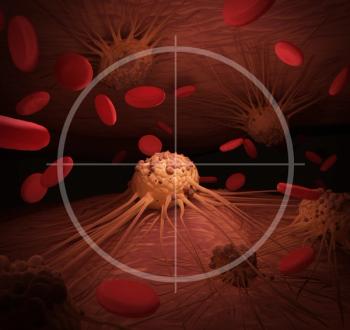
The FDA’s fast track designation to poziotinib for use in previously treated patients with non-small cell lung cancer whose disease harbors a certain genetic mutation, may open the doors to an accelerated approval.

In the field of lung cancer, a number of current studies evaluating the efficacy of adoptive cellular therapies may one day offer patients with non-small cell lung cancer a “high risk, high reward” treatment option, according to Dr. Ben Creelan of the Moffitt Cancer Center.

A trial investigating a novel drug plus the chemotherapy docetaxel failed to show a survival benefit in patients with previously treated locally advanced or metastatic non–small cell lung cancer.

As the population ages, the incidence of older adults being diagnosed with lung cancer is increasing, though data on how to specifically treat this population are lacking.

The National Comprehensive Cancer Network (NCCN) recently released the best practices for the management of COVID-19 infection in patients with cancer.

The FDA’s recent approval of Cosela to reduce the frequency of chemotherapy-induced bone marrow suppression in adults who are receiving certain types of chemotherapy for extensive-stage small cell lung cancer is a “breath of fresh air,” according to an expert.
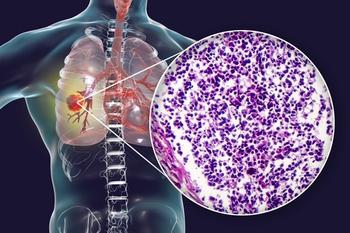
An expert discusses ways that small cell lung cancer is diagnosed, how to treat it and how to pivot if the disease spreads or recurs. He also focuses on efforts in the clinical trial space to potentially treat patients more effectively.

The US Preventive Services Task Force now recommends lowering the age and smoking history requirements for people to receive annual lung cancer screening.

The GO2 Foundation for Lung Cancer (GO2 Foundation) announced its leadership in the launch of an important multi-institutional study to determine how to improve the participation of Black communities in lung cancer clinical trials.

A roundup of some of the latest news and updates for patients with lung cancer from CURE®.

View the full CURE Educated Patient Lung Cancer Summit on demand.

Merck – the manufacturer of Keytruda (pembrolizumab) – is pulling the immunotherapy drug’s indication for patients with metastatic small cell lung cancer whose disease progressed on or after platinum-based chemotherapy and one or more prior line of therapy.

The International Association for the Study of Lung Cancer recently joined more than 100 cancer centers and organizations in urging leading public health officials to prioritize administering the COVID-19 vaccine to cancer survivors and patients undergoing treatment for the disease.

This approval expands a previous accelerated approval of the drug in 2018, allowing it for use in patients with brain metastases.

The data, according to the study authors, confirm a recent Food and Drug Administration approval of the regimen and support its use in the front-line treatment of patients with advanced non-small cell lung cancer.

A young mother and athlete discusses receiving a shocking diagnosis of stage 4 lung cancer and her incredible response to treatment with a single, targeted drug.
Advertisement
Advertisement
Trending on CURE
1
FDA Approves Jemperli for dMMR Locally Advanced Rectal Cancer
2
Gemcitabine Plus BCG Clears Bladder Cancer in 96% of Patients After BCG Failure
3
New Myelofibrosis Guidelines Back Wider Gene Testing at Diagnosis
4
FDA Clears AI Tool Using MRI to Gauge Breast Cancer Recurrence
5