




A new grant program offers financial assistance for patients with mesothelioma who must travel for cancer care.
A new grant program offers financial assistance for patients with mesothelioma who must travel for cancer care.

Each month, we take a look back at the most popular CURE® stories. Here are the top five stories for November 2020.

Living with cancer is not dissimilar to the challenges the COVID-19 pandemic is presenting all of us, but living with cancer during this pandemic is a challenge all to itself, a tough balancing act to pull off.

Drugs that target certain gene mutations are improving survival rates for patients with lung cancer.

Patients with mesothelioma are living longer thanks to new drug combinations – including the first FDA-approved regimen in 15 years.

As our understanding of lung cancer broadens, experts are now looking to rare genomic alterations that lead to aggressive lung cancer.
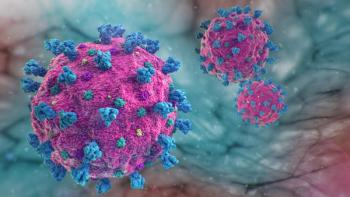
Patients with lung cancer should take all recommended precautions against COVID-19, but they must also keep up with their cancer care, doctors advise.

Bonnie Addario, a 16-year lung cancer survivor, shares a message of hope and invites you to ‘The Living Room.’
CURE® spoke with Dr. David Cooke, on behalf of the American Lung Association, on addressing racial disparities in lung cancer screening and care.
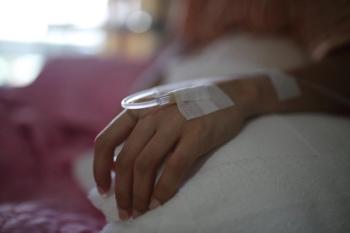
Among patients with extensive-stage small cell lung cancer, several groups were found to receive chemotherapy less often compared with White patients. They included Black, older and uninsured patients as well as those with nonprivate health insurance.

The cost of cancer care is often an insurmountable challenge for many patients, in particular patients with lung cancer. Many of whom will die because they cannot afford treatment. Health care costs must not compromise care.
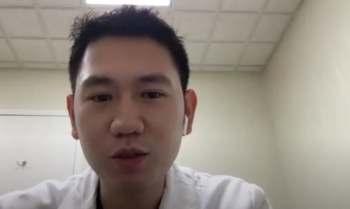
Doctor turned patient with cancer, Dr. Dan Tran, discusses how research and new medicine can help your hang onto hope during the cancer journey.
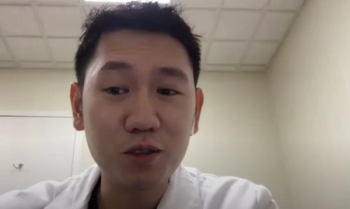
Dr. Dan Tran discusses his stage 4 lung cancer diagnosis at age 30, and how he has managed the shift from doctor to the patient with cancer.

Ultra-precise drug targeting brings new hope for patients with non-small cell lung cancer that harbors rare mutations.

Here is a list of some recent trials that launched within the cancer space in October.
In this episode of the “CURE Talks Cancer” podcast, we looked back on CURE’s Lung Cancer Heroes event and recognized each winner that helps bring together the lung cancer community to raise awareness.

The FDA’s approval or Opdivo (nivolumab) and Yervoy (ipilimumab) for the frontline treatment of patients with unresectable malignant pleural mesothelioma was desperately needed, says a thoracic oncologist at Memorial Sloan Kettering Cancer center. However, some questions remain.

Bonnie Addario, our co-founder, board chair, survivor, and inspiration for thousands of patients here and around the world, shares the powerful stories of lung cancer patients and how they found ways to survive – and thrive -- in her book, The Living Room.
Two physicians, a nurse and a patient advocate were honored during CURE®’s first ever Lung Cancer Heroes program.

Larry Whipple had to travel 1,500 miles from his hometown for a second opinion after he was diagnosed with advanced lung cancer, but through the course of his treatment he had to remain in isolation to avoid further illness.

The Food and Drug Administration’s approval of Opdivo in combination with Yervoy for patients with unresectable malignant pleural mesothelioma marks the first new systemic therapy approved in more than 15 years in this setting.

There is no approved treatment that targets the KRAS p.G12C mutation that drives some cancers like non-small cell lung cancer. But a recent study shows how the experimental drug sotorasib sparked responses in some patients with advanced non-small cell lung cancer that harbored the mutation.

Four exceptional heroes will be honored along with the Lifetime Achievement award winner, who has provided a significant impact in the lung cancer community.

The addition of immunotherapy to radiotherapy increased the overall survival of patients with cancer who developed brain metastases, according to new research.