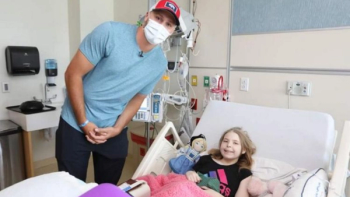
Hannah was 11 when she was diagnosed with acute lymphoblastic leukemia (ALL). Four years, two relapses and a 53-day hospital stay later, she is back in school.
FDA expands access to CAR-T cell therapy for patients with relapsed or refractory PCNSL.
The U.S. Food and Drug Administration (FDA) has approved an update to the prescribing information for Yescarta (axicabtagene ciloleucel), removing previous limitations of use for adults with relapsed or refractory primary central nervous system lymphoma, according to a news release from Kite, a Gilead Company.
This allows broader access to the CAR-T cell therapy for patients with this rare and aggressive form of non-Hodgkin lymphoma based on safety findings from a phase 1 study.
Primary central nervous system lymphoma, often called PCNSL, begins in the brain, spinal cord, eye or cerebrospinal fluid. It remains difficult to treat and has historically been associated with poor outcomes. Approximately half of patients see their disease return after initial therapy and survival after relapse has been reported at about two months, underscoring the need for additional treatment options.
With the updated label, Yescarta is now the only CAR-T cell therapy approved for relapsed or refractory large B-cell lymphoma to have this prior limitation removed for eligible patients with PCNSL.
The FDA’s decision was based on results from a phase 1 investigator-sponsored safety study conducted by the Dana-Farber Cancer Institute that included patients with relapsed or refractory PCNSL.
Among 13 patients with PCNSL treated in the study, neurologic toxicities occurred in 85% (11 of 13 patients). Grade 3 (severe) neurologic toxicities were reported in 31% (4 of 13 patients).
Grade 3 or 4 (life threatening) side effects included hypotension in 23% (three of 13), encephalopathy in 15% (two of 13), seizure in 15% (two of 13), and several other side effects each occurring in 8% (one of 13), including gait disturbance, headache, hypoxia, muscular weakness, nausea, pyrexia, thrombosis and tremor.
Investigators reported no new safety signals and described the safety profile as manageable, supporting removal of the earlier restriction.
PCNSL affects an estimated 1,500 people in the United States each year. It accounts for 3% of all primary brain tumors and 1% of all cases of non-Hodgkin lymphoma. The five-year survival rate has historically been about 30%, highlighting ongoing unmet needs for patients with cancer facing this diagnosis.
The phase 1 safety study enrolled 18 total patients, including 13 with PCNSL and five with secondary central nervous system lymphoma. The first six participants were observed specifically for treatment-limiting toxicities.
The primary goal of the study was to evaluate safety. Researchers measured the rate of treatment-limiting toxicities and grade 3 or higher side effects.
Secondary goals included evaluating objective response rate, complete response rate, duration of response, progression-free survival and overall survival.
Yescarta is a CD19-directed genetically modified autologous T cell immunotherapy. It is already indicated for several types of relapsed or refractory large B-cell lymphoma and follicular lymphoma. The updated labeling now clarifies that patients with relapsed or refractory PCNSL are not subject to the previous limitation.
Yescarta carries a boxed warning for cytokine release syndrome, neurologic toxicities and secondary hematological malignancies.
Cytokine release syndrome (CRS) occurred in 90% (379 of 422) of patients with non-Hodgkin lymphoma across studies, including grade 3 or higher side effects in 9%. In large B-cell lymphoma specifically, CRS occurred in 93% (256 of 276) with grade 3 or higher side effects in 9%. Median onset ranged from two to three days after infusion and median duration was seven days.
Common CRS symptoms included fever (85%), hypotension (40%), tachycardia (32%), chills (22%), hypoxia (20%), headache (15%) and fatigue (12%). Severe cases may involve cardiac or respiratory complications.
Neurologic toxicities were also frequent. Across studies in non-Hodgkin lymphoma, neurologic side effects occurred in 78% (330 of 422), with grade 3 or higher events in 25%. In patients with PCNSL specifically, neurologic toxicities occurred in 85% (11 of 13). The median time to onset was three days and the median duration was 59 days. Some patients had ongoing neurologic symptoms at the time of study withdrawal, death or data cutoff.
Reported neurologic effects in PCNSL included confusional state, headache, somnolence, attention changes, lethargy, tremor, gait disturbance, hypersomnia, insomnia and seizures.
Serious infections occurred in 45% of patients with non-Hodgkin lymphoma and grade 3 or higher infections occurred in 17%. Other risks include prolonged low blood counts, hypogammaglobulinemia, hypersensitivity reactions and the potential for secondary malignancies.
Patients receiving Yescarta are advised to be closely monitored after infusion for signs of CRS, neurologic changes and infection, and to seek immediate medical attention if symptoms develop.
For more news on cancer updates, research and education, don’t forget to