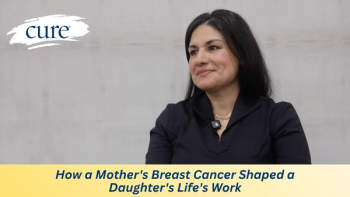
Rina Bello was working at Bay Area Cancer Connections when her mother was diagnosed with breast cancer. Today she leads the organization, which has offered free support to patients and caregivers for 33 years.
A cervical cancer survivor tells her story of how a MLM company urged her to use her diagnosis to sell more products.
At the time of her cervical cancer diagnosis in 2015, Emily Lynn Paulson was involved in a multi-level marketing (MLM) company — a business where individuals sign up to sell products, and then are encouraged to recruit others to distribute under them.
“When I got the diagnosis, I thought ‘OK, I’m going to have to step back and take a break from this,” Paulson said in an interview with CURE®. “I was really encouraged by the people in my upline (saying), ‘Use this to your advantage. You’re going through this thing. People love personal stories, people love vulnerability.’”
After Paulson was diagnosed, others in the company encouraged her to use her diagnosis to sell more products; she said that this type of emotional manipulation was not an uncommon tactic to make more money.
READ MORE:
Meanwhile, Paulson underwent a trachelectomy (cervix removal) and was working on getting sober after her bout with cancer. Two years later, she received a second diagnosis, which led to a hysterectomy, and more doubt about the company she was working for. Eventually, when the COVID-19 pandemic hit, she said she realized how predatory these sales tactics were and left the company to become a sobriety coach and author of the book, “Hey Hun: Sales, Sisterhood, Supremacy, and the Other Lies Behind Multilevel Marketing.”
“Being in an MLM, you really target people’s pain points… there’s a solution to every pain point; it’s just a very predatory design,” she said.
In this episode of the “Cancer Horizons” podcast, Paulson discusses her cancer experience, life in the MLM, sobriety and more.
For more news on cancer updates, research and education, don’t forget to