
Hargitay shared her thoughts with CURE regarding her father’s journey, her motivation for speaking out now, and the key message she wants to convey to patients today.
Hargitay shared her thoughts with CURE regarding her father’s journey, her motivation for speaking out now, and the key message she wants to convey to patients today.
Jen Christensen, RN, BSN, MSN, of City of Hope Orange County, brings deep personal experience with cancer loss to her role as a nurse manager, combining clinical excellence with compassionate, family-centered care.
Rob Lowe joins CURE Talks Cancer to share his grandmother's breast cancer journey, including the clinical trial that helped prolong her life after she was twice told to get her affairs in order.

A UCLA study found patients with cancer who used biosimilars paid less out of pocket, and their insurers paid far less, than those on brand-name biologics.
Zachary Rieke, of MD Anderson Cancer Center, pioneered a screening tool to identify and address food insecurity among pain management patients.
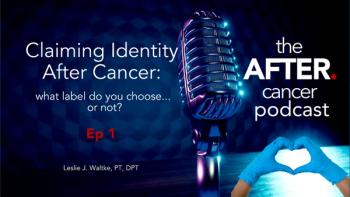
Leslie Waltke's new podcast explores how cancer labels like 'survivor,' 'patient' and 'victim' evolved — and why no single word fits everyone.
A cancer survivor shares what happens when a routine surveillance scan brings an unexpected finding — and how she navigated scanxiety, surgery, and an NED result.
“For nearly 11 years, my sister measured her cancer fight in holidays—wondering if she'd see spring again, or one more Christmas.”
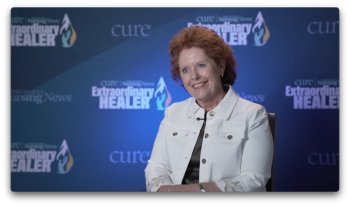
Tammy Zinn, a finalist for the Extraordinary Healer Award, reflects on the personal loss that led her to oncology nursing and the programs she built to support patients.
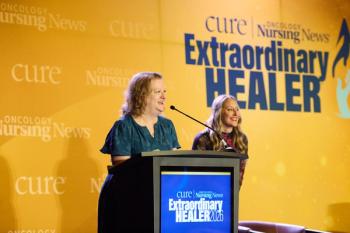
In a Q&A with CURE, oncology nurse Jill Winther reflects on advocacy, holistic care, and what's kept her in the field for 35 years.
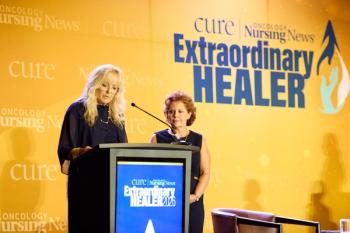
Oncology nurse Tammy Zinn, an Extraordinary Healer finalist, discusses hope, advocacy, and launching Emma's Wish for patients with cancer.
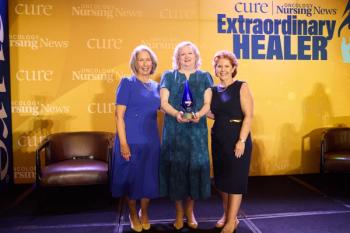
Oncology nurse Jill Winther discusses why understanding treatment reasoning and advocating for patients matters most in cancer care.
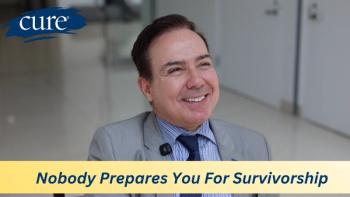
Psychologist Ian Sadler explains why many patients with cancer face anxiety and emotional challenges after treatment ends and why mental health support matters.

Appeals, peer-to-peer reviews and external reviews often overturn insurance denials, helping patients access recommended cancer care.
Dr. Maurie Markman, joins The Moonlight Shift to discuss precision medicine's real-world limits, oncology's cost crisis, CAR-T in solid tumors, and the decision support gap costing patients.

Oncology nurse Jill Winther was honored for decades of patient advocacy, education and compassionate support across cancer care settings.
At ONS Congress 2026, Elianna Tobin shared how nurse navigator outreach helped patients feel more prepared before cancer appointments.

Michele Kranz, discussed how oncology nurse navigators like herself support patients with cancer through education, advocacy and care coordination.
MD Anderson’s trial uses psilocybin and psychotherapy to treat cancer-related anxiety, helping patients thrive through neuroplasticity.
Dr. Samyukta Mullangi shares how AI can help patients understand oncology visits, ask better questions, and feel more engaged in their care.
Dr. Ramy Sedhom highlights screening and care pathways that improve outcomes and strengthen psychosocial support for patients with cancer.
Dr. Ramy Sedhom discusses how embedded psychosocial care in oncology may improve access, engagement and emotional support during cancer care.
Although AI can support complex oncology decision-making, physician judgment remains critical to ensuring safe, individualized patient care.
Caroline Taylor discusses how disparities in access and resources affect diagnosis, treatment, and survival for patients globally.
At NCCN 2026, Anjali Albanese discussed how young adults with cancer face grief, isolation and loss of control that impact their emotional well-being.
A leukemia survivor shares how her experience inspired a national support network for young adults navigating cancer and survivorship.
An expert highlights global barriers to cancer care and outlines solutions to improve access, education and equity for patients worldwide.
My smile today is one of compassion. It’s a smile that welcomes the stranger I meet. It radiates joy and presence.
Christine Fader shares how her husband’s past trauma shaped his cancer treatment experience and why awareness and patient empowerment matter.
Coverage from NCCN 2026 highlights global care delivery, younger patient needs, survivorship strategies and safer immunotherapy management.