

CURE® surveyed its audience to see if cancer has affected their identity. Here’s what they have to say.
CURE® surveyed its audience to see if cancer has affected their identity. Here’s what they have to say.

My body and mind go through a lot before and after cancer scans. Here is how I bounce back.

When I experienced an alcohol and cancer relapse, I fell into a depression. Thankfully, clinicians, loved ones and medicine helped.

Here are a few tips I’ve found that helped me regain a sense of control after being diagnosed with breast cancer.

The risk for psychiatric disorders increased for spouses of patients with cancer compared with those whose partners did not have cancer.
CURE® surveyed its audience to learn how they celebrate milestones in their experiences with cancer, if they do at all. Here’s what they have to say.
As a cancer survivor, major medical appointments cause a great deal of stress. It took my dog throwing up to make me snap out of it.

In 2023, instead of looking over my shoulder to see how cancer has invaded every aspect of my life, I’m vowing to face forward. No fear. No uncertainty. No what-ifs.

Now that I’m six years out of my breast cancer treatment, people assume that I’m better and lack empathy. However, my anxiety is still high.

Through a survey on social media, CURE® collected responses on what terms people prefer when describing their cancer experiences. Some people who have experienced cancer explain why they have embraced the terms "thriver" and "warrior."

CURE® surveyed its audience to see which terms they prefer to use when describing their cancer experiences. Some people who have experienced cancer explain their mixed feelings with the commonly used terms “patient” and “survivor.”
I recently came across a Twitter thread where people were shaming a cancer survivor’s decisions, forcing me to step back before reacting.

CURE® surveyed its audience to see which terms they prefer using when describing their cancer experiences. Some people who have experienced cancer explained why they dislike certain labels.

Study findings showed that anxiety and depression may not decrease over time in patients with testicular cancer, emphasizing the importance of discussing symptoms with cancer teams.

A kidney cancer diagnosis may negatively affect a patient’s mental health; however, exercise may help put them at ease.

Going through chemotherapy treatment was extremely difficult, and eventually I learned that sometimes, it’s OK to not be OK.

CURE® surveyed its audience to see how they cope with “scanxiety,” the anxiety surrounding cancer scans. Here’s what they had to say.

An expert recommends that cancer survivors and patients take several actionable steps to improve their quality of sleep.

When I found myself struggling with anxiety and depression after cancer and COVID-19, I decided a therapy dog might be a good idea, so I adopted one.

A patient with prostate cancer under active surveillance may encounter the fear that their cancer might progress, causing stress and anxiety. However, HIIT workouts may help put them at ease.
There are ways to manage the fear of cancer recurrence, so it doesn’t become overwhelming or debilitating. Physicians like me and a network of resources are here to help.
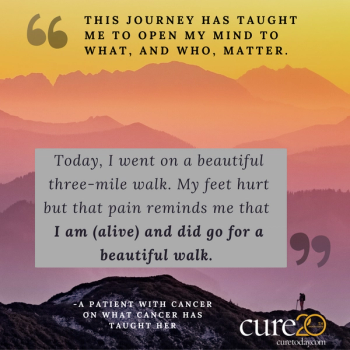
CURE® surveyed its audience to gather insight into what unexpected lessons cancer has taught them. Here’s what they had to say.

CURE® surveyed its audience to see how cancer-related pain or treatment-related side effects interfered with their ability to be independent. Here’s what they had to say.

I grew up in a society where mental health was stigmatized, but cancer made me realize that it helps to speak up about these issues.

I never thought I’d admit experiencing fear of cancer recurrence, but at a recent medical appointment I realized that I struggle with this fear daily.
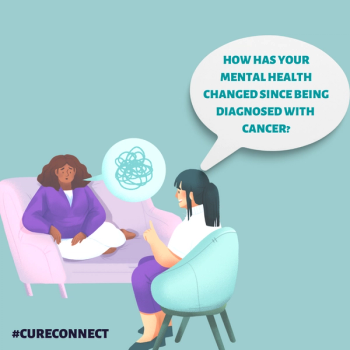
CURE® surveyed its audience to see how their cancer diagnosis affected their mental health. Here’s what they had to say.

Cognitive therapy, teletherapy, journaling and taking up other daily activities may help cancer survivors overcome their fear of recurrence.

Cancer is talked about more openly nowadays, and while watching a movie with my daughter, a scene portraying a character in hospice care gave me flashbacks to our cancer experience.

CURE® surveyed its audience to see how they cope with fear of cancer recurrence. Here’s what they had to say.
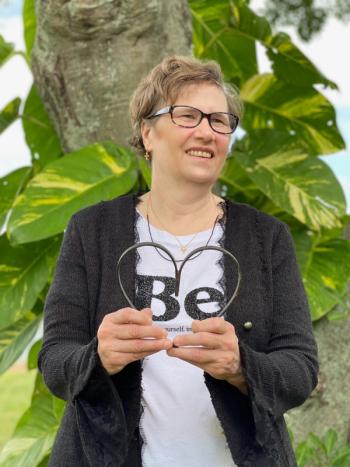
Prior to my breast cancer diagnosis, my only goal in life was for my son to turn 16 so he could drive me to and from the local bars. Now I can’t help but think that my cancer was meant for me to change my life.