








Getting kidney cancer treatment during the COVID-19 pandemic.
Getting kidney cancer treatment during the COVID-19 pandemic.

Kidney cancer positives that might come from this pandemic.

How kidney cancer affects the risks of coronavirus.
Cancer patients sometimes require blood due to anemia, blood loss during surgery, or as a result of negative side effects radiation or chemotherapy have on platelet or red blood cell counts.
A message from the KCA’s CEO and President about COVID-19.
Here is a roundup of the latest news and updates for patients with Chronic Lymphocytic Leukemia from CURE.
Kidney cancer changed how Tracie saw her world.

On his motorcycle, Stewy rides for kidney cancer.
A clinical trial and a positive attitude helped Bill Brown ring the bell.

Dawne Gee worked hard to get answers about her kidney cancer.
“These results continue to support pembrolizumab (Keytruda) plus axitinib (Inlyta) as a standard of care for patients with previously untreated advanced RCC,” said lead study author Dr. Elizabeth R. Plimack.
A cancer survivor explains why being in remission feels similar to worrying about getting COVID-19.

From the Food and Drug Administration asking pharmaceutical companies to voluntarily recall metformin, a type 2 diabetes medication, as it contains high levels of the cancer-causing contaminant NDMA to an NHL team’s fanbase showing support to a player as he finishes treatment for Ewing sarcoma, here’s what is making the headlines in the cancer space this week.

Patients participating in phase 1 clinical trials could benefit from the integration of palliative care, according to data presented at the 2020 ASCO Virtual Scientific Meeting.

“The superior efficacy of venetoclax-obinutuzumab has been observed and maintained in the current follow up,” Dr. Othman Al-Sawaf, of University Hospital of Cologne in Germany, said during a pre-recording presentation at the 2020 ASCO Virtual Scientific Program.
A breast cancer survivor reflects on the double mastectomy and reconstruction process two years out from beginning the process.
“Collectively, these results support acalabrutinib (Calquence) use in upfront CLL,” said Dr. John C. Byrd. “This is compounded and supported by two additional phase III studies that have been completed with this agent.”

Results from an early-phase trial showed that cirmtuzumab plus Imbruvica is safe and efficacious in treating patients with relapsed/refractory MCL and CLL.
Knowledge is power, and using that is vital on the cancer journey.
Viewing scars associated with cancer can be a difficult thing, but with a little understanding, it can become easier.
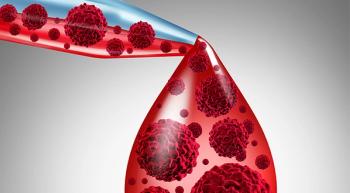
One survivor has advice for others affected by both cancer and the COVID-19 pandemic: Accept your limitations.

Each month, we take a look back at the most popular CURE® stories. Here are the top five stories for May 2020.

Dr. Brad S. Kahl discusses the unique challenges that occur when treating patients with indolent non-Hodgkin lymphoma.
"Good luck, and if you can’t keep your hair, just remember it puts a bad hair day in perspective."
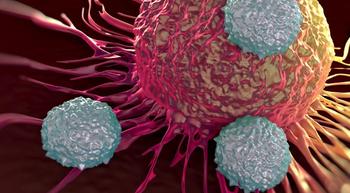
CC-92480, a novel cereblon E3 ligase modulator agent, in combination with dexamethasone appeared safe and active in patients with heavily pretreated relapsed or refractory multiple myeloma, according to data presented during the 2020 American Society of Clinical Oncology (ASCO) Virtual Scientific Program.
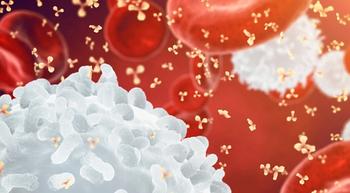
“Altogether, this pharmacological data supports the concept of CAR T-cell therapy being able to overcome MCL disease with poor risk factors,” said lead study author Dr. Luhua (Michael) Wang.
COVID-19 and cancer are very different in how they work in the body, but the psychosocial challenges they present are also very familiar.
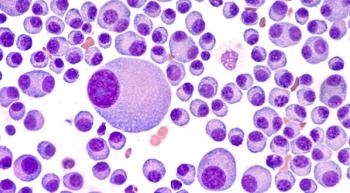
The addition of the novel drug Xpovio to the regimen of Velcade and dexamethasone delayed disease progression, reduced peripheral neuropathy and required fewer office visits in a study of previously treated patients with multiple myeloma.
New findings, presented at the 2020 ASCO Virtual Scientific Program, suggest that the standard of care for newly diagnosed patients with multiple myeloma remains as Kyprolis triplet does not improve outcomes.

“The approval of this new firstline metastatic EGFR-mutated non-small cell lung cancer regimen … is an important milestone in the treatment of this disease,” said Dr. Edward Garon.