
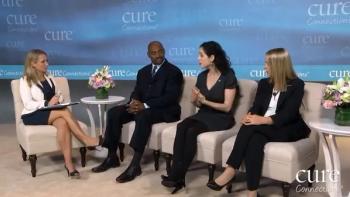
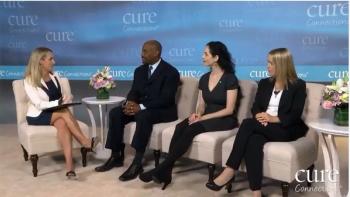
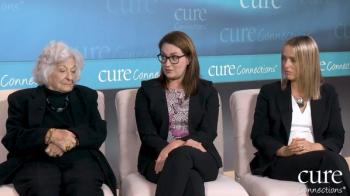
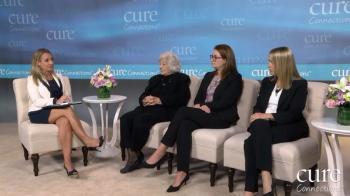
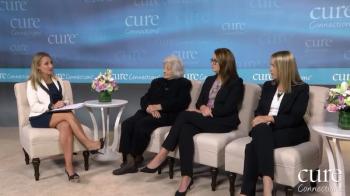
A panel of caregivers drew upon personal experience to offer advice and ideas to those in this role.
A panel of caregivers drew upon personal experience to offer advice and ideas to those in this role.
In this week’s episode of CURE Talks Cancer, we spoke with Jill Kelly – wife of Pro Football Hall of Fame Quarterback Jim Kelly – about his bout with head and neck cancer, and how she copes as a caregiver.
I poignantly remember an eloquent wife of a patient who died of acute leukemia shared her analogy with me. She stated, “You know when my dog died, I got a card from my vet. When my husband died, I got nothing.”

In a recent survey, researchers from the University of Colorado Denver found a variety of predictors that affect caregiver burden, and how psychological resilience and future interventions can help.

At the GI Cancer Patient Summit, a panel of caregivers drew upon personal experience to offer advice and discuss what more can be done for individuals in this role of the cancer journey.
In this week’s episode of CURE Talks Cancer, we spoke with Matt Lashey, creator and CEO of the chemoWave app, which is designed to manage cancer symptoms and conditions by keeping track of a patient’s overall well-being to understand how their experiences may be related to feeling better or worse during treatment.
Eighty-nine percent of caregivers of young adult colorectal cancer survivors are depressed because they can’t take the pain away, according to findings from the Raymond Foundation, an advocacy organization that aims to eradicate colon cancer.
I learned a lot during my time as a caregiver, and plan to carry that over in my career as an oncology nurse.
Remission may put an end to the disease, but it does not always stop the feeling of being lost.
I had my own complete life external to cancer. I also had my life within the constant reality of cancer.
November is National Family Caregiver month. Let's give the caregivers the shout out they deserve!

November is National Family Caregivers Month. CancerCare’s Caregiver Program Coordinator, Carly O'Brien, OSW-C, LCSW, shares her thoughts on why it’s important to have an awareness month dedicated to caregivers, and the importance of acknowledging the work that caregivers do.
Surviving cancer just got easier, thanks to these angels.