
A recent survey demonstrated the common tradeoffs most patients report regarding treatment decisions, highlighting the importance of shared decision making.
A recent survey demonstrated the common tradeoffs most patients report regarding treatment decisions, highlighting the importance of shared decision making.

The high cost of treatment for cancer places a heavy burden on patients and their families, often leading to stress-related illnesses. Is there a solution?
Even living in a country with socialized medicine, cancer debt is an unfortunate side effect of treatment, making holiday shopping a challenge
Health care shouldn't be a fight, but it is. I tell my story of fighting for an MRI in a hope that I illuminate the cracks in our system in a hope we can make change, so no one falls through those cracks.

What’s the best plan for lowering cancer drug prices? A panel of experts debated the possibilities.
Cancer is costly. What if I did not have health insurance or a steady paycheck? Would I have fallen through the cracks and died of metastatic breast cancer before anybody told me I was sick? An exercise in role-playing taught me that there is help available.

When Paul Isenberg’s wife, Nicole, was diagnosed with stage 4 Hodgkin lymphoma shortly after the birth of their child, Gabrielle, the couple realized two things: how blessed they were and that some people going through cancer have nobody to turn to.

Individuals are willing to make great sacrifices to pay for their cancer treatment.
For some with overwhelming medical expenses, bankruptcy can offer a solution.

Take a look at the top five CURE stories of July 2018 in this video.
The increase in health insurance deductibles has affected health care for many cancer patients. These changes contribute to unnecessary stress in the lives of some affected by breast cancer. Read one survivor's viewpoint.
A recent study found that socioeconomic status can play a role in survival for patients with anal cancer.
The health care experts call it financial toxicity. I call it an agonizing, stress-inducing, horrifying choice between financial ruin and treatment of a life-threatening disease.
If passed, the H.R. 2976 bill would defer student loan payments for individuals who are undergoing cancer treatment. Hear what one advocate had to say about it.
Sometimes it pays to play the cancer card.

According to findings from the ASCO Annual Meeting, insurance disparities still exist, and may even contribute to cancer-specific and comorbidity-associated mortalities in patients with early-stage non-small cell lung cancer.

While many advocacy groups set out to raise money for cancer research, a first-of-its-kind charitable crowdfunding platform, called Sound Affects, has set out to change how the war on cancer is fought and financed, all with support from musical talents.
The group is seeking 1,000 people, diagnosed with breast cancer before the age of 40, to complete an online survey about how the journey affected them financially. The survey will support the organization’s efforts to bring more benefits to patients in need.
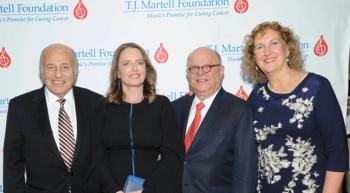
Fueled by the tragic loss of their son, Tony and his wife Vicky Martell built the foundation by working closely with their passionate friends in the music industry to continue his legacy and expand the foundation’s fundraising initiatives every year.

Recovery from cancer doesn’t just involve physical health; it often involves overcoming the financial barriers between illness and wellness that make moving forward seem impossible.
Being unsure of medical coverage can cause cancer patients undue stress, which is very unhealthy.
When you're fighting for your life, you shouldn't have to worry about going into debt because of cancer-related costs
In this episode, we’ll talk with founder Donna Deegan herself about the foundation and its efforts, as well as the foundation’s executive director Amanda Napolitano on how much they have raised so far, and we’ll hear from one very inspiring participant Hollis Youngner.
Within a complex and expensive health system, there are ways to cut both individual and societal costs without harming the quality of care.
There is no doubt that cancer can be costly, but there are some things you can do to help lessen the financial impact of the disease.

Researchers from Israel, the United Kingdom (UK) and Canada sought to determine the cost-effectiveness of Keytruda for the second-line treatment of patients with advanced bladder cancer. Drug costs were compared between the US, UK, Canada and Australia.

Until recently, Herceptin, which is used to treat patients with metastatic breast cancer, was fully covered under Humana’s South Florida Medicare Advantage plans. But, after taking it off the preferred drug list, patients will now be responsible for 20 percent of the drug’s cost, better aligning South Florida’s plans with Humana’s other Medicare Advantage plans.

For many cancer survivors, returning to work can be both exciting and anxiety-inducing. Knowing your rights and making a plan can help ensure a smooth transition.
No matter how expensive treatment was, we didn’t want to put a price tag on my sister’s life.
A major insurer takes a 20-year, first-line standard treatment off its preferred list in one market. But where will it end?