Naturally, newly diagnosed patients with multiple myeloma have a lot of questions for their physicians. Dr. Joshua Richter had the time to discuss some of them.
Naturally, newly diagnosed patients with multiple myeloma have a lot of questions for their physicians. Dr. Joshua Richter had the time to discuss some of them.
Real-world data shows that CAR-T therapy can lower costs for patients with pre-existing comorbidities outside of the clinical setting.

New findings show that Ibrance has the potential to help patients with brain metastases that harbor a CDK pathway alteration.

At the 2019 San Antonio Breast Cancer Symposium, Khevin Barnes advocated on behalf of men with breast cancer, but also advocated for more men with breast cancer to join him.

At the 2019 MPN Heroes® event Tammy Matuska, B.S.N., RN, known as the "lifeline to patients," was honored for her outstanding work for patients with MPN.

At CURE’s Educated Patient Summit on Multiple Myeloma Dr. Shebli Atrash had the chance to further discuss with CURE what questions he addresses most when patients with multiple myeloma undergo diagnostic testing.

Dr. Cesar Rodriguez offers a message of hope and self-determination for patients with multiple myeloma.

When others assume that patients with lung cancer must have smoked to get the disease, this stigma can affect patient outcomes.
Immunotherapy in combination with chemotherapy is becoming a popular treatment for patients with lung cancer, but patients need to understand the side effects.
An overview of the therapies available for patients with diffuse large B-cell lymphoma (DLBCL) and transformed follicular lymphoma.
There is plenty of scientific data about the physical challenges patients with cancer endure, but more is needed to address psychosocial issues.

Pancreatic cancer doctors and researchers share what motivates them to do better for pancreatic cancer patients.
The Elvin Howard, Sr. Pancreatic Cancer Advocacy Foundation (Elvin Howard, Sr. PCAF) and Let’s Win have released a new public service announcement (PSA) to raise awareness of pancreatic cancer in people of color.
To combat the stigma around mental health care for patients with lung cancer, survivor Nancy Cohen shares her own treatment story and why she feels it's important to include mental health care during cancer treatment.














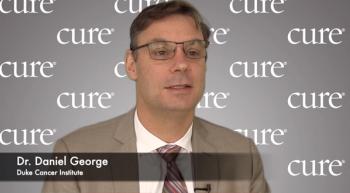
The addition of novel agents in the prostate cancer treatment landscape could create a shift in the way patients with advanced disease are treated, said Dr. Daniel George.