
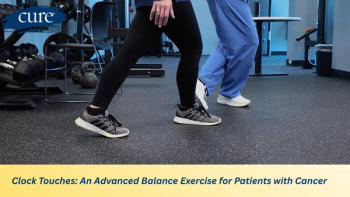
Build balance, leg strength, and core stability with Clock Touches, an advanced balance exercise designed for patients with cancer and survivors.
Build balance, leg strength, and core stability with Clock Touches, an advanced balance exercise designed for patients with cancer and survivors.
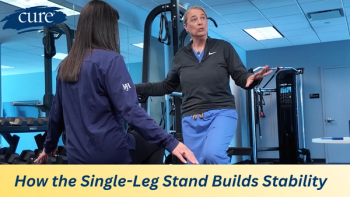
Learn the single-leg stand in the Balance Exercise Package for patients with cancer to improve stability, strengthen balance and reduce fall risk.
Jeff Cape, a Blue Faery volunteer and HCC caregiver, shares why patient voices matter at ASCO and what he wishes every cancer patient knew.
Focal cryotherapy is changing prostate cancer care. Dr. Herbert Lepor explains this milestone treatment and what it means for patients.
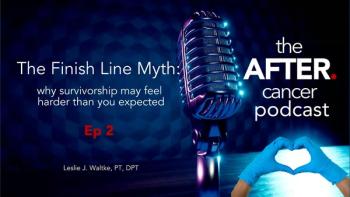
In episode 2 of the After Cancer Podcast, Dr. Leslie Waltke explores why the end of treatment can feel harder than anything that came before it.
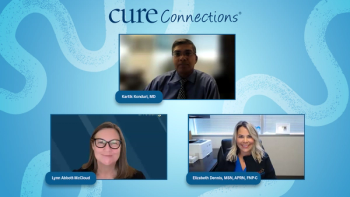
Dr. Konduri provides a clinician's overview of the frontline to subsequent-line treatment framework for metastatic EGFR-positive NSCLC.
Lynn Abbott-McCloud articulates that quality of life extends well beyond clinical or medical definitions: it encompasses life quality in its fullest sense, including whether a patient has the energy to pick up a grandchild after a karate class.
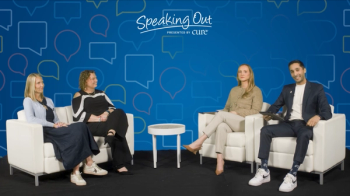
There is a particular kind of fear that settles in after a lung cancer diagnosis — not just fear of the disease, but fear of the waiting.
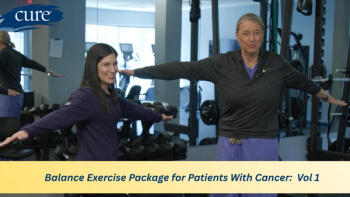
The first Balance Exercise Package for patients with cancer features tandem standing to improve balance, reduce fall risk and support everyday movement.
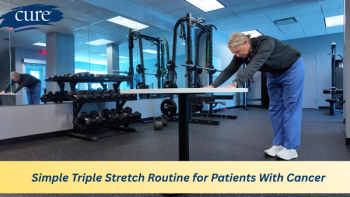
Learn Leslie Waltke's triple leg stretch for patients with cancer—an easy calf, hamstring & low back stretch to ease pain, improve sleep, and boost mobility.
Understand the difference between targeted therapy, chemotherapy, and immunotherapy in lung cancer — and why starting the wrong treatment first can be harmful for patients with targetable mutations.
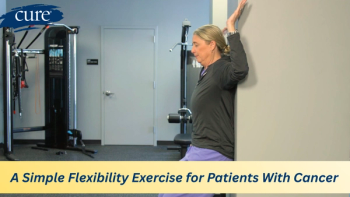
Oncology PT Dr. Leslie Waltke shares an easy at-home thoracic spine stretch to ease tightness, improve posture, and support lung capacity.
Follow one brain tumor survivor's 28-year cancer journey and discover lessons on finding answers, resilience, integrative care, and hope.
Lynn Abbott-McCloud describes the overlooked burden of being in cancer treatment, likening it to a full-time unpaid job.
Dr. Konduri provides an overview of the current frontline treatment landscape for metastatic EGFR-positive NSCLC.
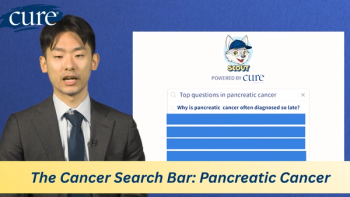
Get expert answers to the top pancreatic cancer questions, including symptoms, surgery, new treatments, hereditary risk and early diagnosis.
Elizabeth Dennis describes the testing process following a new lung cancer diagnosis. Initial tissue biopsy is sent for next-generation sequencing (NGS), although repeat tissue sampling or liquid biopsy from blood may be needed if the initial biopsy is insufficient for molecular profiling.
Learn why comprehensive biomarker testing is essential before starting any lung cancer treatment. Hear from patients and oncologists about the life-changing importance of knowing your mutation first.
Dr. Kartik Konduri introduces the program on patient experiences with EGFR-positive NSCLC, joined by Elizabeth Dennis, an advanced practice provider at Texas Oncology at Baylor Simmons Cancer Center, and Lynn Abbott-McCloud, Executive Director of LiveLung, a nonprofit lung cancer organization.
Leslie Waltke's new podcast explores how cancer labels like 'survivor,' 'patient' and 'victim' evolved — and why no single word fits everyone.
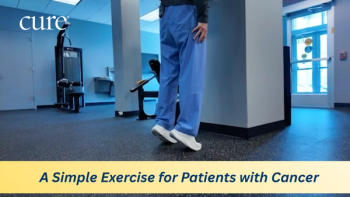
Oncology physical therapist Dr. Leslie Waltke demonstrates calf raises, a simple at-home exercise to help rebuild lower body strength during cancer treatment.
A UF Health oncologist answers the most common questions about cell therapy, from who qualifies to how it differs from chemotherapy.

Nicholas Hornstein, MD, PhD discusses ctDNA in colorectal cancer, the INTERCEPT-TT trial, building Northwell's GI oncology program, and what better drugs will look like.
The discussion concludes with examination of recent research developments, particularly the CROWN trial's 7-year follow-up data presented at the American Society of Clinical Oncology meeting. Dr. Florez explains that this trial has changed ALK-positive treatment paradigms by demonstrating unprecedented durability of response with lorlatinib compared to previous standard crizotinib therapy.
The segment explores concepts of living well with cancer, advocacy, and community building for young patients facing long-term therapy. Dr. Florez notes that current reality for many young patients with ALK-positive disease involves years rather than months of survival, fundamentally changing perspectives on living with versus dying from cancer.
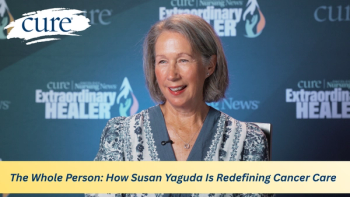
Susan Yaguda, oncology nurse at Atrium Health Levine Cancer Institute, transforms cancer care by treating the whole person — mind, body, and spirit — one patient at a time.
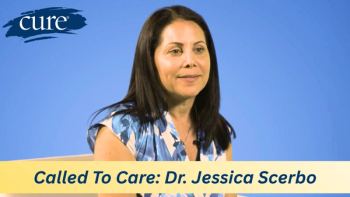
A pediatric oncologist opens up about what draws her to one of medicine's hardest jobs, and what keeps her going.
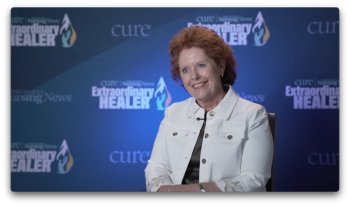
Tammy Zinn, a finalist for the Extraordinary Healer Award, reflects on the personal loss that led her to oncology nursing and the programs she built to support patients.
The discussion addresses practical aspects of living with ALK-positive disease, emphasizing that long-term oral therapy has transformed treatment possibilities from months to potentially decades of survival.
The discussion addresses practical aspects of living with ALK-positive disease, emphasizing that long-term oral therapy has transformed treatment possibilities from months to potentially decades of survival.