

Medicare will move ostomy supplies to eight national contracts in 2028. Survivors and clinicians say a poor fit can lead to leaks, infection and hospital stays.

Kaitlyn covers the intersection of science and storytelling in oncology. She recently graduated from California Polytechnic State University, San Luis Obispo where she studied Journalism and Biomedical Engineering. Her background spans clinical research and patient care, bridging communication gaps between providers and patients. In her free time, she enjoys thrifting, hiking, and music.
Email her at kle@mjhlifesciences.com
Medicare will move ostomy supplies to eight national contracts in 2028. Survivors and clinicians say a poor fit can lead to leaks, infection and hospital stays.

An experimental treatment has kept one patient with heavily pretreated hairy cell leukemia free of detectable disease for more than two years, raising questions about whether CAR T-cell therapy could offer a path toward a cure.
New research found that nearly 1 in 5 second-level appeals for denied cancer medications under Medicare Part D were successful, raising questions about how insurers make coverage decisions and what patients can do when their treatment is denied.

A clinical trial will test zanubrutinib plus sonrotoclax as a fixed-duration, chemotherapy-free treatment for hairy cell leukemia, aiming for undetectable disease.

Dr. Robert Kreitman explains how CD22-targeted CAR T could help heavily pretreated patients.

Dr. Robert J. Kreitman explains how an experimental CAR T-cell therapy may help patients with relapsed hairy cell leukemia achieve lasting remissions.
Dr. Jacqueline Barrientos discussed how collaboration, individualized treatment and patient advocacy helped a 72-year-old man achieve leukemia remission and receive a kidney transplant.

A study found that sentinel lymph node biopsy rarely missed remaining cancer in patients with locally advanced breast cancer whose lymph nodes responded to chemotherapy before surgery.

A study of 52,236 patients with cancer found that episodes of unintended weight loss affected 46.63% of patients and were tied to shorter overall survival.

Diagnosed with leukemia at 8 years old, Harper feared that losing her hair would change who she was. She reflects on body image, confidence and finding a sense of herself during cancer treatment.

Diagnosed with bone cancer at 14, college setter Gabby Orlet shares how volleyball, honesty and her family carried her through years of treatment.
Noah Elliott, now a Paralympic snowboarder, counted small wins during inpatient chemotherapy and found inspiration in the youngest children on his hospital floor.

A biomarker test changed one mother’s diagnosis from suspected glioblastoma to ependymoma, but the report written in October did not reach her until December.

The approval adds patients with high-grade papillary-only tumors, based on trial data showing a 62% complete response rate in patients with carcinoma in situ.

Patients with a newly identified tumor state had shorter survival following chemotherapy and immunotherapy, potentially helping doctors identify those at greater risk of poor outcomes.

Longer follow-up of the phase 2 LUNAR trial showed a 62% lower risk of progression, additional hormone therapy or death with 177Lu-PNT2002 plus radiation.

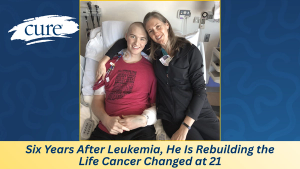
Six years after a B-cell ALL diagnosis at 21, William Yank shares how his view of therapy changed and why he is still working on his mental health.

A Phoenix man with metastatic castration-sensitive prostate cancer shares how back pain led to a PSA test and how his family helped him cope.

In the phase 2 CO.28 trial, all 4 patients with tumor DNA in their blood after chemotherapy were recommended surgery, versus 38.1% of those without it.

In a phase 2 study, Ojemda (tovorafenib) led to responses in 43% of adults with melanoma or other solid tumors that carried rare RAF gene changes.

In a video interview with CURE, Dr. Elizabeth K. Lee explained that how a treatment affects daily life matters as much as how well it works.
Rinatabart sesutecan shrank tumors in 45.9% of patients with platinum-resistant ovarian cancer in a phase 2 study, with responses lasting a median of 12.1 months.

Prostate cancer grows slowly, and while 50% of men on active surveillance eventually need treatment, waiting can mean years without side effects.

Tecentriq plus chemotherapy lowered the risk of cancer returning or death by 50% versus chemotherapy alone in patients with stage 3 dMMR colon cancer.

In a Johns Hopkins study, 64% of African American patients with myeloma received bone-modifying drugs in their first year, compared with 77% of White patients.
Median progression-free survival reached 24.9 months with Tukysa plus Herceptin and Perjeta versus 16.3 months with placebo plus Herceptin and Perjeta.
Epkinly plus R-CHOP lowered the risk of disease progression or death by 51% versus R-CHOP alone in patients with newly diagnosed diffuse large B-cell lymphoma.
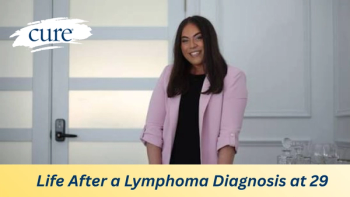
Katie Parrinello was diagnosed with primary mediastinal B-cell lymphoma at 29, reached remission four days before turning 30 and now advocates for wig education.

A leukemia survivor recalls how bonding with other patients helped his hospital stays go by faster and became a key part of his emotional healing.
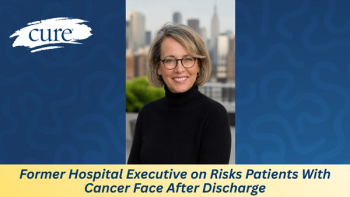
After 17 and a half years with metastatic primary peritoneal cancer, a former hospital executive explains how an AI health agent helped her after discharge.
Published: September 29th 2026 | Updated: October 21st 2026

Published: August 5th 2026 | Updated: October 21st 2026

September 24th 2026

August 10th 2026
Published: September 29th 2026 | Updated: October 21st 2026
September 23rd 2026