

The phase 3 DESTINY-Lung04 trial met its main goal of keeping cancer from growing longer than chemotherapy plus immunotherapy did.

Kaitlyn covers the intersection of science and storytelling in oncology. She recently graduated from California Polytechnic State University, San Luis Obispo where she studied Journalism and Biomedical Engineering. Her background spans clinical research and patient care, bridging communication gaps between providers and patients. In her free time, she enjoys thrifting, hiking, and music.
Email her at [email protected]
The phase 3 DESTINY-Lung04 trial met its main goal of keeping cancer from growing longer than chemotherapy plus immunotherapy did.

Nicole Schultz was treated for acute myeloid leukemia as a teenager. Two decades later, chronic graft-versus-host disease and ongoing survivorship monitoring remain part of her care.
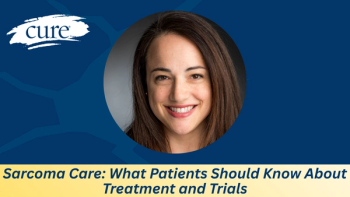
Dr. Priscilla Merriam discusses why sarcoma is often mistaken for a benign growth, how treatment differs across more than 150 types and where patients can find expert care.

Genomic testing can show whether a targeted treatment may be an option. In a Medicare study, fewer than 1 in 5 patients with cancer received it in 2023.

Black women with ovarian cancer had a 45% higher risk of death than White women, with the gap widest in high-vulnerability neighborhoods.

Adding sirexatamab did not delay cancer growth overall, but patients with higher levels of a blood protein called DKK1 went longer without their cancer worsening.

Weekly smartphone check-ins that alerted the care team when symptoms worsened and improved physical functioning at six months.

Divesiran met the primary end point of the phase 2 SANRECO trial, with 88% of patients avoiding phlebotomy and keeping hematocrit below 45%, according to new trial results.
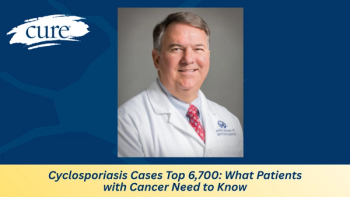
Doctors say patients with cancer face distinct risks during the cyclosporiasis outbreak that spans 45 states.

Dr. Priscilla Merriam discusses how sarcomas can be mistaken for benign growths like lipomas and fibroids, and why asking about a biopsy can matter before surgery.
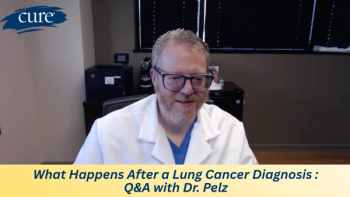
At least half of patients get nervous before a follow-up scan. Dr. Geoffrey Pelz explains why that is common, what he wants patients to hear at the first visit and how much lung cancer treatment has shifted in 15 years.
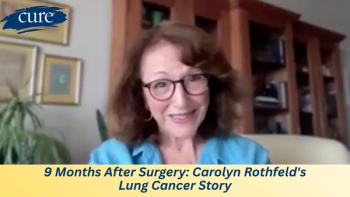
An incidental CT scan revealed stage 1A lung cancer. After robotic surgery at Hackensack University Medical Center, Carolyn Rothfeld describes a recovery that took longer than she expected.

After receiving a stage 1 lung cancer diagnosis, Carolyn Rothfeld underwent robotic surgery to remove part of her lung and is back to her exercise routine nine months later.
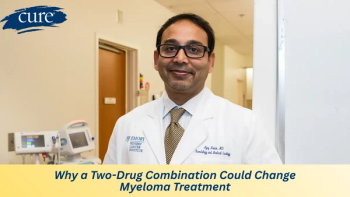
Learn how Talvey plus Tecvayli cut the risk of myeloma progression or death by 89%, how the combination is given and what it may mean for daily life.
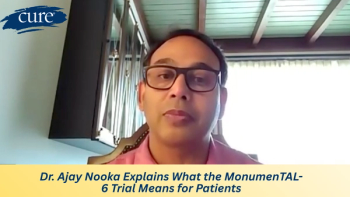
Dr. Ajay Nooka discusses the MonumenTAL-6 trial and explains what the promising Tecvayli plus Talvey results could mean for patients with relapsed multiple myeloma.

Patients with advanced biliary tract cancer lived longer on Imfinzi (durvalumab) plus chemotherapy than on chemotherapy alone, according to four-year follow-up data from the phase 3 TOPAZ-1 trial.

Tafinlar plus Mekinist extended progression-free survival to 12.8 months vs. 3.7 months with placebo in BRAF V600E-positive thyroid cancer.
Patients with advanced stomach cancer lived longer on sonesitatug vedotin than on standard treatment, according to new trial results.
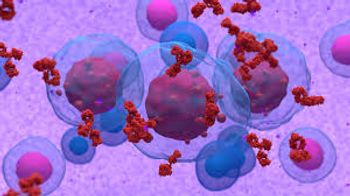
Tecvayli plus Talvey cut the risk of disease progression or death by 89% in patients with relapsed multiple myeloma, according to new trial results.