A cancer survivor shares what to say, what not to say and how listening can help support someone through cancer treatment and beyond.
The investigational drug, first developed for brain cancer, is being tested to see whether it can make resistant tumors respond to treatment again.
Kazia Therapeutics is expanding its ongoing breast cancer trial of paxalisib, an investigational drug originally developed for brain cancer, to include patients with hormone receptor (HR)-positive, HER2-negative metastatic breast cancer whose disease has progressed after previous treatment. Researchers want to know whether the drug can help tumors respond again to treatments that have stopped working.
Paxalisib blocks the PI3K/mTOR pathway, which plays a role in cancer cell growth and survival, but researchers have also found signs that it may affect how cancer cells resist treatment and avoid the immune system. Those findings are why researchers are looking beyond the drug's ability to kill cancer cells directly.
"We are not simply asking whether paxalisib can kill more cancer cells," said Dr. John Friend, chief executive officer of Kazia Therapeutics. "We are asking whether it can change the biological state of a resistant cancer sufficiently to make established therapies work again and whether it can also change the immune environment surrounding that cancer."
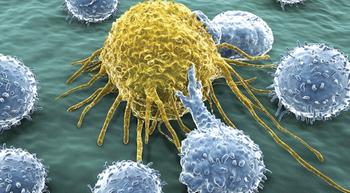
The immune environment around a tumor includes T cells that have become exhausted, meaning they can no longer effectively attack cancer cells. Friend added that these dysfunctional T cells may limit the immune system's ability to respond to the tumor.
"That is what we mean by reprogramming: not simply attacking the tumor, but potentially changing both the cancer and the immune environment that allow it to resist treatment [and] evade the immune system," he said.
For patients with HR-positive, HER2-negative metastatic breast cancer, that kind of reprogramming could matter once standard options stop working. Endocrine therapy and CDK4/6 inhibitors are commonly used to treat this type of breast cancer, but the cancer can eventually become resistant and progress.
Preclinical research offered an early signal. "It appeared to be able to resensitize these tumors such that these CDK4/6 inhibitors could then become effective again," Friend explained.
Resensitizing a tumor means making cancer cells responsive again to a treatment that had stopped working, and the trial will test whether the effect seen in preclinical research also happens in patients.
"Preclinical data … help us understand the biology, they help us generate hypotheses and really determine whether it's strong enough to bring it into a clinic and test these in clinical trials," Friend noted. "They don't guarantee that it's going to show it."
Paxalisib has already been studied in more than 550 patients during its development for glioblastoma and other brain cancers, giving researchers existing information about its safety and tolerability.
"The next step is taking this preclinical and translating it into a clinical trial and testing these hypotheses," Friend said.
For more news on cancer updates, research and education,