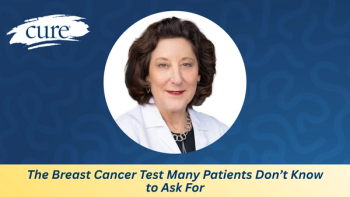
Dr. Hope S. Rugo explains what KEYNOTE-B49 found about adding Keytruda to chemotherapy for PD-L1-positive, HR-positive, HER2-negative breast cancer.
A breast surgeon explains why patients should raise lymphedema with their care team at the start of treatment, and how early detection can make it reversible.
For people who have been diagnosed with breast cancer, treatment can bring side effects that last well beyond the final appointment. One of them is lymphedema, a buildup of lymph fluid that can cause swelling and heaviness in the arm after surgery or radiation that affects the lymph nodes.
According to Dr. Manpreet Kohli, medical director of breast surgery at Monmouth Medical Center, part of RWJBarnabas Health, the time to start thinking about lymphedema is at the beginning of cancer care, not after it ends.
In an interview with CURE, Kohli said many patients now raise the issue as soon as they start treatment.
“Now patients are coming in asking, ‘What’s your plan with my lymph nodes? What’s our plan long term? What are we going to do if I do develop swelling?’” she said.
Kohli encouraged patients to bring up lymphedema with their care team as a valid concern. She said they should ask whether bioimpedance is part of their surveillance plan. Bioimpedance spectroscopy is a quick, noninvasive test that measures fluid in the arm. It can flag changes during and after cancer treatment, before a patient notices them.
That early warning matters, she explained. If lymphedema is found while it’s still subclinical, meaning a change in measurement rather than visible swelling, the fluid buildup can often be reversed “pretty quickly without very aggressive means of intervention.” By the time a patient sees swelling, the condition has progressed further and may need more treatment.
Kohli also reassured survivors who worry that lymphedema means a lifelong problem. Caught early, she said, it’s reversible, and most cases appear within the first three years.
“It’s important to know that lymphedema is not a life sentence of disability,” she said. “And it’s also important to know that it is something that’s treatable, manageable, reversible.”
For Kohli, protecting patients from lymphedema doesn’t mean holding back on cancer treatment.
“You can treat a cancer really well, and you can also make sure that there’s a very, very good quality of life long-term,” she said.
For more news on cancer updates, research and education,