Children with diffuse midline glioma who took Keppra lived a median of 20.96 months, compared with 9.92 months for those who did not, a new study found.
Four of seven patients had no visible cancer on scans in early data from CONVERGE, a trial testing a tumor injection meant to boost radiation in lung cancer.
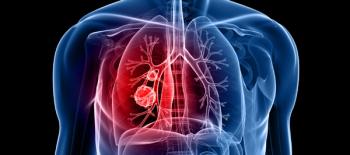
Patients with stage 3 non-small cell lung cancer (NSCLC) that cannot be removed with surgery may have a radiation-enhancing medicine injected directly into their tumors before treatment begins. CONVERGE, a phase 2 trial, is testing whether adding this approach to chemoradiation, followed by immunotherapy, can improve how well tumors respond to treatment.
The trial is evaluating JNJ-1900 (NBTXR3), an investigational medicine made of hafnium oxide nanoparticles that is given as a one-time injection into the tumor and switched on by radiation. The approach falls under a field called intratumoral therapy, in which treatment goes straight into a tumor instead of through an IV or a pill.
"One of the things that I'm focused on now … is trying to explore treatments that are directed right to a lung cancer tumor rather than given systemically or via IV or pill form," said Dr. David DiBardino, an interventional pulmonologist at the University of Pennsylvania in Philadelphia.
Many cancer medicines do not work for every patient, and it is not always clear why, DiBardino noted. When patients receive more of the same medicine it often adds side effects without shrinking tumors further.
Patients in CONVERGE have stage 3 lung cancer and receive chemotherapy and radiation at the same time, followed by the immunotherapy Imfinzi (durvalumab) given by IV. Even with that treatment, fully eliminating the tumors remains a challenge.
The injection aims to strengthen radiation where the largest tumors are located.
"As opposed to giving more radiation to the entire radiation field, which really would cause safety concerns … we're really trying to … enhance the [effect of] radiation, kind of only where it's concentrated in the biggest tumors being treated," DiBardino said.
CONVERGE is a randomized, open-label trial sponsored by Johnson & Johnson, meaning patients are assigned by chance and both they and their doctors know which treatment they receive. Some patients receive standard treatment alone, and others receive standard treatment plus the injection. The design is meant to show whether the injection works and how safe it is compared with regular treatment, ahead of a larger phase 3 trial.
The first part of the trial reported results for seven patients who completed the full treatment plan of chemotherapy and radiation, the injection and Imfinzi. Six of seven patients (85.7%) had their tumors shrink, and four of seven (57.1%) had a complete response, meaning no cancer was visible on scans. The cancer did not grow in any of the seven patients (100%).
The researchers noted that complete responses are uncommon with standard treatment in this form of lung cancer, occurring in fewer than 5% of patients. They also concluded that injecting the medicine into lung tumors and lymph nodes appears feasible and can be done safely. Because these results come from a small number of patients, they are early and may not predict how the larger trial turns out.
The injection adds one procedure before radiation and chemotherapy begin. Doctors inject every area of lung cancer they can reach, and the experience is similar to a lung biopsy. Patients can generally go home the same day.
Some tumors can be reached with a needle through the skin. Most patients, however, undergo a bronchoscopy, in which a camera is passed through the mouth into the lungs while the patient is under general anesthesia. The approach allows doctors to reach both tumors in the outer lung and lymph nodes in the center of the chest.
"In a single procedure that may last an hour and a half or so, maybe up to two hours, we could theoretically inject lymph nodes and a lung tumor with the medicine all in one," DiBardino said.
One to two days later, patients have an extra computed tomography (CT) scan. The medicine shows up as a white substance on the scan, so the radiation oncologist can see where it landed and adjust the radiation plan if needed.
DiBardino described the scan as "an extra layer of safety, kind of built into the protocol." After that, patients continue with standard care.
The first part of CONVERGE tested whether lung tumors could be injected successfully, since the field began in melanoma, where tumors on the skin are visible to the naked eye.
Lung tumors have historically been difficult to reach because the lungs move with every breath. The lungs also hold less air when a patient is asleep during a procedure than they do during scans taken while the patient is awake, meaning a tumor may not be exactly where an earlier scan showed it.
Several advances have helped doctors navigate these challenges. Smaller cameras can now travel deeper into the lungs, while robotic-assisted bronchoscopy provides guidance similar to a GPS. For lymph nodes, a camera equipped with ultrasound allows doctors to see and inject them in real time. Because ultrasound does not work as well through air-filled lung tissue, doctors can also take miniature CT scans during bronchoscopy to confirm that their instruments have reached the intended location.
"It really has gone well, thankfully," DiBardino said of the early injections.
CONVERGE is an international trial taking place at more than 30 sites. To help keep the procedure consistent and safe across hospitals, doctors must use imaging, either ultrasound or CT, to confirm that the needle is inside the tumor before each injection.
The dose is based on the size of the tumor rather than a patient's body weight. One group receives an amount equal to slightly more than one-fifth of the tumor's volume, while another receives about one-third. The goal is to deliver enough of the drug into the tumor without overwhelming it.
"We're learning now that … these tumors are not necessarily … like sponges," DiBardino said. "So we have to kind of take into account their fragile architecture and ways that they can potentially be vulnerable if injected with too much medicine."
More than 60 of the 120 planned patients have enrolled in CONVERGE. The next goal is to better understand whether the treatment can help patients with this form of lung cancer and, if the findings are positive, move it into a phase 3 trial.
Early response data were presented at the 2026 European Society for Radiotherapy and Oncology (ESTRO) Annual Meeting in May, with DiBardino among the authors. Findings on how the procedure was performed were later presented at the American Association for Bronchology and Interventional Pulmonology (AABIP) Annual Meeting, held Aug. 20 to 22 in Denver.
DiBardino said CONVERGE could also provide a model for studying other medicines, proteins and vaccines delivered directly into lung tumors.
"It almost can serve as this like boost alongside lots of other things that already exist," he said. "And for that, it's sort of uniquely exciting."
For more news on cancer updates, research and education,