
Dr. Diego Schaps discussed how upcoming Medicare competitive bidding changes could affect access to ostomy supplies and why having the right pouching system matters for patients.

Kaitlyn covers the intersection of science and storytelling in oncology. She recently graduated from California Polytechnic State University, San Luis Obispo where she studied Journalism and Biomedical Engineering. Her background spans clinical research and patient care, bridging communication gaps between providers and patients. In her free time, she enjoys thrifting, hiking, and music.
Email her at kle@mjhlifesciences.com
Dr. Diego Schaps discussed how upcoming Medicare competitive bidding changes could affect access to ostomy supplies and why having the right pouching system matters for patients.
Cancer can change, hide from the immune system and escape treatment, making effective therapy about more than targeting cancer cells alone.
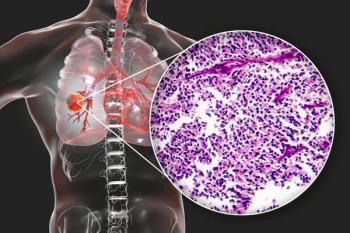
T-cell engagers and other cellular therapies could help the immune system recognize and target lung cancer, including small cell lung cancer.
Gail Fackler reflected on her husband Jim’s stage 4 small cell lung cancer diagnosis, the uncertainty they faced and the hope they found through a clinical trial.

Dr. Jenni Sheng discussed weight management after breast cancer, when medication may be considered and why survivorship care goes beyond cancer surveillance.
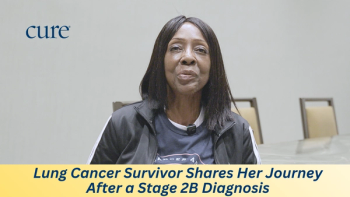
Diagnosed with stage 2B lung cancer after a screening, Vicky found community and a new purpose through lung cancer advocacy.
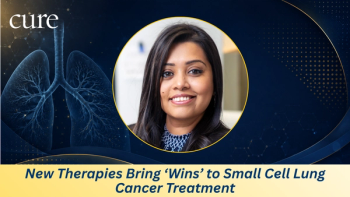
T-cell engagers and antibody-drug conjugates are expanding the SCLC treatment landscape as researchers focus on improving responses and overcoming resistance.

The A-NEW study found that 42% of breast cancer survivors with slower early weight loss reached the 5% goal after Contrave was added.

Ivonescimab plus chemotherapy improved survival compared with Imfinzi plus chemotherapy in patients with previously untreated advanced biliary tract cancer, according to phase 3 findings.
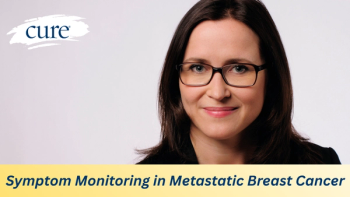
Dr. Maria Margarete Karsten discusses how weekly symptom monitoring helped identify changes between visits and what patients told her about using it.

Final phase 1 results showed lasting responses to soquelitinib in some patients with relapsed or refractory T cell lymphoma.

In the phase 2/3 STAR-TREC trial, 78.5% of patients given long-course chemoradiotherapy kept their rectum at 12 months, versus 60.6% with short-course radiotherapy.

In the phase 3 SHARE trial, salvage radiation given in 26 sessions kept cancer in check as well as 33 sessions did, with more late bowel side effects.

Nona Baker discusses the misdiagnoses that came first, why families need support and what has changed since.

An incoming medical oncologist at the University of Cincinnati on how patient values shape treatment, and what precision medicine can now target.

Dr. Matthew Karr explains how CAR T-cell therapy works, who may be eligible and how doctors decide when to treat or monitor cancer.

A medical oncologist at UC San Diego Health on choosing between surgery and radiation, and why precision oncology changes what patients should ask first.
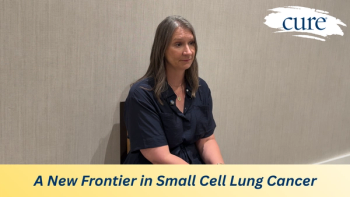
Long-term survivorship in small cell lung cancer was not expected 20 years ago. A radiation oncologist explains what that shift means for patients today.
Cancer drugs sit in a protected class under Medicare Part D, but plans can still deny coverage. A researcher from Vanderbilt found that many of those denials do not hold up under outside review.
In the phase 2 SANRECO trial, 88% of patients with polycythemia vera kept hematocrit below 45% without a phlebotomy. Lead investigator Dr. Marina Kremyanskaya explains what that could mean day to day.

In the phase 2 KEYPAD trial, Keytruda plus Xgeva shrank tumors in 31% of patients with advanced clear cell kidney cancer after prior treatment.

The phase 3 DESTINY-Lung04 trial met its main goal of keeping cancer from growing longer than chemotherapy plus immunotherapy did.

Nicole Schultz was treated for acute myeloid leukemia as a teenager. Two decades later, chronic graft-versus-host disease and ongoing survivorship monitoring remain part of her care.
Dr. Priscilla Merriam discusses why sarcoma is often mistaken for a benign growth, how treatment differs across more than 150 types and where patients can find expert care.

Genomic testing can show whether a targeted treatment may be an option. In a Medicare study, fewer than 1 in 5 patients with cancer received it in 2023.

Black women with ovarian cancer had a 45% higher risk of death than White women, with the gap widest in high-vulnerability neighborhoods.

Adding sirexatamab did not delay cancer growth overall, but patients with higher levels of a blood protein called DKK1 went longer without their cancer worsening.

Weekly smartphone check-ins that alerted the care team when symptoms worsened and improved physical functioning at six months.

Divesiran met the primary end point of the phase 2 SANRECO trial, with 88% of patients avoiding phlebotomy and keeping hematocrit below 45%, according to new trial results.
Doctors say patients with cancer face distinct risks during the cyclosporiasis outbreak that spans 45 states.