September brought new options for breast, lung, kidney, bile duct, skin and neuroendocrine cancers, plus a brain tumor scan and easier lung cancer treatment.
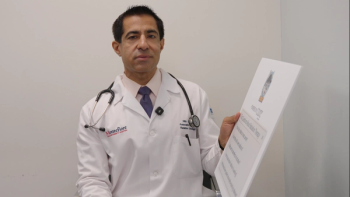
Dr. Priscilla Merriam discusses why sarcoma is often mistaken for a benign growth, how treatment differs across more than 150 types and where patients can find expert care.
Sarcoma accounts for less than 1% of cancers in adults, and there are more than 150 types, which is why the same diagnosis can vary from one person to the next, according to Dr. Priscilla Merriam, medical oncologist of the Sarcoma Center at Dana-Farber Cancer Institute.
"Sarcomas are rare, and there are also many different types of sarcomas, so it can make it difficult when you have a diagnosis of sarcoma to really understand what the diagnosis is and how to find resources," Merriam said.
Some types grow slowly and others do not. A person may be told they have leiomyosarcoma (a cancer that starts in smooth muscle)-one of the types Merriam sees most often-or liposarcoma (a sarcoma related to fat).
"In a sense, talking about sarcoma is a blanket, because there are truly many different types of sarcomas," she explained.
A person may notice a lump and assume it is harmless. A physician may reach the same conclusion, identifying it as a lipoma, a benign growth. In other cases, a mass may be found incidentally on a CT scan ordered for an unrelated reason. Since sarcomas are rare, a physician who does not regularly encounter the disease may not recognize what they are seeing.
Misidentifying a sarcoma as a benign growth or overlooking a mass found incidentally can delay diagnosis, and a surgeon who believes a mass is benign may plan an operation that is appropriate for a noncancerous growth but not for sarcoma.
Leiomyosarcoma, for example, can sometimes be mistaken for a fibroid, a common smooth muscle growth in the uterus. While many fibroids are benign, a small number are considered leiomyosarcoma, a cancerous version of that growth.
Merriam encouraged patients and physicians to pause when something does not seem typical and ask whether additional testing is needed before treatment decisions are made.
"Is there anything that seems unusual about this situation?" she said. "Is it important for us to get a biopsy to try to understand what this growth is before making decisions about moving forward with treatment?"
Treatment for sarcoma depends on the subtype, stage, and location of the cancer. Some patients may be required to undergo surgery, with or without radiation therapy, followed by imaging to continuously monitor for signs that the cancer has returned. Others may be prescribed to a therapeutic regimen, which can include chemotherapy, oral medications that target specific behaviors of the sarcoma, immunotherapy, or cellular therapies.
Merriam noted that sarcoma treatment is best approached by a multidisciplinary team of medical oncologists, surgeons, radiation oncologists, and radiologists and pathologists who review each case together.
Pathology is important, Merriam said, because a pathologist at a high-volume sarcoma center may have more experience identifying and classifying these tumors than a pathologist at a center that rarely encounters them.
"Truly, we work as a team, and that's a really important element," she said.
Sarcoma can affect anyone, as it most often develops without a particular predisposition.,
An estimated 13,910 new cases of soft tissue sarcoma and 4,110 new cases of bone cancer will be diagnosed in the United States in 2026, according to the American Cancer Society.
"This really can happen to people, and usually there's not an explanation for it," Merriam said.
Because each subtype of sarcoma is its own disease, much of the current research is aimed at understanding what drives an individual type of the cancer, and whether that creates a vulnerability amongst the malignant cells that treatment could target, Merriam said. Trials are one-way experimental treatments that can reach patients, and are an option at any point, from a patient’s first line of treatment and beyond.
"Clinical trials are not required; they're always optional," she said.
Merriam encourages patients to seek care at a high-volume sarcoma center in person when that is possible; however, she acknowledges that may not be an option for everyone. Patient advocacy foundations can help cover the cost of travel and connect patients to those centers. Insurance companies will sometimes sponsor remote or online second opinions with sarcoma experts.
She pointed to the Sarcoma Foundation of America and the Sarcoma Alliance as two organizations that help patients find expert centers, information and clinical trials, along with other patients who have received the same diagnosis.
Patients frequently tell her they had never heard of sarcoma and had never met anyone else who had it, which can leave them feeling isolated.
"The message is you are not at all alone," she said. "There are many people who have seen lots of your type of sarcoma, your kind of cancer, and by connecting to some of these resources, you can get connected. You yourself, your family members, the people that care about you, can get more information, and you can feel more control, and feel empowered to take care of yourself, to advocate for yourself."
For more news on cancer updates, research and education,