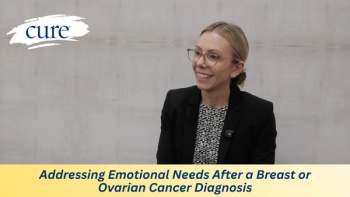
Colleen Carvalho, chief mission officer at Bay Area Cancer Connections, explains the emotional and practical needs that often go unaddressed after a diagnosis.

At its 23rd annual conference, Bay Area Cancer Connections described how donations and volunteers fund services for people facing cancer’s medical, financial and practical costs.
People diagnosed with cancer often face challenges beyond treatment, including insurance gaps, unexpected costs and complicated care decisions. At the 23rd annual conference of Bay Area Cancer Connections (BACC), Chief Development and Engagement Officer Lydia Kukolski described how the nonprofit tries to meet those needs and how it pays for that work.
According to Kukolski, BACC is funded entirely by philanthropy. Most of its money comes from individual donors, along with foundation grants and a corporate partnership program that is still growing. She said corporate sponsors contributed more than $35,000 toward this year’s conference.
The organization reports offering more than 30 programs and services, including 14 support groups. It also runs a boutique that provides wigs, post-surgical garments and prosthetics at no cost to clients.
Kukolski said financial need among patients has grown, and she pointed to economic and political conditions in the Bay Area. BACC gave 195 grants last year. She said some recipients had been choosing between paying for medication and paying rent. In one case she described, a woman who traveled to the area for treatment was sleeping in her car until a grant covered a hotel stay.
New patients receive information about treatment and insurance in a short time, and that insurance doesn’t always cover items such as wigs said Kukolski. She expects changes to Medicaid and Medicare to leave more people without coverage, and she said that would likely increase demand for nonprofit support.
Volunteers make up a large part of BACC’s operations and many of them are former clients. Some take part in a buddy program that pairs trained volunteers with people who were recently diagnosed. Others help with inventory, client fittings, data entry and community events. Kukolski said several board members are also former clients.
Corporate involvement has included employee giving campaigns and volunteer days. Employees at Gilead made port pillows for chemotherapy patients, and a Salesforce team made cards for program volunteers.
BACC also runs a mobile resource center. Kukolski said it recently received funding to reach coastal communities with limited access to health services.
For more news on cancer updates, research and education,