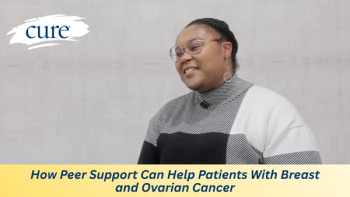
Claudine Joseph, board president of Bay Area Cancer Connections, shares her mother’s breast cancer experience and why peer support matters for all patients.

Colleen Carvalho, chief mission officer at Bay Area Cancer Connections, explains the emotional and practical needs that often go unaddressed after a diagnosis.
A breast or ovarian cancer diagnosis brings a new set of medical appointments, scans and pathology reports, but the emotional and practical needs that come with it often go unaddressed, according to Colleen Carvalho, chief mission officer at Bay Area Cancer Connections (BACC).
Carvalho, a licensed therapist and nurse who lost her grandmother to breast cancer, has worked with BACC for 17 years and has seen patients respond to a diagnosis in many different ways.
“For some of the clients we serve, it is devastating to receive this news, especially, I think, if it’s a metastatic diagnosis, and feeling like the world is collapsing around them,” Carvalho said.
One client recently asked Carvalho why emotional support was not the first thing her oncologist offered after her diagnosis. BACC aims to fill those gaps by working alongside providers, Carvalho noted.
“I think things that often go unaddressed are the emotional and practical support side,” she said.
Loved ones look for different kinds of help, from meal ideas and guidance on taste changes after chemotherapy to advice on how to talk with children about the diagnosis.
“So there can be both the practical and the emotional and just navigating everyday life changes,” Carvalho added.
Carvalho compared the language patients hear from their providers to learning a whole new language, with terms on pathology reports that most people never learn in school.
“I think we all know that medical appointments now are shorter, and people don’t feel like they have enough time to just kind of sit and then be with information and respond and ask questions,” she said.
BACC’s cancer information and education team spends as much time as each client needs to understand their questions, pathology report and clinical trial options, according to Carvalho, who also shared a message for patients facing a new diagnosis.
“I would tell them that I’m sorry they are going through this and that we are here for them, that there is support, there is information,” Carvalho said.
For more news on cancer updates, research and education,