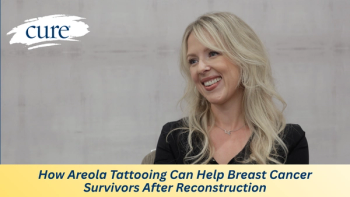
Jessica Tovar, owner of Ink Esthetics, explained how paramedical tattooing can help restore the appearance of the areola and support patients after breast cancer surgery.

Dr. Elham Vosoughi, a breast medical oncologist at UCSF, discusses new breast cancer treatments, clinical trials and why genetic testing matters for families.
When a patient receives a breast cancer diagnosis, time in the exam room is often too short to cover everything, according to Dr. Elham Vosoughi, a breast medical oncologist at UCSF.
That is part of why Vosoughi takes part in the Ask an Expert program from Bay Area Cancer Connections (BACC). The program gives physicians a chance to meet with patients outside the clinic.
Programs like this help patients “feel less overwhelmed and empower them with the knowledge” to make decisions about their own care, she explained.
Sessions cover new treatment approvals as well as how to manage side effects from chemotherapy and hormone-blocking therapy, she noted.
One development Vosoughi highlighted was Wilserdly (giredestrant), an oral drug under FDA review for patients with hormone receptor-positive breast cancer after surgery. An FDA decision is expected by Nov. 30. She said it would be the first new medication in this setting in 20 years. It lowered the risk of the cancer returning by 30% compared with standard care.
Clinical trials are open at every stage of the disease, from patients who were just diagnosed to those who have received several lines of therapy, Vosoughi added. At UCSF, those include the I-SPY 2 trial, which tests new treatments before surgery. Trials give patients the “opportunity to receive a medication that otherwise is not yet available, but can be very effective for their type of cancer,” she said.
Vosoughi recommends that any woman diagnosed with breast cancer at age 65 or younger talk with her care team about genetic testing. BRCA1 and BRCA2 mutations raise the risk of a second breast cancer and of ovarian cancer. Knowing about a mutation before surgery can help patients decide whether to have both breasts removed at the same time as the cancer. The results also matter for first-degree relatives, who can get tested and follow screening that matches their own risk.
For patients who were just diagnosed, Vosoughi’s message centers on knowledge. “Diagnosis of cancer can change patients within a few seconds,” she said. Understanding why a treatment is recommended, and how it can help patients live longer despite side effects, makes a difference.
“I think education is the power for our patients,” she concluded.
For more news on cancer updates, research and education,