In patients with advanced ROS1-positive lung cancer who had not previously received a ROS1-targeted drug, Jideytro also shrank tumors that had spread to the brain in all 10 evaluable patients.
An estimated 70% of patients with stage 3 lung cancer do not see their tumors respond to standard treatment. An expert explains why, and what a new approach aims to change.
For patients with stage 3 non-small cell lung cancer (NSCLC) that cannot be removed with surgery, standard treatment is demanding. It includes chemotherapy and radiation given together, followed by a year of the immunotherapy Imfinzi (durvalumab). Even so, many tumors do not shrink.
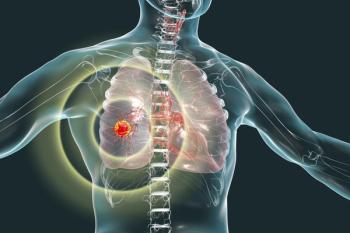
Researchers are studying whether injecting a radiation-boosting medicine directly into tumors could help more patients benefit. The phase 2 CONVERGE trial is testing this approach with JNJ-1900 (NBTXR3), an investigational medicine made of tiny particles of a metal compound called hafnium oxide.
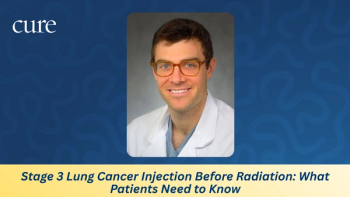
Dr. David DiBardino, an interventional pulmonologist at the University of Pennsylvania in Philadelphia, spoke with CURE about why current treatment does not work for more patients and what researchers hope to learn from intratumoral therapy.
Dr. David DiBardino: It is estimated that about 30% of patients in clinical trials have an objective response to standard treatment. An objective response means the tumor shrinks by a set amount on scans. That leaves roughly 70% of patients whose tumors do not respond to a regimen that can be difficult to tolerate.
Raising the radiation dose is not an option. Patients already receive about 60 gray, a unit that measures radiation, which is close to the most the body can safely handle. Still, radiation generally works well against NSCLC, which is why researchers are looking for ways to make it more effective without increasing the dose.
Dr. David DiBardino: Radiation damages cancer cells in part by acting on the water inside tumors. The hafnium compound causes more of that cell-killing damage than water does on its own. As a result, it may make radiation work better in the areas where it is injected.
Dr. David DiBardino: Melanoma and lung cancer often carry many genetic mutations. Those mutations can help the immune system recognize cancer cells as foreign. That is part of why immunotherapy first took hold in these cancers.
Immunotherapy can work extremely well for some patients, and it has been a major breakthrough. It remains unclear, however, why more patients with these cancers do not respond. Researchers are trying to close that gap.
Dr. David DiBardino: Injecting medicine directly into tumors was first studied in melanoma. Some of those injected treatments have gone on to reach patients, including some approved recently. They have been used as monotherapy or combined with immunotherapy.
Other injected medicines looked promising in phase 1 and 2 trials but did not succeed in larger phase 3 trials. Looking back, I agree with experts who believe the instructions for injecting tumors in those trials may not have been precise enough. As a result, the medicine may not have reliably reached the tumor or stayed there.
Dr. David DiBardino: Intratumoral therapy is "this black box that we're sorting out." Open questions include how much medicine to give, how often to give it and how concentrated it should be. Researchers also need to learn whether the medicine stays in the tumor after it is injected or whether it moves into the bloodstream as it would if given through an IV.
Dr. David DiBardino: In standard care, a patient's specialists typically meet at the start to set a treatment plan. Each then works mostly within their own specialty. With intratumoral therapy, those check-ins happen more often.
Specialists meet to decide whether the approach fits a patient and again to plan radiation around where the medicine was injected. Throughout treatment, they also discuss side effects and review scans together. Medical oncologists help weigh the other treatment options a patient has. Radiation oncologists, in turn, guide decisions about radiation dose and mapping. The added coordination takes more effort, but the experience has been overwhelmingly positive.
Dr. David DiBardino: Several dozen small pilot studies have tested injecting tumors in lung cancer. Those studies included a wide range of patients and medicines. They were low-quality studies with inconsistent methods, the kind that would be expected to show little effect.
Even so, those early studies showed a consistent pattern of tumors shrinking, even when researchers used the most basic medicines and injection techniques. In a cancer with a high need for better options and treatments that can cause serious side effects, "we really could be onto something here."
For more news on cancer updates, research and education,