

The FDA has approved Pixclara, the first FET-PET imaging agent for glioma in the U.S. Here's what it does, how accurate it is and why it matters for anyone waiting on an MRI result.
The FDA has approved Pixclara, the first FET-PET imaging agent for glioma in the U.S. Here's what it does, how accurate it is and why it matters for anyone waiting on an MRI result.
Six-year PERSEUS results show 81% of newly diagnosed, transplant-eligible myeloma patients had no cancer progression, with many stopping Darzalex.

A phase 3 trial found that adding Imdelltra to Imfinzi maintenance improved survival in extensive-stage small cell lung cancer, while another drug's application was pulled. Here's what patients should know.

Five-year results presented at ASTRO 2026 show a five-week radiation schedule after prostatectomy controls cancer as well as a seven-week course. But serious urinary side effects were more common.

A study of more than 17,000 patients ages 23 to 64, presented at ASTRO 2026, found that only about 28% took endocrine therapy consistently for five years, and people who skipped radiation were more likely to fall off. Here's what to weigh before making that choice.

September brought new options for breast, lung, kidney, bile duct, skin and neuroendocrine cancers, plus a brain tumor scan and easier lung cancer treatment.

Breast cancer treatment has changed dramatically since 2021. Here are the key FDA approvals, year by year, and what they mean for patients.

Learn how to cope with life after cancer treatment with Dr. Eric Bengtsen, a psycho-oncology psychiatrist at Memorial Sloan Kettering Cancer Center.

On National Previvor Day, learn what it means to carry an inherited gene change like BRCA1 or BRCA2, and the screening and surgery options that lower risk.

A phase 3 trial presented at ASTRO 2026 found that giving focused radiation in three to five sessions, instead of one, lowered the chance of cancer returning at the surgery site, and patients lived longer.

Long-term results presented at ASTRO 2026 show that a shorter radiation schedule after mastectomy controls high-risk breast cancer as well as the standard five-week course, without more long-term side effects.

FDA fast-tracks review of elinzanetant for hot flashes linked to breast cancer treatment. Here’s what the trial found and what patients should know.

See how FDA-approved lymphoma treatments have changed over 5 years — what's new, who it's helped, and what's still to come.

Survivors and experts share what to do before your first chemo infusion, from scalp cooling and saving your hair to skin care and building a support team.
FDA approves Welireg plus Lenvima for advanced clear cell kidney cancer after PD-1 or PD-L1 treatment, offering a new treatment option.
See 5 years of FDA leukemia approvals for CLL, AML and CML — new drugs, new drug classes, and how many patients they've actually helped.
FDA approves Inluriyo plus Verzenio for adults with ESR1-mutated, ER-positive, HER2-negative advanced or metastatic breast cancer after endocrine therapy.
FDA approves an updated Ibtrozi label for locally advanced or metastatic ROS1-positive NSCLC, reflecting nearly four years of response data.

Talvey and Darzalex combinations helped patients with relapsed multiple myeloma live longer without disease progression in the phase 3 MonumenTAL-3 trial.

Lung cancer treatment has changed rapidly since 2021, with new targeted drugs, immunotherapy and treatments designed to overcome resistance.
The FDA granted final approval to OMCAZIO, a new cabozantinib capsule formulation for certain patients with kidney, liver and neuroendocrine cancers.
Prostate cancer treatment has advanced rapidly in five years. Explore key FDA approvals, improved treatments and what these changes mean for patients.

FDA grants accelerated approval to Hyrnuo (sevabertinib) for certain patients with HER2-mutated, advanced or metastatic non-small cell lung cancer.
Bristol Myers Squibb reports positive results from a phase 2 trial of investigational CAR T-cell therapy arlo-cel in relapsed multiple myeloma.

AI is changing breast cancer screening, helping doctors detect cancer and predict future risk. Learn what AI mammography means for patients.
FDA grants accelerated approval to camizestrant for certain advanced breast cancers with ESR1 mutations, offering a new treatment option.
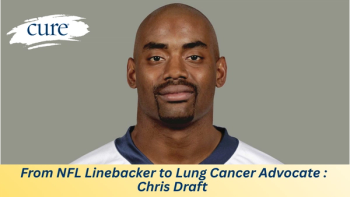
Former NFL linebacker Chris Draft honors his late wife Keasha by advocating for lung cancer research and equitable access to care.
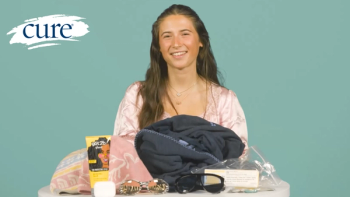
Brynn Forlizzi was just 15 when diagnosed with ovarian cancer. She shares 10 things that helped her navigate treatment while staying connected to her teenage life.
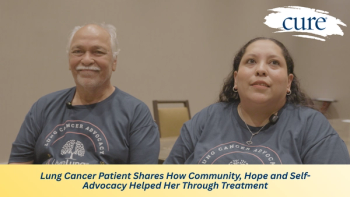
Lung cancer patient and her father, a cancer survivor and caregiver, share how community, hope and self-advocacy helped them through treatment.
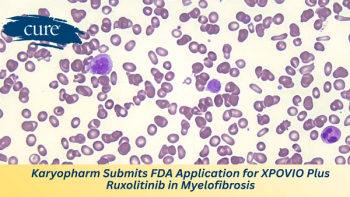
Karyopharm submitted an FDA application seeking accelerated approval for XPOVIO plus ruxolitinib for patients with myelofibrosis.


