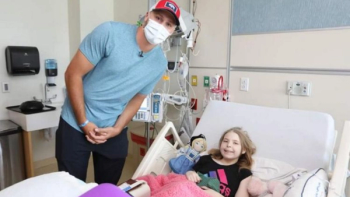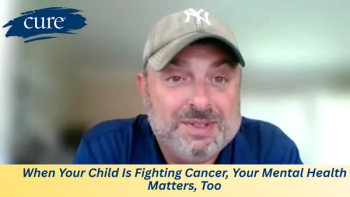
AJ Wyman shares his daughter’s cancer journey and why parents caring for a child with cancer must make time for their own mental health, too.
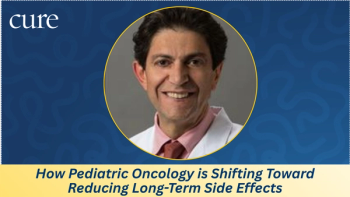
A pediatric oncologist explains how scalp cooling, fertility preservation and early planning protect children with cancer well beyond treatment.
When a child is diagnosed with cancer, the immediate priority for families is survival. But according to Dr. Jessica Scerbo, section chief of pediatric hematology and oncology at Hackensack Meridian K. Hovnanian Children's Hospital at Jersey Shore University Medical Center, the future matters just as much as the present moment, and planning for it can't wait."
"Contrary to adult diagnoses, when a child is diagnosed with cancer, we expect that they're going to go on and live a healthy life for decades," Scerbo said. "So we have to start thinking about the long-term effects right in the very beginning, opting for medications that have less long-term effects on their organs and their physical abilities, so that we know not only are we curing them, but we're bringing them back to be able to have a very fruitful life afterwards."
That forward-looking approach shapes two of the most pressing concerns families raise early in treatment: hair loss and fertility.
Scerbo said that one question comes up almost universally once a cancer diagnosis is delivered: will my child lose their hair? For teenagers especially, she said, appearance is closely tied to identity, which makes hair loss far more than a cosmetic side effect.
"For our teenage population in particular, their physical appearance is very much how they identify themselves," Scerbo said. "Being able to see that physical reminder about their health is very impactful."
To address this, Scerbo's team uses scalp cooling systems, which cool the scalp before, during and after chemotherapy infusions. The goal is to limit the amount of the drug that reaches hair follicles.
"The way chemotherapy works is it goes to the most rapidly dividing cells first the cells within your mouth, your hair, your nails," she said. "If we're able to cool your scalp to a certain degree, the chemotherapy does not reach the follicles and can preserve your hair."
In pediatric patients, scalp cooling is currently used mainly for solid tumors that carry a low risk of spreading to the brain. That distinction matters clinically: cooling the scalp also limits chemotherapy exposure to that region, so using the technique in cancers with a higher risk of central nervous system involvement could create what's known as a sanctuary site, allowing cancer cells to evade treatment.
"We're constantly looking at different protocols to see which other types of cancers we could use it on, because it is such an impactful thing for our patients to maintain that physical appearance," Scerbo said.
Even with growing evidence supporting scalp cooling, Scerbo said the most common concern she hears from parents is straightforward: am I putting my child at risk by doing this?
"That's why it's very important that we look at the protocols and make sure that it's safe for the particular case," she said. "We do evaluate it on a case-by-case basis."
Hair loss isn't the only long-term concern that has to be addressed before treatment begins. Many families, Scerbo said, are surprised to learn that chemotherapy can affect future fertility and that the conversation can't wait.
"There's no right answer to [when to bring this up], because it is an important part of our informed consent," she said. "While we would like to be able to wait for them to process the diagnosis and then speak about that at a later time, we do have to talk about that upfront. Many of the regimens that can cause infertility do it right away."
The encouraging part, she added, is that fertility preservation options are expanding rapidly including for patients who haven't yet reached puberty.
Historically, prepubertal patients had few, if any, fertility preservation options. Scerbo said that has changed with the introduction of ovarian tissue preservation, a procedure typically performed at the same time a child's central line is placed.
"In the decades that I've been doing pediatric oncology, we would say if you have not reached puberty, there wasn't a fertility option for females," she said. "We could do sperm banking, we could do egg harvesting, but we couldn't offer anything to our prepubertal females or males. This has been revolutionary."
During the procedure, a pediatric surgeon removes a portion of the ovary, which is then frozen for potential reimplantation or future use in IVF. "It's a huge relief to the families and the patients," Scerbo said. "Again, another long-term burden that you're looking at upfront that can potentially be mitigated."
With pediatric cancer survival rates continuing to climb, Scerbo noted that 1 in 300 children will become a cancer survivor, she said the focus of care is shifting beyond simply curing disease.
"That's the goal, that's the expectation," she said. "We want to make sure that when we bring them back to their full health, it's not just physical health it's their mental health, their psychosocial well-being. We're going to focus on that throughout the journey, so that they can get back to their lives and be successful children, young adults, and on to their senior years."
For families navigating a new diagnosis, Scerbo's message is one of both urgency and reassurance: the hardest conversations about the future may need to happen early, but they exist precisely because so many children go on to have one.
For more news on cancer updates, research and education,