Kazia Therapeutics CEO Dr. John Friend discussed how paxalisib is being studied in HR-positive, HER2-negative breast cancer, why researchers are focusing on treatment resistance and what the ongoing clinical trial could show for patients.
Dr. David DiBardino explains how intratumoral therapy is being studied to deliver treatment directly into tumors and potentially enhance radiation in patients with locally advanced non-small cell lung cancer.
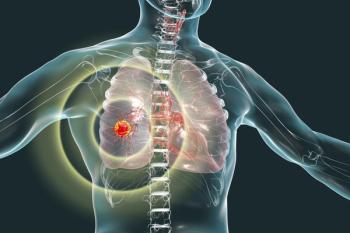
Dr. Dave DiBardino, an interventional pulmonologist at the University of Pennsylvania, discussed how intratumoral therapies may allow researchers to deliver treatment directly into lung tumors and how the CONVERGE trial is evaluating this approach in locally advanced non-small cell lung cancer.
DiBardino: The idea is to concentrate an anti-tumor treatment directly inside the tumor. With systemic immunotherapy, we have seen tremendous benefit in some patients, but not everyone responds, and simply increasing systemic treatment can also increase toxicity.
That led to the question: What if we could deliver more treatment, but only where it is needed?
This approach has been studied more extensively in melanoma because those tumors can sometimes be easier to access and inject. Lung cancer has been more challenging because the lungs move as patients breathe and tumors can be difficult to reach. Improvements in bronchoscopy, imaging and navigation now allow us to locate equipment inside the chest more accurately.
The goal is to potentially increase the effect on the tumor while limiting toxicity elsewhere in the body. These treatments could eventually be used alongside systemic therapies or, in some situations, on their own.
We are starting with almost a clean slate. There are still many questions about the best dose, concentration and frequency of treatment.
We also need to know whether the medicine actually stays inside the tumor after it is injected. Is it reaching the intended location? Is some of it leaking outside the tumor or entering the bloodstream? Can different types of tumors or lymph nodes safely receive the volume being injected?
Those procedural questions matter because even if a treatment itself is effective, a clinical trial may not show that benefit if the drug is not delivered reliably.
CONVERGE is studying patients with locally advanced non-small cell lung cancer who are receiving chemoradiation followed by Imfinzi (durvalumab).
The study adds an injectable radio-enhancing material made with hafnium. The goal is to potentially make radiation more effective inside tumors without simply increasing the radiation dose.
The study includes 120 patients. One-third receive standard treatment alone. One-third receive standard treatment plus a lower dose of the injected radio-enhancer, and one-third receive standard treatment plus a higher dose.
That allows us to compare safety and begin looking for signs that the addition of the injectable treatment may improve outcomes.
The first part included seven patients and focused heavily on whether the injection procedure could be performed consistently and successfully.
Six of the seven patients had an objective response, meaning their tumors shrank by a predefined amount.
That is a very small group, so we have to be careful about interpreting those findings. But it is an interesting early signal and one of the reasons we are eager to see the results from the larger randomized portion of the study.
The full study has now enrolled more than half of its planned 120 patients.
Intratumoral therapy brings interventional pulmonologists, medical oncologists and radiation oncologists together more closely than some traditional treatment approaches.
Medical oncologists help determine where an investigational treatment might fit among other systemic treatment options. Radiation oncologists help us understand radiation doses, treatment fields and imaging. Interventional pulmonologists are involved in accessing and injecting the tumors.
Instead of having only a few points of communication during treatment, we may need to work together repeatedly throughout the process, including when evaluating imaging, planning treatment and monitoring side effects.
There have already been several dozen smaller studies evaluating different approaches to injecting therapies directly into lung tumors.
Many of those studies were small and used different patient populations, drugs and procedures, so they cannot give us definitive answers. But researchers have repeatedly seen signals that tumors can shrink following these approaches.
Now we are beginning to conduct larger and more standardized studies. Lung cancer remains an area with significant unmet need, particularly when treatments can be difficult to tolerate, so there is a lot of interest in whether delivering therapy directly into tumors can improve treatment while limiting toxicity.
For more news on cancer updates, research and education,