Researchers are studying whether combining CAR-T cell therapy with targeted drugs could help children with high-risk leukemia, including infants whose cancer may be more likely to return after treatment.
After two relapses of acute lymphoblastic leukemia, Hannah Koepsell received CAR-T cell therapy. A pediatric oncologist explains why leukemia can return after treatment and how researchers are working to make CAR-T responses last longer.
Hannah Koepsell was 11 years old when she was diagnosed with acute lymphoblastic leukemia (ALL) in June 2022. Instead of finishing the softball season with her teammates, she spent 39 days in the hospital.
"I had one game left, and I just wanted to finish the season," Hannah recalled.
Treatment stretched over the next two years, with infections, fevers and hospital stays that sometimes lasted weeks. When her immune system was weak, a fever could keep her away from her friends, her brother and home.
In 2024, Hannah finished chemotherapy, but five months later, the leukemia returned.
She went through more treatment and a bone marrow transplant using cells from her younger brother, Jackson, who was a 100% match. When the leukemia returned for the second time in fall 2025, Hannah received CAR-T cell therapy.
"They actually took out her blood, filtered it out and genetically altered it to kill off the cancer that she had," said her father, Jason Koepsell.
Hannah has been in remission since December 2025.
Cases like Hannah's have researchers asking how leukemia returns after powerful treatments such as CAR-T cell therapy. Dr. Lisa Niswander, a pediatric oncologist and physician-scientist at Roswell Park, studies targeted and immune-based approaches for high-risk pediatric leukemias. Part of her work looks at whether targeted drugs can be paired with CAR-T cells to make treatment more effective and keep leukemia from finding ways around it.
Treatment for childhood ALL has improved over the past several decades. The 5-year survival rate for children younger than 15 is approximately 90%, according to the National Cancer Institute. Leukemia is a group of cancers with different genetic features rather than a single disease, which is why it does not behave the same way in every patient. Infants younger than 12 months fall into a higher-risk group. Their leukemia can act differently from leukemia in older children or adults and may be more likely to resist standard chemotherapy.
Many infants with ALL reach remission, meaning the leukemia can no longer be detected through testing.
"The leukemia sort of develops changes that outsmarts our therapies, and the leukemia comes back," Niswander said.
Once leukemia returns, it can be harder to treat because the cells left behind are the ones earlier therapy could not eliminate.
Jason understands the experiences his daughter went through. He was diagnosed with Hodgkin lymphoma at 17 and has been in remission for more than two decades.
"Seeing my daughter go through it is awful," he said. "It was awful, every bit of it."
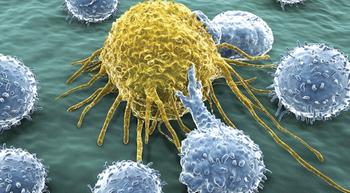
Part of the reason leukemia develops is that the immune system does not recognize cancer cells as something to destroy. CAR-T cell therapy uses a patient's own T cells, a type of white blood cell that helps the body clear infections and abnormal cells. The T cells are collected from the patient's blood, modified in a lab to recognize and attack leukemia cells, and then returned to the patient.
"The fact that we're able to then sort of re-trick the immune system into recognizing leukemia is really something that's incredible to me," Niswander said.
In some patients, the modified cells stay in the body and keep watching for leukemia after treatment ends.
CAR-T therapy is not part of standard first treatment for children newly diagnosed with B-cell ALL. It is generally used when the leukemia comes back or does not respond to other treatments.
CAR-T therapy can bring about remission after other treatments have failed, but it does not prevent relapse in every child. Niswander explained that leukemia returns in two main ways.
In some cases, the leukemia cells change so the CAR-T cells, though still in the body, no longer recognize them. In others, the CAR-T cells do not last long enough. Niswander said the cells "peter out," taking that ongoing protection with them.
About half of children who receive CAR-T cells may see their leukemia return within a few years if they receive no additional treatment afterward according to Niswander. Researchers are working to understand how to prevent these relapses and whether certain traits could help doctors predict which patients are most likely to benefit.
Niswander's lab is studying whether pairing CAR-T cells with targeted drugs can attack leukemia in more than one way, making it harder for cancer cells to develop resistance.
One genetic change seen in some childhood leukemias, particularly infant leukemia, is a KMT2A rearrangement, in which the KMT2A gene breaks and joins with part of another gene, driving leukemia cells to grow. Drugs called menin inhibitors can target leukemia cells with certain KMT2A changes and are being studied and used in both ALL and acute myeloid leukemia. Niswander's team is looking at how these drugs interact with CAR-T cells.
Because CAR-T cells are living immune cells, adding another drug is more complicated than combining two cancer medications. Researchers first need to know what the second drug does to the CAR-T cells themselves.
"Is it good? Is it bad? And how can we most appropriately sort of sequence these medications together to benefit the patients in the long term?" Niswander said.
Her team is doing preclinical research, meaning lab studies, on those interactions, the step that comes before combinations can be tested more broadly in patients.
Traditional chemotherapy can affect healthy parts of the body along with leukemia cells, which matters for children and infants whose bodies are still developing.
"If we can really focus on just getting rid of the leukemia and keeping it away and minimize the effects on the rest of the body, that's better for these little babies who still have a really long life ahead of them," Niswander said.
Some of the chemotherapy drugs Jason received as a teenager were similar to those Hannah later received. He said newer technologies have expanded what is possible and, in some cases, made treatment more targeted.
"Seeing the advances that have come out in cancer oncology in general," he said, "that's a huge benefit."
Because treatment affected her immune system, Hannah still receives intravenous immunoglobulin (IVIG) infusions every eight weeks. She also takes a targeted medication matched to the genetic features of her leukemia, and her family said both may continue long term. After long stretches away from school, she is finally getting ready to return to the classroom once again for her 10th grade.
"When we're taking care of patients, we're constantly thinking about sort of going back to the lab and how to make things better for those patients," Niswander said.
For more news on cancer updates, research and education,