Dr. Maurie Markman discusses how AI could support primary care doctors and specialists caring for patients with cancer while keeping physicians at the center.
Some patients with lymphoma show no detectable cancer by day 8 of treatment, and a lymphoma specialist explains how early testing could guide care.
Two people with lymphoma can receive the same general diagnosis and still face very different treatment paths, because the disease includes more than 100 subtypes with distinct biology.
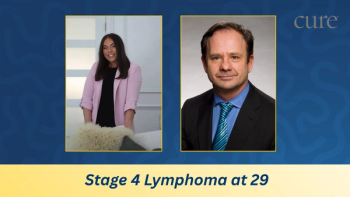
In an interview with CURE, Dr. Andre Goy, physician-in-chief of oncology at Hackensack Meridian Health, explained how early response testing could help doctors adjust treatment sooner, along with how lymphoma treatment plans are built and which advances are changing care. He also discussed his patient Katie Parrinello, who was treated for primary mediastinal B-cell lymphoma.
Read more:
Goy: Lymphoma is a very heterogeneous disease. As we understand the differences among lymphoma subtypes better, particularly with progress in molecular genetics, we see that they are distinct functional subgroups. Depending on the classification, there are well in excess of 100 to 120 different subtypes of lymphoma.
So, the first thing when someone is diagnosed is to find a place with the expertise to make the right diagnosis and identify the subtype. For example, [my patient Katie Parrinello] had primary mediastinal B-cell lymphoma, but with some aggressive features in terms of extension, with a very large mass extending into the sternum and some axillary [underarm] lymph nodes. That's not as typical in young women, where it's usually self-contained in the mediastinum [the area of the chest between the lungs].
After identifying the type of lymphoma, we also do genomic studies here to look at the genomic profile of the lymphoma and see if there are additional risk features. For example, someone might be TP53 positive, which we know is associated with poor outcome, particularly with chemotherapy. The type of lymphoma, the biology, is what matters the most.
Then you look at the amount of lymphoma and where it has spread, so you do a PET scan. You also do extensive blood work and an echocardiogram [an ultrasound of the heart] to evaluate cardiac function before starting treatment, because some of the drugs can have cardiac toxicity. Based on the stage, the biology and those results, you can make a treatment plan. There are multiple options in that setting, and the idea is to customize the treatment plan based on the precise situation of a given patient.
Always. Age matters. What's called performance status [a measure of how well a patient can carry out daily activities] matters, and so do the patient's symptoms and whether they have any other medical conditions.
Katie is very dynamic and young. She was very symptomatic, but she's driven and physically active. She has a real estate business and a gym on the side. She is a good model of someone who is very tough and driven and might recover even better from chemotherapy. I believe being active is really important while on chemotherapy.
There's a lot of information online, and some of it doesn't necessarily reflect reality or connect to the features of the lymphoma we're dealing with. There's also a lot of evolving therapy, so we need to make sure the recommendations people find online are current.
I usually don't like to share, quote unquote, statistics, because statistics make sense when researchers compare two different treatments to decide which one is best. For a patient, it's never going to be very helpful. The statistics are clinical trial driven and don't necessarily reflect the real world, and there are so many different factors. I do tell them the odds in their situation. Although [Katie's] was an aggressive presentation, the odds of cure are really, really high, and that's our role.
We usually wait until patients have had two cycles of chemotherapy so we can see how well they respond. That's really the ultimate factor. Until you start treatment, it's difficult to identify what the long term will look like for a given patient. If the treatment is not enough after two cycles, we have plenty of options to adjust and intensify it.
For someone who has an aggressive lymphoma and gets R-CHOP, which is the most common backbone of chemotherapy, real-world data show that dose intensity matters. A simple dose reduction of 10% to 15%, which is not a high number, or delays in treatment because of toxicity can dramatically affect the outcome. So until you see how well someone reacts, it's difficult to make a final statement, let alone the fact that it scares patients before starting. I'd rather get them started and talk more about this after two cycles of chemotherapy.
One of the biggest opportunities in lymphoma is understanding better what's happening on treatment, so that you could potentially tweak the treatment early or reduce the number of cycles. We are doing a study here called the SONAR study, where we do immune profiling and genetic studies on days 1, 8 and 21 to correlate with the PET scan. We see patients on day 8 who are MRD negative [meaning no lymphoma is detectable], and that's remarkable.
What matters are the changes that happen as you get your treatment, the dynamic biomarkers that show you're responding. You might tweak the treatment to make it better early instead of waiting until full-blown resistance. If patients respond very well, maybe you could reduce the amount of treatment. And if they respond well but still have residual MRD, what do we do for them to prevent recurrence? That's where the future of molecular medicine is going.
This is quite a formidable time in lymphoma. Targeted therapies have been critical. They have had a huge impact, particularly in mantle cell lymphoma, and we've developed a lot of non-chemotherapy options, like in CLL [chronic lymphocytic leukemia].
The second factor disrupting lymphoma the most is cell therapy and T-cell engagers, or bispecific antibodies. Bispecific antibody combinations are going to be really helpful for patients with aggressive lymphoma who are not eligible for an intensive regimen like the one we used for Katie. They are also important as consolidation for patients who are MRD positive [meaning a small amount of lymphoma is still detectable] after chemotherapy.
CAR T-cell therapy is still a remarkable story. We have patients [whose lymphoma has not responded to] all standard induction [initial] treatment, and with one infusion of cells, we cure roughly 40% of patients with refractory large cell lymphoma. That's a pretty good number.
She's responding really well, and she's had no major side effects beyond the ones you expect with an intensive regimen. She's very driven, bubbly and positive. She comes to the clinic, she runs her business, she never stops. She does something really smart. She plans things and keeps on schedule, or even adds more, to keep herself going in between treatments. Overall, this has been a good experience.
One unappreciated aspect that was really good in Katie's approach is the lifestyle aspect on treatment, being very active and making some lifestyle changes. This is an emerging field. I think these changes improve the activity of treatment, particularly in the context of immunotherapy, including in solid tumors, and potentially help prevent recurrence and support a better recovery.
We tend to think of the lifestyle piece for the way after treatment, and I think this is something people should embrace from the get-go. I 100% recommend my patients try to make some of these changes, including nutrition, but also physical activity on treatment, because they tolerate the treatment better and recover better.
For more news on cancer updates, research and education,