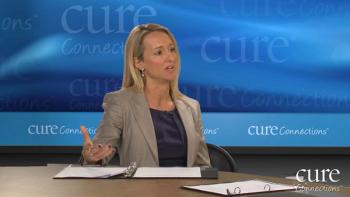









Melanoma specialist, Suzanne L. Topalian discusses how new approved drugs and those in the pipeline for advanced melanoma are making an impact for patient.

Melanoma specialist, Suzanne L. Topalian discusses how new approved drugs and those in the pipeline for advanced melanoma are making an impact for patient.

A new study has found that while the breast cancer prevention drug tamoxifen's benefits outweigh its risks, the drug isn't right for all women.

Ibrutinib becomes the first drug specifically approved for Waldenstrom's macroglobulinemia (WM), two months ahead of expectations.

Every day, breast cancer researcher Edith Perez sets her mind on finding better treatments for the disease and conducting research aimed at improving patients' lives.

When motivating people to get screened for cancer, fear may not be the best way to do it.

The Food and Drug Administration is evaluating proposals for new indications for at least 17 oncology medicines, according to Friends of Cancer Research, an advocacy group that aims to get patients cutting-edge treatments as safely and quickly as possible.

An analysis of patients with advanced hepatocellular carcinoma and elevated AFP who received second-line Cyramza showed improved survival, according to data from the phase 3 REACH study.

There is a lot of pressure on cancer patients to stay cheerful and only focus on the positive during treatment and beyond. I think this is overrated and can stifle the process of coming to terms with this disease.

Recent results from the phase 2 TERRAIN trial showed Xtandi increased progression-free survival by nearly 10 months compared with Casodex in patients with metastatic castration-resistant prostate cancer.

The integrative treatment of cancer must include nutrition as an adjunct to surgery, radiation therapy and chemotherapy.

Immune checkpoint inhibitors targeted against PD-1 and its ligand PD-L1 have rapidly advanced as treatments for patients with melanoma and non-small cell lung cancer (NSCLC), following their initial debut in 2012. What's next?

The emotional fallout of cancer takes a heavy toll. Experiencing your feelings in your own way, at your own pace, can be a challenge.

The Food and Drug Administration granted a Fast Track Designation to CPX-351 for the treatment of elderly patients with relapsed acute myeloid leukemia (AML).

Most oncologists are well acquainted with the term precision medicine, often used interchangeably to describe a model of care in which a treatment plan is based on patient characteristics and the molecular and genetic profile of the patient's tumor.

Two recent studies outline the importance of nutrition in preventing obesity-related cancers, as well as the potential benefits of a nutrition education intervention in preventing breast cancer recurrence.

There are some things known to increase the risk of gynecologic cancers. Bottom line, being a woman puts you at risk.

Phase 2 Chinese study shows famitinib, a multi-targeted tyrosine kinase inhibitor, led to a small improvement in progression-free survival in patients with advanced, previously treated metastatic colorectal cancer.

The vastly improved outlook for patients with chronic lymphocytic leukemia (CLL) was named the American Society of Clinical Oncology's inaugural "Cancer Advance of the Year."

Last week, I walked the massive halls of Moscone West in San Francisco and attended the Gastrointestinal Cancers Symposium, better known as ASCO GI. It is a meeting I always feel quite privileged to attend; it offers a glimpse into the work, passion, and expertise that goes into the many aspects of being able to live with metastatic colon cancer.

Those of us living with metastatic cancer ride a see-saw between hope and acceptance.

Changing the administration schedule for Gemzar (gemcitabine) plus Abraxane (nab-paclitaxel) from weekly to every other week significantly reduced side effects without impacting efficacy as a frontline treatment for patients with metastatic pancreatic cancer, according to a retrospective study presented at the 2015 GI Cancers Symposium.

An analysis of the phase 3 NAPOLI-1 trial supports the benefits of adding MM-398 chemotherapy for the treatment of patients with metastatic pancreatic cancer who were previously treated with Gemzar.

The stress of cancer doesn't leave us at bedtime. Focusing on relaxation, rather than sleep, can get you the healing rest you need.

Women with hormone receptor-positive breast cancer who remained premenopausal after receiving chemotherapy had a lower risk of disease recurrence when adding ovarian suppression to adjuvant Aromasin, according to results from the phase 3 SOFT trial.

It's taken me a while to accept that it's OK to not be OK. Sometimes the only way to keep moving forward is to stop and have a pity party first.

Among patients with metastatic gastric cancer treated with the PD-1 inhibitor Keytruda, the agent showed promising activity, according to updated findings from the KEYNOTE-012 study presented at the Gastrointestinal Cancers Symposium.

In the past four months, the PD-1 inhibitors Opdivo (nivolumab) and Keytruda (pembrolizumab) have been approved for the treatment of advanced melanoma. Jeffery S. Weber, a senior member at Moffitt Cancer Center in Tampa, Fla., provides insight on what this means for treating patients.

The Food and Drug Administration's calendar for making decisions on new cancer drugs and indications is taking shape for 2015, and the clock is ticking on at least 13 applications for novel agents and new therapeutic settings for existing drugs.

Patients with metastatic colorectal cancer treated with Cyramza and standard FOLFIRI lived a median of 1.6 months longer than patients treated with FOLFIRI alone, according to results from the phase 3 RAISE trial.

Intensifying the chemotherapy component of a standard regimen containing Avastin reduced the risk of death and increased five-year overall survival in newly diagnosed metastatic colorectal cancer.