





Prostate Cancer
Latest News
Advertisement
Educated Patient Resource Guide
Metastatic Castration-Resistant Prostate Cancer (mCRPC)

Video Series




Latest Videos



Advertisement
More News

The FDA granted fast track designation to Enolen for patients with low-to-intermediate risk prostate cancer.

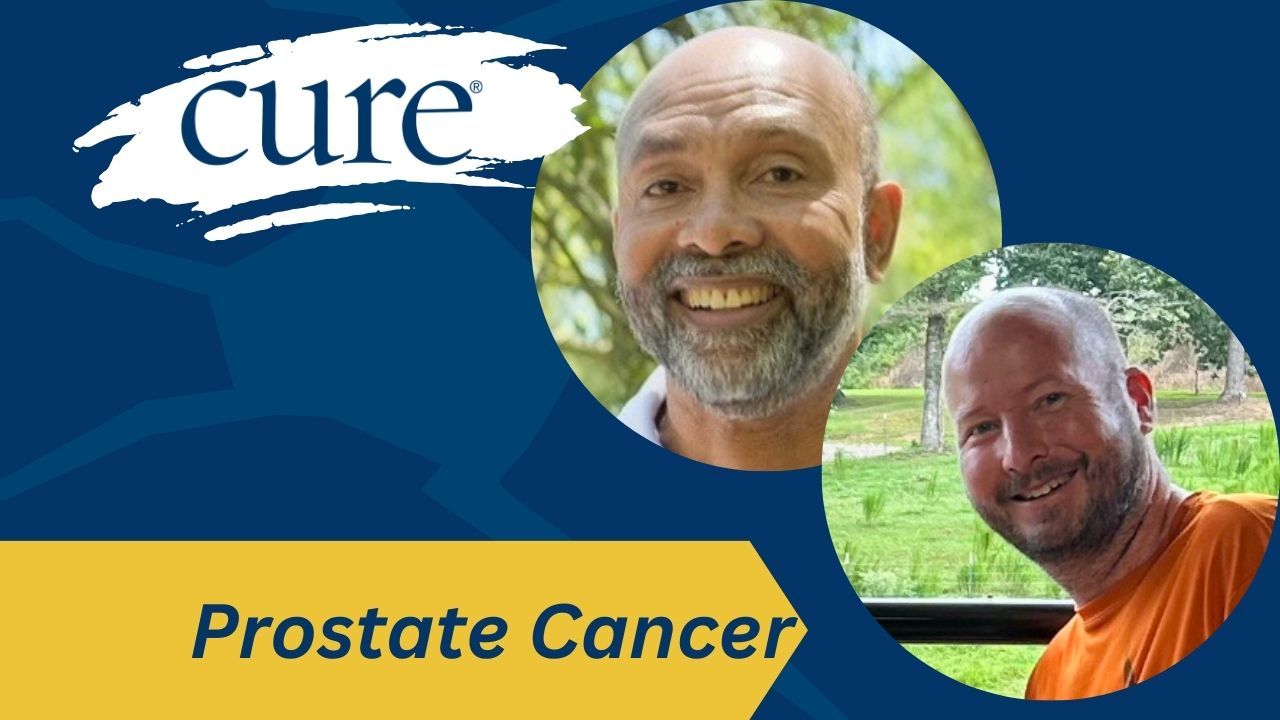
Prostate cancer survivors Ronald Wakefield and Ernie Strauss sat down for an interview with CURE.

My initial reaction was fear: Fear of the unknown possibilities of what could happen as a result of this most dreaded diagnosis.

The FDA granted regular approval to treatment with Rubraca for some adult patients with previously-treated metastatic castration-resistant prostate cancer.

Newly diagnosed with stage 3 prostate adenocarcinoma? Understand your diagnosis and explore multimodality treatment options for an informed cancer journey.
The FDA approved Akeega combination therapy for adults with BRCA2-mutated metastatic castration-sensitive prostate cancer.

In a recent interview with CURE, Dr. Kai Tsao discussed treatment advancements for patients with prostate cancer.

Among young patients, clinical trial results have shown that Pedmark is associated with a reduction in chemotherapy-induced ear damage.
Following the 2025 ESMO Congress, Dr. Joshua Saba sat down with Dr. Chandler Park to discuss recent advances in prostate cancer care.
Stoboclo and Osenvelt is now interchangeable with brand-name drugs, per the FDA, letting pharmacists substitute them while ensuring safety and efficacy.

Choosing treatment for stage 2 prostate cancer? Get the facts on surgery versus radiation and learn to manage possible side effects such as erectile dysfunction.

In hormone-sensitive prostate cancer, an alternative dosing of docetaxel plus Nubeqa and ADT was associated with improvements in side effect rates.

Adding Xtandi to androgen deprivation therapy and radiation did not significantly improve metastasis-free survival in high-risk localized prostate cancer.

Adding Truqap to Zytiga, prednisone, and ADT extended radiographic progression-free survival by 7.5 months in PTEN-deficient prostate cancer.

For patients with HRRm prostate cancer receiving Akeega with prednisone, quality of life remained at baseline.

Although death rates continue to decline each year, prostate cancer cases are increasing, especially those diagnosed at advanced stages.
This stage 1 prostate cancer guide explains diagnosis, Gleason scores and the choice between surgery, radiation and active surveillance.
In September 2025, the FDA approved new treatments for breast, bladder and prostate cancers, plus biosimilars and a subcutaneous immunotherapy option.

The FDA approved the denosumab biosimilars Enoby and Xtrenbo for patients on hormone therapies for breast or prostate cancer that weaken bones.

Patients with prostate cancer can position themselves to receive the best care possible by being seen by a multidisciplinary team of healthcare providers.

The NY Giants Legend To Celebrate Being Cancer Free At The NFL Giants Crucial Catch Game September 28th at MetLife Stadium.
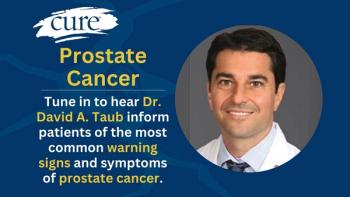
Dr. David A. Taub sat down with CURE for an interview in honor of Prostate Cancer Awareness Month, observed annually each September.

Press Release
This Prostate Cancer Awareness Month, a first-in-the-nation trial offers hope by using a targeted therapy before surgery to stop recurrence in its tracks.
The FDA approved Bosaya and Aukelso, biosimilars of Prolia and Xgeva, respectively, for the treatment of solid tumors, like breast and prostate cancer.

This comprehensive guide provides essential information to help patients and their families navigate their prostate cancer journey.
Advertisement
Advertisement
Trending on CURE
1
Why PSA Monitoring Matters After a Prostate Cancer Diagnosis
2
Rectal Cancer Tumor DNA Fell From 45.8% to 8.7% After Chemotherapy
3
ESMO 2026 Preview: 5 Late-Breaking Trials Patients Should Watch
4
California Will Require Coverage of Scalp Cooling During Chemotherapy
5