



Prostate Cancer
Latest News

Advertisement
Educated Patient Resource Guide
Metastatic Castration-Resistant Prostate Cancer (mCRPC)

Latest Videos


Advertisement
More News

Prostate cancer survivors who had a more plant-based diet tended to have fewer sexual and urinary side effects, research showed.

The Food and Drug Administration has granted a Fast Track designation to the novel immune activator drug BXCL701 in combination with a checkpoint inhibitor for patients with metastatic small cell neuroendocrine prostate cancer (SCNC).

Here are some of the top stories from the recent Gastrointestinal Cancers Symposium as well as the Genitourinary Cancers Symposium.

Patients with high-risk prostate cancer who had a higher dose of radiation plus long-term androgen deprivation therapy tended to live longer than those who had a lower dose.

Fear overtook my mind as I received rounds of scans for prostate cancer when my PSA results surged.
CURE® editors discuss last week’s biggest cancer headlines, from Dexter Scott King’s death to the potential of laughter therapy to boost quality of life.

Patients with metastatic castration-resistant prostate cancer previously treated with external beam radiation therapy did not increase incidence of blood-related side effects with radium-223 compared with the overall population.

Nubeqa plus androgen deprivation therapy and docetaxel to treat patients with metastatic hormone-sensitive prostate cancer lowered hospitalization rates but led to marginally longer lengths of stay compared with those treated with placebo, androgen deprivation therapy and docetaxel.
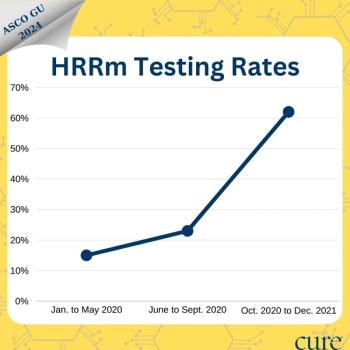
Approximately 40% of patients with metastatic castration-resistant prostate cancer did not undergo certain types of tests that can be instrumental in treatment decisions.

Treatment with Zytiga, prednisone and Erleada plus another treatment regimen improved prostate cancer outcomes and did not change health-related quality of life outcomes.
Lynparza, Zytiga and prednisone led to improved progression-free survival and response rates in patients with metastatic prostate cancer.

Cabometyx plus Tecentriq led to improved progression-free survival compared with novel hormonal therapy in patients with metastatic castration-resistant prostate cancer.

Dexter Scott King, son of Martin Luther King, Jr., died of prostate cancer the same day MLB Hall-of-Famer Ryan Sandberg announced he’s been diagnosed with metastatic disease.
Last week, the FDA provided updates on two cancer therapies. In this episode, we discuss those decisions and more.

From Michael Strahan announcing his cancer diagnosis to a “Baywatch” star being diagnosed with cancer, here’s what’s happening in the oncology space this week.
Patients continue to be enrolled in a study evaluating the dual-action androgen receptor inhibitor ONCT-534 for the treatment of patients with advanced prostate cancer who are relapsed or refractory to approved androgen receptor pathway inhibitors (ARPIs).

The first patients has been dosed within the new CLARIFY trial for patients with prostate cancer awaiting prostatectomy.

Dr. Stephanie Berg of Dana-Farber Cancer Institute and Harvard Medical School discusses the need to be mindful of quality of life when treating prostate cancer.
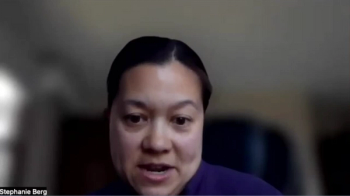
Dr. Stephanie Berg of the Dana-Farber Cancer Institute and Harvard Medical School discussed the recent EMARK trial which resulted in the FDA’s approval of Xtandi for non-metastatic castration-sensitive prostate cancer (nmCSPC) with biochemical recurrence at high risk for metastasis.


An expert explains the significance of the recent approval of Xtandi for non-metastatic castration-sensitive prostate cancer (nmCSPC) with biochemical recurrence at high risk for metastasis (high-risk BCR) by the Food and Drug Administration.

Researchers have found that a deeper look at proteins and cells may help explain why prostate cancer tumors often become resistant to hormone therapy.
The first patient has received TLX591, an antibody-based treatment for PSMA-positive metastatic castrate-resistant prostate cancer.

I see a psychologist who is helping me to understand my feelings and to learn mindfulness meditation techniques.

In honor of Men’s Health Awareness Month, CURE® looked back on some of the most significant news within the oncology space.
Advertisement
Advertisement
Trending on CURE
1
FDA Grants Traditional Approval to Keytruda for TMB-H Solid Tumors
2
Why Cancer Screening Remains Important for Long-Term Cancer Survivors
3
Breast Cancer at 30: Aisha Shares the Challenges of Motherhood, Body Image and Life After Treatment
4
FDA Clears AI Tool Using MRI to Gauge Breast Cancer Recurrence
5