




Kidney Cancer
Latest News

Advertisement
Latest Videos




Advertisement
More News

Welireg led to improved time to progression and objective response rates compared to Afinitor for patients with advanced clear cell renal cell carcinoma, according to study findings.


Tian Zhang, MD, MHS, provides an overview of the treatment of patients with non–clear cell renal cell carcinoma.
An overview of the treatment protocol for patients with advanced RCC who are receiving IO/TKI or IO/IO combination therapy.

Patients with intermediate- or poor-risk clear-cell metastatic renal cell carcinoma saw improved response rates with Opdivo with or without Yervoy.

From Julia Louis-Dreyfus opening up about her breast cancer experience to Dolph Lundgren discussing his experience, here’s what’s happening in the cancer space this week.
Genitourinary oncologists discuss the safety and efficacy of IO/TKI and IO/IO combination therapies in advanced renal cell carcinoma.
Expert perspectives on the decision-making process for selecting frontline systemic therapy for patients with advanced renal cell carcinoma.
A comprehensive overview of systemic therapies available for the treatment of patients with advanced renal cell carcinoma.
Experts in the field of kidney cancer discuss the risk stratification process for renal cell carcinoma and its effect on prognosis.
Clinical insights on the typical presentation of kidney cancer and the diagnostic process.
Chandler H. Park, MD, and Tian Zhang, MD, MHS, give an overview of renal cell carcinoma (RCC) and outline disease risk factors, symptoms, and prevention strategies.

The FDA granted Welireg a priority review after it showed promising outcomes for patients with pretreated advanced renal cell carcinoma.

Treatment with Welireg significantly improved progression-free survival rates in patients with advanced renal cell carcinoma, the most common type of kidney cancer.

From Jill Martin revealing an updated about her cancer to Casey DeSantis announcing breast cancer diagnosis, this is what’s happening in the oncology space this week.
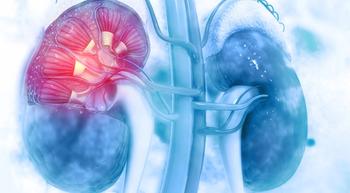
Patients with metastatic clear cell renal cell carcinoma who received corticosteroids during Opdivo treatment did not experience a negative impact on survival.
Even with the increase of immunotherapy utilization to treat patients with advanced renal cell carcinoma, more research is needed to determine in which order to administer it as later lines of therapy.
Therapies that target specific characteristics on kidney cancer cells are showing promise in the space, an expert explained.
With new treatments being explored, it’s an exciting time for patients with kidney cancer, an expert explained.
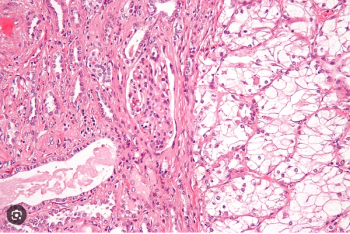
An expert explained what aspects of a patient’s disease cancer care teams use to determine the best treatment options for patients with clear cell renal cell carcinoma.
Patients with BAP1-mutated renal cell carcinoma who were treated with Lynparza obtained responses with favorable side effect profiles.

A randomized clinical trial, CHEERS, determined that the combination of stereotactic body radiotherapy (SBRT) and immune checkpoint inhibitors (ICIs) were ineffective as treatment for patients with advanced solid tumors.

Adolescents and young adults undergoing VEGF treatment for nonmetastatic, high-risk renal cell carcinoma may still experience heart-related conditions like left ventricular systolic dysfunction and high blood pressure.

The addition of Tecentriq to Cabometyx did not improve the length of time patients lived without their disease getting worse for individuals with previously treated advanced kidney cancer, and came with additional side effects, too, recent research showed.

Adding Cabometyx to Opdivo and Yervoy tended to improve progression-free survival in patients with advanced kidney cancer, research showed.
Advertisement
Advertisement
Trending on CURE
1
FDA Grants Traditional Approval to Keytruda for TMB-H Solid Tumors
2
Why Cancer Screening Remains Important for Long-Term Cancer Survivors
3
Breast Cancer at 30: Aisha Shares the Challenges of Motherhood, Body Image and Life After Treatment
4
FDA Clears AI Tool Using MRI to Gauge Breast Cancer Recurrence
5