
Cancer changes everything about one’s self-image, but that doesn’t mean it is a negative outcome.
Cancer changes everything about one’s self-image, but that doesn’t mean it is a negative outcome.

A survivor of male breast cancer goes through what he wishes he knew before a breast cancer diagnosis.

Dr. Pat Basu, president and CEO of Cancer Treatment Centers of America discusses the fear surrounding cancer screenings during the COVID-19 pandemic and finding the right balance between what is an essential visit and what can be done using telemedicine.
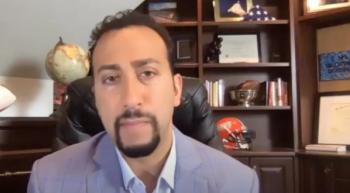
“There's a lot of miscommunication and number one, I would tell them you don't need to face these decisions alone,” Dr. Pat Basu said in an interview addressing patient’s fear in the midst of the COVID-19 pandemic.
A fellow cancer survivor mourns the passing of Kathy LaTour.

“I think that when people are diagnosed with cancer, cancer really becomes their life,” Alessandra Tantawi said in a recent interview with CURE®. “And it's so hard to just have a ‘normal day’ where you can focus on anything besides cancer. And I think what's important is to spend time that is outside of the cancer treatment.”

For survivor Michele Grimes, time at home during the pandemic fosters an opportunity for reflection and growth.
A cancer journey influences how a person contemplates retirement. In my case, it inspired me to retire from teaching earlier than I had originally planned.
Takeaways from 3 months of video tele-mental-health care during cancer treatment amid the coronavirus pandemic.
Support for cancer patients and survivors comes in all shapes and sizes, but sometimes the good vibes, encouragement and positivity can go too far
A breast cancer survivor talks about how she went about enjoying the summer to find the right swimsuit for her after her cancer journey included a mastectomy.
Writing about the cancer journey and sharing your story is vulnerable and challenging, but the experience is often cathartic and necessary.
A cancer survivor deals with virtual examinations and how they can feel impersonal.
A simple banana split can be a powerful memory, and a powerful tool, to help caregivers and patients find the strength to keep going on their cancer journey.
A cancer survivor explains why being in remission feels similar to worrying about getting COVID-19.
COVID-19 and cancer are very different in how they work in the body, but the psychosocial challenges they present are also very familiar.

“For the patients that are nervous about how this is going to end, or what's going to happen, I would say that that's true for them outside of the COVID crisis because that's the same question they have about their cancer,” Dr. Scott A. Irwin said.
As stress and anxiety have increased during the COVID-19 pandemic, one expert notes how it’s important for patients with cancer to pay attention to their mental health.
Patients with cancer have a unique skill that not only aids them through their own cancer journey but a global pandemic like COVID-19.
As millions of people face a “new normal” during the COVID-19 pandemic, patients with cancer can teach others about the resilience needed to face the unknown.
There's a lot of rapidly changing information on COVID-19 and patients need to take their time and find the facts that matter.

Although many patients with cancer are concerned about leaving their house during the COVID-19 pandemic, a board-certified psychiatrist highlights that some of his patients with cancer have reported a reduction in their anxieties during the pandemic.
May marks Mental Health Awareness month, a crucial part of the healing required for patients on their cancer journey.
Hope is a tenuous thing, but it is important to foster hope during the cancer journey even when the statistic don't feel hopeful.
All of us could choose to practice gratitude instead of judgment during these challenging times.