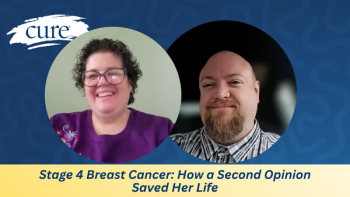
Diagnosed with stage 4 breast cancer weeks after giving birth, Eileen Carter explains why getting a second opinion changed the course of her care.
Debbie Legault, whose daughter was diagnosed with breast cancer at 27, urges shoppers to skip pink ribbon products and donate directly to support organizations.
Since my daughter was diagnosed with breast cancer at 27, I have become involved in a number of ways with the breast cancer community, and more than anything, when it comes to October, breast cancer survivors tell me they want to crawl under a blanket and hide until the month is over.
Because to them, it feels like their misery has become a marketing tool.
Companies make money by implying that purchases of “pink” items support people with breast cancer when they simply don’t. The challenge here is that marketers are not, at the heart of the matter, lying. People wearing or displaying breast cancer awareness T-shirts or bumper stickers or socks are raising awareness. But when purchasers hit that “Buy Now” button thinking they are supporting breast cancer research or providing direct support to patients, they are too often actually contributing to a company’s bottom line: companies that potentially rely on these sales the same way chocolate manufacturers rely on the bump from Valentine’s Day.
Breast Cancer Awareness Month launched in the 1980s, but it was in the 1990s that companies began to realize that the pink ribbon was a powerful way to appeal to shoppers. Since 1 in 8 women will be diagnosed with breast cancer at some point in their lives, this opened up a huge demographic of people who often didn’t know what to say or do to help Aunt Mable, but doggone it, they could buy a pair of socks.
The ultimate insult that pushed it over the line for many breast cancer survivors was when a pink ribbon Halloween costume came on the market a few years ago. I couldn’t believe it either. Imagine the reaction if an AIDS costume was released, or something making light of diabetes. Take that one step further and place yourself in the room where the discussion happened about the appropriateness of selling a costume that played upon the misery of millions of women and their families, and someone thinking, “Yeah, this is a great tie-in.”
This is an example of how the marketing has completely overwhelmed the message and the intent. The original idea of Breast Cancer Awareness Month was to increase awareness of how screening could potentially save lives by catching breast cancer early, before it had spread to the brain or bones or liver and become terminal. This is still an excellent goal, and I would not want to take it off anyone’s calendar. Indeed, it was seeing information about the Breast Cancer Awareness Campaign in October 2018 that prompted my daughter to do the self-check that eventually led to her diagnosis and treatment in early 2019. But as consumers of both information and things, I wish with all my heart that we could all take a step back and think about what turning millions of women into boxes of chocolate must feel like to them.
And to their mothers... like me.
I’ve said this before, but it bears repeating. Look at the price tag of the pink ribbon-inspired product you’re thinking of purchasing, and instead of hitting “Buy Now,” send that money as a donation to an organization that provides direct support. Many cancer support organizations provide free rides to and from treatment centers, wigs to cover bald heads or even support with necessities like food and rent. You could even go a step further and talk to your colleagues and loved ones about this as an option instead of yet another water bottle or coffee mug no one really needs.
Stepping down off my soapbox.
Debbie... out.
For more news on cancer updates, research and education,