

Commentary|Videos|November 3, 2023
Caring for a Wig in Patients With Cancer-Related Hair Loss
Author(s)Kristie L. Kahl
In this on-demand webinar series, CURE partnered with Look Good Feel Better to discuss how patients with cancer can care for their wig.
Advertisement
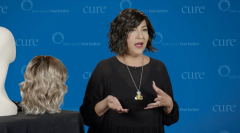

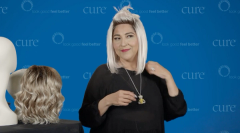

In part four of CURE’s “Confidently You: Choosing and Styling Wigs that Look and Feel Right” webinar, Daniela Hernandez-Salas, a Look Good Feel Better volunteer, discussed how to wash and care for a wig worn by patients with cancer experiencing treatment-related hair loss.
Summary:
00:04 – Shampooing a wig
- If a patient wears one wig every day, they should shampoo it every two to three weeks; however, this could be dependent on perspiration and wear.
- For example, Daniela Hernandez-Salas noted that during the summer or in warmer weather, patients may want to shampoo more often.
- She also mentioned that the less a wig is shampooed, the longer it will last.
00:44 – Shampooing a synthetic wig.
- The speaker suggested using lukewarm water with wig-specific shampoo in a basin of water.
- She motioned to turn the wig inside out and dip it up and down in the basin, working the shampoo into the fibers, followed by rinsing it under water.
- Last, she recommended squeezing the water out of the wig, not to twist or wring the synthetic hair, and let it air dry for seven to eight hours.
02:53 – Tips and tricks for washing wigs.
- Hernandez-Salas recommended against using blow dryers, curling irons or any kind of instrument that is going to cinch the fiber again to prevent damage.
- She also offered an example of being careful when cooking in either the stove or oven.
- Further, using a sweat liner or wig cap can help to catch sweat and protect ones skin in hot weather.
- When not wearing their wig, patients should keep them on a tall stand or to lay them flat on tissue paper.
- Lastly, Hernandez-Salas reminded the audience to keep wigs away from heat sources, including cars.
For more news on cancer updates, research and education, don’t forget to
Advertisement
Related to this article

After 18 years with multiple myeloma, Sally Kalksma shares 10 people, places and things that helped her stay strong through cancer treatment.
In the latest installment of CURE's "Text a Survivor" series, Brad Moore answers some of the most common questions people have about living with and beyond a colorectal cancer diagnosis.

Lyrfigtu was approved for adults with previously treated cholangiocarcinoma with an FGFR2 gene fusion or other rearrangement.

Researchers are studying whether combining CAR-T cell therapy with targeted drugs could help children with high-risk leukemia, including infants whose cancer may be more likely to return after treatment.

Mindfulness-based cancer recovery and Tai Chi/Qigong improved fatigue and how much pain interfered with daily life among cancer survivors experiencing distress, while Tai Chi/Qigong also improved sleep quality.

A breast cancer survivor reflects on the complicated meaning of pink, remembering what cancer took, those still fighting and the people behind the ribbon.

Paxalisib, first studied in brain cancer, may help HR+ breast tumors respond to CDK4/6 inhibitors again, based on early lab data.

A cancer survivor shares what to say, what not to say and how listening can help support someone through cancer treatment and beyond.
Advertisement
Advertisement