Resectable: removable by surgery.
Neoadjuvant: administered prior to the main treatment, such as surgery.
Adjuvant: administered after the main treatment, such as surgery.
Prescription Drug User Fee target action date: a deadline set for the FDA to review and potentially approve a product.
Event-free survival: the length of time after primary treatment that a patient remains free of certain complications or events that the treatment was intended to prevent or delay.
Major pathological response: the lack of all signs of cancer in tissue samples removed during surgery or biopsy after treatment.
Regarding safety, the manufacturer said the safety profile of Keytruda was consistent with previous studies and no new safety signals were observed.
"The standard of care for patients with resectable locally advanced head and neck squamous cell carcinoma has remained the same for over two decades, representing a significant unmet need for new treatment options,” said Dr. Marjorie Green, senior vice president and head of oncology, global clinical development, Merck Research Laboratories, in the news release. “Based on the compelling results of the KEYNOTE-689 trial, we hope to reduce the risk of recurrence and disease progression in earlier stages of disease. We look forward to working with the FDA to potentially bring Keytruda to these patients as soon as possible.”
In KEYNOTE-689, approximately 704 treatment-naïve patients with newly diagnosed stage 3 or 4A resectable LA-HNSCC were randomized evenly to receive either 200 milligrams (mg) of Keytruda intravenously every three weeks for two cycles prior to surgery, followed by either 200 mg of Keytruda intravenously every three weeks for 15 cycles plus standard of care radiotherapy with chemotherapy after surgery for high-risk patients or 200 mg of intravenous Keytruda every three weeks for 15 cycles plus standard of care radiotherapy without chemotherapy after surgery for low-risk patients, or no therapy prior to surgery followed by either radiotherapy with chemotherapy after surgery for high-risk patients or radiotherapy without chemotherapy after surgery for low-risk patients.
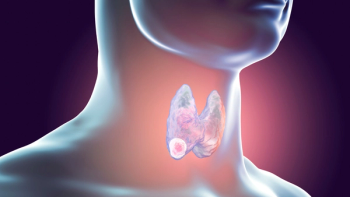
Head and neck cancers, according to the American Association for Cancer Research, are malignancies that arise in the nasal cavity, sinuses, lips, mouth, salivary glands, throat or larynx, and usually begin in the squamous cells that line the moist mucosal surfaces of the mouth, nose and throat.
At this time, Keytruda is approved by the FDA as a monotherapy and in combination regiments for some patients with metastatic or unresectable, recurrent HNSCC.
Keytruda, according to the National Cancer Institute, is a type of immunotherapy known as an immune checkpoint inhibitor that works by binding to the protein PD-1 on the surface of immune cells known as T cells, which prevents cancer cells from suppressing the immune system.
For more news on cancer updates, research and education, don’t forget to subscribe to CURE®’s newsletters here.