

Opinion|Videos|June 19, 2024
Getting the Most From Your CLL Care Team
Josie Montegaard, MSN, AGPCNP-BC, and Yuliya Linhares, MD, conclude their discussion with advice for patients with CLL on managing their diagnosis and treatment.
Advertisement
Episodes in this series
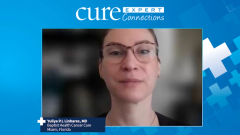
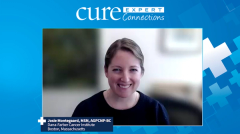
Video content above is prompted by the following question(s):
- Do you have any advice for patients and their caregivers about how to work with their health care team to ensure best outcomes?
- Why is it important for patients with chronic lymphocytic leukemia (CLL) to have a support network in place?
- How and when should patients reach out to their health care team about treatment adverse effects or any changes in how they’re feeling?
- Do you have any additional advice or key takeaways for patients as they manage their CLL diagnosis and treatment?
Advertisement
Related to this article

Medicare will move ostomy supplies to eight national contracts in 2028. Survivors and clinicians say a poor fit can lead to leaks, infection and hospital stays.

An experimental treatment has kept one patient with heavily pretreated hairy cell leukemia free of detectable disease for more than two years, raising questions about whether CAR T-cell therapy could offer a path toward a cure.

The National Comprehensive Cancer Network released its first patient guideline written for caregivers on Oct. 27, 2026. The free guide covers emotional support, money, legal questions, medical tasks and caregivers' own well-being.

Three phase 3 trials presented at the 2026 ESMO Congress looked closely at swallowing, daily functioning and blood counts in throat, kidney and colorectal cancer. Here is what they found about living well during and after treatment.
New research found that nearly 1 in 5 second-level appeals for denied cancer medications under Medicare Part D were successful, raising questions about how insurers make coverage decisions and what patients can do when their treatment is denied.
Joy Maulik, MSN, FNP-C, explains why a prostate cancer diagnosis should be seen as a change in direction, not an ending, and how patients can lean on education, their providers and caregivers.
Dr. Morana Vojnic answers common questions about brain cancer, including diagnosis, tumor types, treatment effects, recurrence and life after treatment begins.

A national survey study of about 200,000 adults, published in Supportive Care in Cancer, found that people caring for someone with cancer had 89% higher odds of frequent mental distress than people who were not caregivers.
Advertisement
Advertisement
Trending on CURE
1
3 Quality-of-Life Results From ESMO 2026 Patients Should Know
2
4 Long-Term Survival Results From ESMO 2026 Patients Should Know
3
Neuro-Oncologist Answers Common Questions About Brain Cancer Diagnosis and Treatment
4
Cancer Caregivers Had 89% Higher Odds of Frequent Mental Distress
5