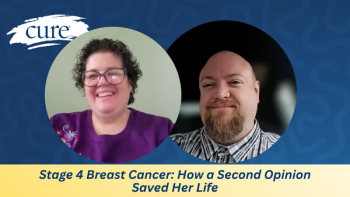
Diagnosed with stage 4 breast cancer weeks after giving birth, Eileen Carter explains why getting a second opinion changed the course of her care.
Nurse practitioner Bridget Hopkins discusses her metastatic breast cancer diagnosis, the role of clinical empathy and finding hope in stage 4 care.
In October 2017, Bridget Hopkins was in what she describes as a "happy chapter" of her life — engaged to be married and planning her future. A diagnosis of breast cancer came as a complete shock, triggered by a routine day of yard work. After noticing a lump she initially mistook for a cyst, Hopkins entered the diagnostic treadmill. Despite her medical background and reassurances from her gynecologist that there was a "99% chance" it was non-cancerous, a mammogram and ultrasound quickly shifted the narrative.
Her radiology report confirmed a high suspicion of malignancy. Looking back as she shared her story in an interview with CURE, Hopkins recalled the "earth-shattering" moment of her biopsy, highlighting the profound impact of compassionate clinical care. She specifically credited an interventional radiologist whose empathy and "human touch" provided a glimmer of hope during her darkest hour.
The dual perspective: nurse and patient
As a family nurse practitioner coming from a long lineage of nurses, Hopkins’ experience as a patient deeply informed her professional life. Having worked in emergency medicine, urgent care, and eventually palliative care and hospice, she utilized her first-hand knowledge of the healthcare system’s "roadblocks" to better advocate for her patients. During her initial years of remission, she served as a mentor and role model, guiding others through the same challenges she had faced in 2017.
The "silver lining" of a traumatic event
After nearly eight years in remission, Hopkins’ life changed again following a significant car accident in November 2024. While the accident caused painful injuries to her back and shoulder, it ultimately served as a life-saving catalyst. When persistent pain didn't resolve with physical therapy, Bridget sought an elective procedure with her plastic surgeon to address "dimpling" in her breast reconstructive site, assuming it was scar tissue from the crash.
During this surgery, her surgeon discovered and biopsied a small, unassuming nodule. Ten days later, Hopkins received a notification on her phone via a patient portal while sitting in a chiropractor's office: "Positive breast carcinoma."
Facing metastatic disease
The transition from a suspected local recurrence to a metastatic diagnosis was swift and devastating. While her medical team initially hoped the cancer was localized, a PET scan, a tool not typically used in first-line breast cancer protocols, revealed the full extent of the disease.
"I basically lit up like a Christmas tree," she remarked, describing the scan that showed metastasis to her liver, scapula, sternum and lumbar spine.
As a palliative care professional, Hopkins was all too familiar with reading such reports for her patients, making the reality of her own "inoperable" status even more difficult to process. Despite the "horrific, ugly cry" that followed the news, her story remains one of resilience. Now 43, she continues to navigate her stage 4 journey with a positive outlook, leaning on her extensive support network and her professional background to advocate for the importance of bedside manner and patient-centered care.
For more news on cancer updates, research and education, don’t forget to