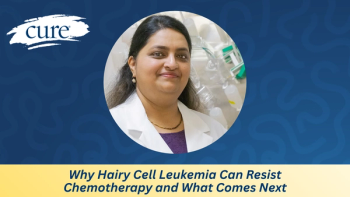
An expert from Case Western Reserve University explains how cancer cells survive treatment, why rare diseases are hard to study and why CAR-T therapy offers hope.
An expert from Case Western Reserve University explains how cancer cells survive treatment, why rare diseases are hard to study and why CAR-T therapy offers hope.
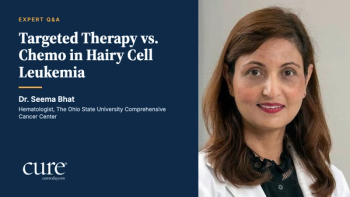
An Ohio State hematologist discusses a new trial comparing tovorafenib plus rituximab with standard cladribine-based treatment, and what quality of life means for patients.

An Ohio State hematologist explains how she weighs chemotherapy against targeted drugs, what side effects patients should expect and why learning about this specific leukemia matters.
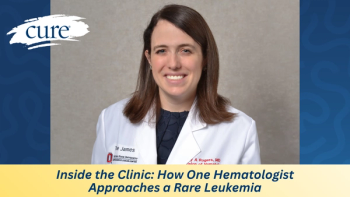
Ohio State hematologist Dr. Kerry Rogers says chemotherapy and newer targeted drugs both work well, and the right choice depends on the patient.
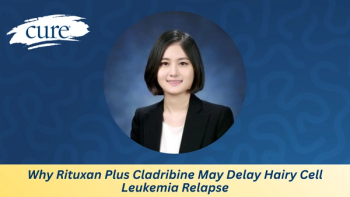
Up to 40% of patients with classic hairy cell leukemia relapse within 10 to 15 years. An NIH researcher explains how adding Rituxan up front may help.

An experimental treatment has kept one patient with heavily pretreated hairy cell leukemia free of detectable disease for more than two years, raising questions about whether CAR T-cell therapy could offer a path toward a cure.
Dr. Jacqueline Barrientos shares how a targeted therapy, a determined care team and a stranger’s generosity gave a 72-year-old man with hairy cell leukemia and kidney failure a second chance.

A clinical trial will test zanubrutinib plus sonrotoclax as a fixed-duration, chemotherapy-free treatment for hairy cell leukemia, aiming for undetectable disease.

Dr. Robert Kreitman explains how CD22-targeted CAR T could help heavily pretreated patients.

An expert discusses infection risks after treatment, what follow-up care looks like and why patients with a rare cancer should ask questions, seek expert opinions and find community.

Dr. Robert J. Kreitman explains how an experimental CAR T-cell therapy may help patients with relapsed hairy cell leukemia achieve lasting remissions.
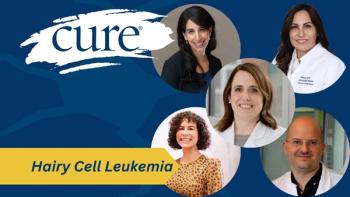
CURE attended the Hairy Cell Leukemia Foundation 2025 Conference where medical experts gathered to discuss advances in research and patient care.
Dr. Dima El-Sharkawi discusses how hairy cell leukemia typically presents in patients and the challenges clinicians face in identifying the disease early.
CURE sat down with Dr. Kerry A. Rogers for an interview at the Hairy Cell Leukemia Foundation 2025 Conference, hosted in Bologna, Italy.

The Hairy Cell Leukemia Foundation will host a free patient forum on July 17th with guest speaker Dr. Martin Tallman from Memorial Sloan Kettering Cancer Center. This forum is free and open to the public and will cover a range of issues related to patients’ journey with hairy cell leukemia.