
Patients with previously treated advanced neuroendocrine tumors who received treatment with Cabometyx had improved progression-free survival compared with placebo.
Patients with previously treated advanced neuroendocrine tumors who received treatment with Cabometyx had improved progression-free survival compared with placebo.
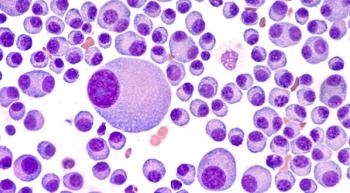
Pomalyst plus Velcade with dexamethasone improves survival outcomes for patients with relapsed/refractory multiple myeloma, according to a phase 3 trial.

Adding Imfinzi the pre- and post-surgical treatment for patients with non-small cell lung cancer led to improved results, research showed.

Iclusig plust reduced-intensity bested Gleevec when it came to MRD-negative complete remission in patients with Philadelphia chromosome-positive acute lymphoblastic leukemia.
Even with the increase of immunotherapy utilization to treat patients with advanced renal cell carcinoma, more research is needed to determine in which order to administer it as later lines of therapy.

Jaktinib significantly improved spleen volume reduction rates compared with hydroxyurea in intermediate- to high-risk myelofibrosis.
Patients with advanced-stage classic Hodgkin lymphoma had a longer progression-free survival rate with Opdivo plus AVD, a chemotherapy regimen, compared with Adcetris plus AVD.

Adding Kisqali to endocrine therapy tended to improve the amount of time patients with HR-positive, HER2-negative early breast cancer lived before their disease became invasive.

Researchers used an AI model to identify patients with endometrial cancer who had a low or high risk for cancer returning to another part of the body, also known as distant recurrence.

BNT211-01, a novel CAR-T cell therapy, was efficacious in treating patients with CLDN6-positive, relapsed/refractory solid cancers, according to a small clinical trial.

The use of the chemotherapy ifosfamide was associated with small improvements in survival outcomes in a group of patients with relapsed/refractory Ewing sarcoma, a rare type of bone or soft tissue cancer.

Zejula plus Avastin led to promising progression-free survival rates with no new side effects for patients with newly diagnosed, advanced ovarian cancer.