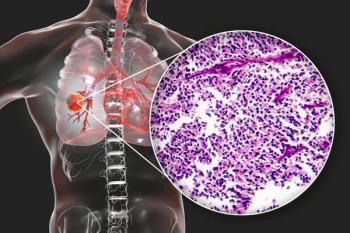

Four phase 3 trials at ESMO 2026 brought news for people with small cell, EGFR, MET and KRAS G12C lung cancer, plus a caution about spacing out immunotherapy doses.
For Lung Cancer Awareness Month, answers to common patient questions about biomarker testing in non-small cell lung cancer: which gene changes doctors look for, blood vs. tissue tests, insurance and retesting.
If you or someone you love has just been diagnosed with non-small cell lung cancer (NSCLC), one of the first things the care team will talk about is biomarker testing. The results can decide whether the first treatment is a daily pill, immunotherapy, chemotherapy or a combination. For Lung Cancer Awareness Month, here are answers to the questions patients most often ask about these tests.
Biomarker testing, also called tumor testing or tumor profiling, looks for genes, proteins and other substances in the cancer itself that help guide treatment. According to the National Cancer Institute (NCI), every person's cancer has its own pattern of biomarkers, and testing is routinely done for some cancers, including NSCLC.
This is not the same as genetic testing for inherited mutations, which looks for gene changes you were born with and can share with relatives. Most lung cancer biomarkers are changes that developed in the tumor, so they are not passed down in families. If a tumor result hints at an inherited change, your team may suggest a visit with a genetic counselor.
For stage 4 NSCLC, the National Comprehensive Cancer Network (NCCN) recommends broad molecular testing, which checks for many changes at once rather than one at a time. Each of the changes below has at least one FDA-approved targeted drug:
Testing also includes PD-L1, a protein that helps doctors judge how likely immunotherapy is to work when no targetable gene change is found. Newer drugs keep being added for these targets. CURE's coverage of
Most testing is done on tumor tissue from a biopsy or surgery. When a tumor is hard to reach with a needle, or when a biopsy is not safe, doctors can use a liquid biopsy, a blood test that looks for bits of tumor DNA in the bloodstream. NCI notes that two liquid biopsy tests, Guardant360 CDx and FoundationOne Liquid CDx, are FDA approved.
The two approaches are often used together. A blood test can return results quickly, while tissue gives the most complete picture. If a liquid biopsy finds nothing, that does not always mean no change is present, so a tissue test may still be needed.
This is a conversation worth having with your oncologist before the first infusion. Some targeted drugs work best as a first treatment, and starting immunotherapy before results return can complicate the choice later for people whose tumors turn out to have certain gene changes. NCI does not list a standard turnaround time, so ask your team how long your test is expected to take and what the plan is while you wait.
Many people with NSCLC do not have a change that matches a targeted drug. That result still matters, because it points the team toward immunotherapy, chemotherapy or both, guided by the PD-L1 result. It can also open doors to clinical trials, some of which enroll patients based on less common biomarkers.
Costs depend on the test, the cancer type and the plan. NCI notes that Medicare and Medicaid cover some tests for advanced cancer, and private insurers often cover tests with enough evidence to guide treatment, while tests considered experimental usually are not covered. It is worth calling your insurer, or asking the hospital's financial counselor to check, before the sample is sent. Clinical trials that include biomarker testing may cover its cost.
Possibly. Tumors can change over time, especially after months on a targeted drug, and a new biopsy or blood test can show why a treatment stopped working and which drug to try next. If your cancer grows or comes back, ask whether repeat testing makes sense before the next treatment is chosen.
For more on why testing matters, see
For more news on cancer updates, research and education,