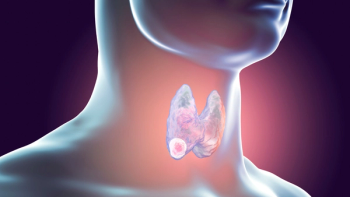
A patient with human papillomavirus (HPV)-positive head and neck squamous cell carcinoma (HNSCC) has been dosed in ACESOT-1051, a phase 1 clinical trial evaluating APR-1051 in advanced solid tumors with cancer-associated gene alterations.
The development was announced in a news release from clinical-stage biopharmaceutical company Aprea Therapeutics, Inc.
APR-1051, according to the National Cancer Institute, is an oral inhibitor of the WEE1 protein kinase. Overexpression of WEE1 occurs in several different cancer types, with a high expression of WEE1 associated with poor outcomes. APR-1051 treatment is intended, by inhibiting WEE1, to promote premature cell division and prolonged blocking of the cell cycle, resulting in an accumulation of unrepaired DNA damage and leading to the death of susceptible tumor cells.
The patient with HPV-positive HNSCC was the first patient to be dosed in Cohort 5 of ACESOT-1051, receiving 70 milligrams once daily of APR-1051, according to the news release. Open-label data from the study are expected to be released in the second half of 2025, Aprea reported.
Glossary:
Oropharynx: the middle part of the throat, behind the mouth, including the soft palate, the side and back walls of the throat, the tonsils and the back third of the tongue.
Pharmacokinetics: study of how the drug is absorbed, distributed, metabolized and excreted in the body, providing insight into the drug's action and optimal dosing.
Pharmacodynamics: assessment of the drug's biochemical and physiological effects on the body and its mechanism of action against cancer cells.
HPV-positive cancers, according to the news release, are among those potentially susceptible to WEE1 inhibition, and approximately 70% of the 20,000 cases oropharyngeal squamous cell carcinoma, or HNSCC that occurs in the oropharynx, diagnosed each year in the United States are attributable to HPV.
The ACESOT-1051 trial, evaluating APR-1051 monotherapy among patients with advanced solid tumors, is currently recruiting, with an anticipated eventual enrollment of 79 patients, according to its listing on clinicaltrials.gov. The trial is being held at three locations in Texas, including The University of Texas MD Anderson Cancer Center in Houston, NEXT Oncology – Dallas in Irving and NEXT Oncology – San Antonio. The trial has an estimated primary completion date of June 2027, and an estimated study completion date of June 2028, according to the listing.
“Enrollment of the first patient with HPV+ head and neck cancer in the phase 1 ACESOT-1051 trial is an important step and is in line with our goal of identifying patient populations most likely to benefit from WEE1 inhibition,” said Dr. Philippe Pultar, senior medical advisor and lead WEE1 clinical development of Aprea. “We are pleased with the progress of the trial and encouraged by the safety profile of APR-1051 to date. We look forward to continuing the study as we work toward identifying the optimal dose for future studies. We continue to believe that APR-1051 has best in class potential.”