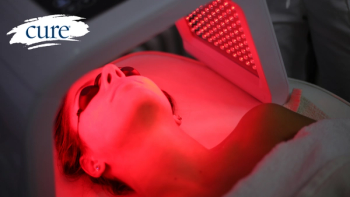
Ameluz photodynamic therapy is the first light-based treatment the FDA has approved for a skin cancer. Here's who it's for, how it works and how it compares with surgery.
A custom mRNA vaccine is the first to succeed in a phase 3 trial. Learn how personalized cancer vaccines work and what to watch for at ESMO 2026.
A vaccine made from a person’s own tumor has become the first of its kind to succeed in a phase 3 trial. Full results come out Oct. 24. Here’s how it works and what it could mean for people with cancer.
Imagine a cancer treatment designed for one person only, built from the genetic fingerprint of their own tumor.
That is the idea behind personalized cancer vaccines. And for the first time, one has succeeded in a large phase 3 trial. In August, Merck and Moderna announced that their investigational vaccine, intismeran autogene, combined with Keytruda (pembrolizumab), helped keep melanoma from coming back better than Keytruda alone.
Researchers will share the full results on Saturday, Oct. 24, at 10:30 a.m. EDT during the Presidential Symposium, the most prominent session at the European Society for Medical Oncology (ESMO) Congress 2026.
Here’s what people with cancer and their loved ones should know.
Most vaccines, like the flu shot, help prevent illness. Personalized cancer vaccines are treatments for people who already have cancer. They are typically given after surgery to help keep cancer from returning.
Cancer cells carry genetic changes, called mutations, that healthy cells don’t have. Some of these changes create unique markers on the surface of cancer cells, known as neoantigens. Because no two tumors have exactly the same mutations, no two people’s neoantigens are exactly alike.
A personalized cancer vaccine teaches the immune system to recognize those specific markers so it can find and attack any cancer cells left behind. That precision is what sets the approach apart from older treatments.
“In contrast to chemotherapy, which are mostly sort of poisons that are more toxic to cancer cells than normal cells, but also affect normal cells and that’s why people get so sick from many types of chemotherapy, the immune system can very precisely target just the cancer cells in principle,” Dr. Jay Berzofsky, chief of the Vaccine Branch of the Center for Cancer Research at the National Cancer Institute, previously told CURE.
Each dose of intismeran is made for one person:
The mRNA gives the body instructions to make the neoantigens, essentially showing the immune system a “wanted poster” for that person’s cancer.
The two treatments work as a team. Keytruda is an immunotherapy that releases a brake on the immune system so it can attack cancer more freely. The vaccine points the immune system at the right targets.
“It basically generates an immune cell response specifically against things that are only in the tumor and not in the normal tissue,” Dr. Jeffrey S. Weber, deputy director of NYU Langone’s Perlmutter Cancer Center and senior investigator of the phase 2b trial, previously told CURE. “… It gives the body a chance to mount a specific immune response against those very specific neoantigens. And the [Keytruda] amplifies the response.”
In the phase 3 trial, people received the vaccine every three weeks for up to nine doses, along with Keytruda for about one year.
The INTerpath-001 trial enrolled 1,137 people with stage 2B to 4 melanoma that had been completely removed by surgery. Two out of three received the vaccine plus Keytruda, and the rest received Keytruda alone.
According to the companies, the combination significantly improved:
It is the first positive phase 3 result for a personalized neoantigen therapy and for any mRNA-based cancer treatment. The exact numbers have not been released yet; they will be shared at ESMO. Researchers are still following participants to see whether the vaccine helps people live longer.
For more on the August announcement, read
The phase 3 trial built on a smaller phase 2b study called KEYNOTE-942, which included 157 people with high-risk stage 3 or 4 melanoma that had been removed by surgery. After five years of follow-up, adding the vaccine to Keytruda:
Gary Keblish, a teacher from New York City, received the vaccine with Keytruda after surgery for stage 3C melanoma as part of the phase 2b trial. When CURE spoke with him, he had lived four years without his melanoma coming back.
“The actual injection — because the mRNA vaccine was injected in one arm or the other — left me feeling on some days like I might have felt after getting a regular flu shot, a little swollen and a little sore,” Keblish said.
“I think it’s a marvel,” he added. “And I would encourage anyone who has the opportunity [to participate in a clinical trial] to do it.”
In the phase 2b study, the most common side effects of the combination were:
Severe fatigue occurred in 4.8% of people, and no life-threatening side effects were reported. Immune-related side effects, which can happen with Keytruda, occurred at similar rates with the combination (45.2%) and with Keytruda alone (44%). The companies reported no new safety concerns in the phase 3 trial.
Not yet, outside of a clinical trial. Intismeran is not FDA approved, and the companies plan to share the results with regulators.
The vaccine is being tested in nine phase 2 and 3 trials across several cancers, including melanoma, non-small cell lung cancer, bladder cancer and kidney cancer. Moderna will also present early data in pancreatic cancer and early-stage lung cancer at ESMO.
Researchers have long seen potential beyond melanoma. “The relevance of this study is the impact it could have not just for melanoma patients but for other cancers as well,” Dr. Ryan Sullivan, associate director of the melanoma program at Massachusetts General Cancer Center, said in a press release when the phase 2b results were first presented. “From a general cancer therapeutic standpoint, this is a potential major breakthrough.”
If you have melanoma or another cancer that could come back after surgery, ask your care team:
You can search for open trials at
For more news on cancer updates, research and education,